 JOURNAL - Page
20
JOURNAL - Page
20| JOURNAL | NEWS | LETTERS | BOOKS | PERSONS | HISTORY | SLIDES |
 JOURNAL INDEX :
Page 20 JOURNAL INDEX :
Page 20 |
| J20.01 Accident of birth - When and where you are born depends on an unseen hand... |
| J20.02 Accident of Birth - a response speaks of unseen hands, invisible force, God’s will... |
| J20.03 Rebirth, the query? - Alive this moment, dead the next; that is the uncertainty of life |
| J20.04 Rebirth: Some queries brings up very intriguing questions and observations on life |
| J20.05 Yoga and Buddhist Meditation - The International Day of Yoga fell on.. |
| J20.06 Beyond the ritualistic realm - Buddhism was introduced into this... |
| J20.07 Rise and fall of human race - Sakvithi, also called Chakravarthi, is no mythical figure... |
| J20.08 The ‘Cult of Personality’ - The Buddha never asked and encouraged anyone to perform... |
| J20.09 Reflections on Binara Poya Buddhism: Least prejudiced against women |
| J20.10 Conquer your anger In Buddhism, anger is not approved and accepted as positive |
| J20.11 Buddhist Saints of the Blessed Isle - Only Sri Lanka has many Arahants |
| J20.12 Taking refuge in the Buddha, the Dhamma and the Sangha - The London Buddhist Vihara goes back to 1955 |
| J20.13 The significance of the seven weeks after Enlightenment |
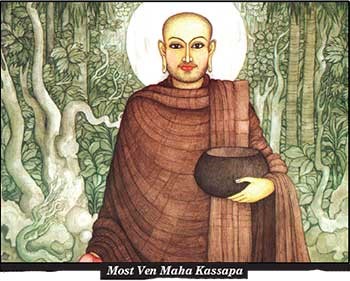
| J20.14 Most Ven Maha Kassapa, ‘Father of the Sangha’ - The poya in October is of special significance |
| J20.15 Theravada, Mahayana – Will the Real Buddhism please stand up! |
| J20.16 Mother - It is felt that the most potent force in the world is ‘maithri’ |
| J20.17 Living Buddha or a departed Buddha - According to the Mahaparinibbana Sutta... |
| J20.18 Importance of Buddhist psychotherapy - Celebrated Psychologists like Carl Jung and many others... |
| J20.19 Dhammacakkappavattana Sutta - First discourse of Lord Buddha... |
| J20.20 Vesak Full Moon Poya Day religious day - Buddhists world over due to several religious incidents... |
J20.01
Accident of Birth
Dr. Upul Wijayawardhana
When and where you are born depends on an unseen hand or an invisible force, according to belief systems; being God’s will for the followers of one of the Abrahamic religions and Karma for the followers of one of the ‘Indian’ religions. For scientists, however, it is a matter of chance. Whatever it may be, this accident of birth determines what we are and shapes our lives along a triumvirate that drives us, sometimes confrontationally; race, gender and religion. We cannot change our race orgender but can change our religion but, again, that is a rarity as the first brain-washing we receive in life dampens free thought. Of course, there are notable exceptions of great thinkers and reformers who challenged orthodoxy, often paying with their lives for the crime of free thinking.
Wikipedia). With increasing migration and inter-marriages racial boundaries are getting blurred which, from an evolutionary point of view, is welcome.
Things used to be simple then but no longer so. In a world that is becoming increasingly complex, what was simple in the past has got very complicated now. Gender is perhaps easier to define than race and was assumed to be fixed. In humans and most other mammals, females have two sex chromosomes of the same type (XX) and males have two distinct chromosomes (XY). If a sperm with a Y chromosome impregnates an ovum, a single gene present in the Y chromosome acts as a signal for the developmental pathway for maleness. But, now we know that there are a number of genetic variants including the Triple X syndrome where a female has three X chromosomes instead of two; they tend to be taller and used to be called ‘Super-females’ till it was recognised that some may have learning difficulties. An emerging minority group are ‘Transgender’ defined as a person whose sense of personal identity and gender does not correspond with their birth sex. To complicate matters further, some consider neither male nor female label fits them and are clamouring for gender neutrality. Sex may be fun and though variations like this and homosexuality are gaining wide acceptance, it cannot be overlooked that from an evolutionary viewpoint the primary purpose of sex is the propagation of the species.
Race can be defined as a group of persons related by common descent or heredity whereas ethnicity is sharing a common and distinctive culture, religion, language, or the like, a term often used to denote origin by birth or descent than the present nationality, an important distinctionin a world enriched with migration. According to Robert B Pickering and David Bachman, in their monograph ‘The use of Forensic anthropology’; "Race is both a cultural and a biological term. For more than a century, scientists and philosophers have tried to define race and describe races. Some scientists define only three races: caucasoid, mongoloid, and negroid, while other scientists have defined more than 10. In our climate of multi-cultural sensitivity, some scholars, not forensic anthropologists, suggest that race does not exist, or at least it should not be talked about." It is extremely interesting that according to Meyers Konversations-Lexicon (1885-90) there are three groups of Caucasoids, five Negroids, ten Mongoloids and, in addition, there is one uncertain group which comprises of Dravida and Sinhalese. (
Though religion is not as fixed an entity like race and gender, for all practical purposes, it behaves as a fixed entity as the vast majority continues to follow the religion they are born into. What is most interesting is to note how educated justify religious fallacies by inventing pseudo-scientific explanations. Though most follow the religion they are born into, in recent times increasing numbers continue only nominally; a phenomenon seen especially among Christians in Western countries. A few question their religion and a tiny minority rebel. There are conversions too, a few due to conviction but mostly due to money, matrimony or delusional attractions.
All religions have had their schisms. Though Buddhism has Mahayana, Theravada and Vajrayana, based on rituals and the means of achieving ultimate detachment, the core ‘Dhamma’ remains the same and there is no enmity. Shortly after the death of the Prophet, Islam divided to two; Sunni and Shia on the basis of who the legitimate successor should be. Though there are no doctrinal differences, there have been assassinations in the past and mass-murder continues even today. I simply cannot comprehend Sunnis bombing worshippers in a Shia mosque and vice-versa based on the delusion that the reward is heaven for such a dastardly act.
Roman Catholic Church is the most powerful religious institution in the world and was the first organised Christian Church. As the Popes became increasingly powerful, and corrupt, rebellions occurred the most significant being the Protestant Reformation that started almost 500 years ago. On 31 October 1517, Martin Luther nailed his ‘Ninety-five Theses’ on a Church door in Wittenberg in Germany detailing the doctrinal and practical abuses of the Roman Catholic Church. He challenged the practice of indulgence, a way to reduce punishment for sins and was excommunicated. John Calvin continued the movement. Henry VIII, desperate for a male heir, wanted his marriage to Catherine of Aragon annulled but as Pope Clement VII refused, he broke away from the Catholic Church in 1533. This led to the English Reformation.
One of the most interesting reformers was George Fox, who founded the ‘Religious Society of Friends’, better known as the Quakers, in mid-17th century and was jailed repeatedly. It is an organization that was far ahead of its time and showed the world that capitalism could be considerate. They refused to participate in war, wore plain dress, refused to swear oaths, opposed slavery which was a common practice and a lucrative trade for the British and were teetotallers. Instead of alcohol, they concentrated on Cocoa as a drink but as it was not very palatable developed chocolate to a new height. The famous confectioners, Cadbury, Rowntree and Fry’s, all were Quakers and were well known for the way they treated their workers. They built fully contained ‘villages’ for their workers and Bournville built by Cadbury’s is still considered one of the best places to live in England. They started financial institutions like Barclays Bank, Lloyds Bank and Friends Provident and manufacturers like Clark’s shoes. But their idealism has been swallowed by unbridled capitalism and Cadburys is now owned by the American Chocolate manufacturer, Hershey. We can only dream of Quaker values being reintroduced to capitalism.
In a world that is obsessed with human rights, one freedom the do-gooders do not seem to care about is the right to free thinking. How can apostacy be punishable by death, still?23 06 2017 – The Island
J20.02
Accident of Birth - a response
Dr. Upul Wijewardhana, in his recent article "Accident of Birth" in The Island, speaks of unseen hands, invisible force, God’s will for those who follow Abrahamic religions, and Karma for followers of Indian religions – Buddhism and Hinduism. But for scientists it is a matter of chance or an accident. To me ‘birth’ is a nature’s gift for all living beings - male and female - for procreation.
As said in several of my letters, use and enjoy the natural endowments – the six senses, to the full, without being a nuisance to the society and the environment you live in. It is simply, live for others and others live for you, which means no attachment, and greed which is the cause of all conflicts. This is what all religions preach, but unfortunately our preachers distort this fundamental understanding and make differences in beliefs. As correctly sated by Dr. UW religion is not something fixed unlike race, gender. Unfortunately, this cannot be said of the fanatics, and those converted due to economic reasons and defeatists, those who lack self confidence and courage, who seek divine help.It is here, I am reminded [I am not a Marxist] of Karl Marx where he said - Die Religionist das Opium des Volkes - Religion is the opiate of the masses, where it says: Religious suffering is, at one and the same time, the expression of real suffering and a protest against real suffering. Religion is the sigh of the oppressed creature, the heart of the heartless world and the soul of the soulless condition. It is the opium of the people. Abolition of religion as the illusory happiness of the people is a prerequisite for their real happiness. To call on them to give up their illusions about their condition is to call on them to give up a condition that requires illusion.
What religion has done to mankind is to retard the progress, materially curbing the potentials of man. Religious conflicts, religions against religion, as seen today where in this country, there is Muslim – Buddhist conflict, and also within religions as in the case of Sunnis and Shia sects in Islam. It is apt to quote from the book ‘Letter to a Christian Nation" by Sam Harris where he says "Competing religious doctrines have shattered the world into separate moral communities and these divisions have become a continuous source of human conflict". Fortunately, scientists have side lined the religious beliefs and gone ahead, and today we are reaping the harvest of their inventions for comfortable living and much more to come.
In essence what is required in life is as Buddha Siddhartha Gauthama annunciated Sabba papassa Akara nan, Kusalassa Upa Sampada, Sachitta Pari Yodapanan, - Ethan Buddhanu Sasanan – Cast away evil, engage in meritorious acts, Purify your mind – That is Buddha Gaurhama's advice.
G.A.D. Sirimal
Boralesgamuwa30 06 2017 – The Island
J20.03
Rebirth, the query?
Dr. Upul Wijayawardhana
Paul Dirac
Alive this moment, dead the next; that is the uncertainty of life. Paradoxically, in fact, it is the only certainty in life: death. One moment you have a restless mind, observing everything the way it wants to, dreaming of many a thing you wished for, wandering freely, but the next moment you are a pulseless, mindless corpse. What happens to the mind when the heart stops beating and starves every organ, vitally the brain, of blood? Does it die with the body? Perhaps, it does. After all, the brain is the most complex super-computer ever and when it is ‘destroyed’ there can be no output. But animals feign death for survival by hibernation and when they wake-up, there minds start working again. In hibernation their brains are not dead but, probably, set to the lowest possible level. Therefore, there is no mind-body dissociation in hibernation but medical scientists, starting with cardiologists, have produced a group of people who are more puzzling.
When it was realised, by post-mortem examinations, that some patients who died following heart attacks had minimally damaged hearts, so called ‘hearts too good to die’, cardiologists started investigating and found that these patients had died of electrical instability that could be treated. Thus, started the whole concept of cardio-pulmonary resuscitation (CPR) which has saved millions of lives. Further, it has produced some intriguing insights, as some patients started reporting that they ‘witnessed’ their resuscitation and a vast literature has grown on this subject. They are a tiny minority, though a large number of patients have continuing mental changes, some having ‘near death experiences’. One of the largest studies carried out prospectively, not by retrospective analysis of data gathered, but by on-going data gathered on the basis of a pre-agreed proforma in 15 centres in UK, the USA and Australia, is the AWARE study, an acronym for the ‘AWAreness during REsuscitation prospective study. Results, reported in 2012, is as follows:
"Among 2,060 cardiac arrest events, 140 survivors completed stage 1 interviews, while 101 of 140 patients completed stage 2 interviews. 46% had memories with 7 major cognitive themes: fear, animals-plants, bright light, violence-persecution, deja vu, family, recalling events post-cardiac arrest and 9% had near-death experiences, while 2% described awareness with explicit recall of 'seeing' and 'hearing' actual events related to their resuscitation. One had a verifiable period of conscious awareness during which cerebral function was not expected."
Though mental changes and near-death experiences (NDE) are of great interest, what is relevant to the question of what happens to the mind at death is the 2% that described awareness. A larger study, AWARE II, is in progress and it will be interesting to see what percentage would recall the resuscitation process as ‘witnessed’. Another interesting study is from the Netherlands, which was done previously in 2001. Pim van Lommel, a cardiologist and his team, conducted a study on NDEs in 344 cardiac arrest patients who had been successfully resuscitated in 10 Dutch hospitals. Patients not reporting NDEs were used as controls for patients who did and the study also included a longitudinal follow-up where the two groups (those who had had an NDE and those who had not had one) were compared at 2 and 8 years, for life changes. What is interesting is that one patient had a conventional out of body experience where he reported being able to watch and recall events during the time of his cardiac arrest. His claims were confirmed by hospital personnel and the trialists commented: ‘This did not appear consistent with hallucinatory or illusory experiences, as the recollections were compatible with real and verifiable rather than imagined events’.
Patients who have accurate recall, though a tiny minority, are the most interesting as they raise the possibility of mind being dissociated from the body; the mind watching from a distance, what is happening to the body with a ‘dead’ brain. Could this support the concept of rebirth? Unlike reincarnation, rebirth is essentially a mental process. Though some interpret this as a continuous state of rebirth in this life, traditional Buddhist texts give a different interpretation. The mind dissociates from the body at the time death (Chuti citta) and settles in a different body (Patisandi ctta), which is rebirth. Scientifically speaking, we do not know when an embryo acquires a mind. Is the zygote, the product of the union of an ovum with a sperm, only physical, later to acquire a mind? Or, whether the zygote, as it divides gradually, forms a brain and then develops a mind, we do not know. Therefore, of all the concepts that try to explain an afterlife, if any, rebirth seems a more plausible explanation than resurrection, eternity or reincarnation.
I started exploring these possibilities, again, after reading the very interesting piece "The query on rebirth" (The Island, 21 March) by my erstwhile friend, Kingsley Kurukulasuriya with whom I have re-established contact, thanks to that excellent article. Till I read what he stated: ‘Some classmates were saying that though Upul was supposed to be a Buddhist, he never believed in Rebirth’, I did not realise that I had the notoriety of being a doubter of rebirth, for so long! This statement also reiterated the commonly held view that it is essential to believe in rebirth to be considered a Buddhist. I cannot recollect reading his contribution to the Ananda College magazine "Do we need a religion" but going by the description he had given, there is no doubt that we think on same lines, perhaps except rebirth, in respect of which I keep an open mind.
In an interesting, well researched article "Life after Death: the range of opinion", written sometime ago (The Island, 6 October 2017), Leo Fernando proposes five categories wherein he casts me to the minority group ‘Buddhists who do not believe in life after death or rebirth’. Being a scientist by training, a Buddhist by conviction who believes that ‘Kalama Sutta’ laid the foundation for scientific thought, it is true that I question before acceptance and keep an open mind about afterlife and rebirth. Rather irrationally, we seem more concerned about afterlife than living this life, as pointed out in my article "Live this life – not the next" (The Island, 2 December 2017). I concluded by saying, ‘There is so much to do and learn in this life. Therefore, why worry about the next!’ To me, it is the most sensible attitude, till we know better; not to worry, not meaning that we should not continue to study and research.
Leo has posed three issues for questioning, and though I may have answered them, at least partly, in my previous writings, having re-read, I have researched with a view to responding, as requested. The first issue is miracles which are common to all religions. Maybe those with advanced minds can perform true miracles but magicians perform miracles all the time. These become miracles because they cannot be explained by science, though fellow magicians can explain, if they dare to break ‘the magician’s code’. How can a scientist explain how a magician makes an aircraft or a bus disappear? These are clever illusions. Further, some miracles described by individuals can certainly be hallucinations. We know, very well, that the brain plays tricks on us all the time.
I will deal with the third issue before the second one; it is the statistical improbability of life evolving. If we look at ourselves the answer is there; each of us has evolved from a single sperm of a father and a single ovum of a mother, to be such complex creatures. If such an evolution could occur in a lifetime, the evolution that occurred over millions of years, may be billions, starting from ‘the primordial soup’, can be easily comprehended. Even if some doubt ‘the primordial soup’ theory, as it stands, further work is likely to clarify. He seems to have misunderstood the opinion of another great British theoretical physicist, Paul Dirac and stated: "Issue 3 is it that Paul Dirac’s statistics proving the improbability of life without a God at 10100 amounting to an impossibility, fail to meet a high standard of proof for God, Life here, and hereafter?" The opinion Paul Dirac expressed in a conference in 1971, as stated by Kragh Helge in "The Purest Soul. Dirac: A Scientific Biography" is as follows:
"It could be that it is extremely difficult to start life. It might be that it is so difficult to start life that it has happened only once among all the planets ... Let us consider, just as a conjecture, that the chance life starting when we have got suitable physical conditions is 10−100. I don't have any logical reason for proposing this figure, I just want you to consider it as a possibility. Under those conditions ... it is almost certain that life would not have started. And I feel that under those conditions it will be necessary to assume the existence of a god to start off life. I would like, therefore, to set up this connexion between the existence of a god and the physical laws: if physical laws are such that to start off life involves an excessively small chance, so that it will not be reasonable to suppose that life would have started just by blind chance, then there must be a god, and such a god would probably be showing his influence in the quantum jumps which are taking place later on. On the other hand, if life can start very easily and does not need any divine influence, then I will say that there is no god"
In this, Dirac is non-committal and vague for a scientist of his standing, with a statistic plucked out of the air, but in other writings has stated that ‘the very idea of god is the product of human imagination’. Francis Collins, a ‘re-born Christian’ geneticist, has stated that life evolving from a self-assembling complex is improbable, not impossible.
Though there is a lot of doubt regarding data obtained from regression analysis, I agree with Leo that the work of Ian Stevenson and his successor, Bruce Greyson are the most valuable contributions to the concept of rebirth. The body of evidence regarding rebirth is increasing but it is still insufficient for confirmation and, as I mentioned, there are pointers to the fact that the mind may be behaving in ways we have not yet comprehended. If these findings are confirmed, it will show, yet again, that the Buddha was far ahead of his time.07 04 2018 - The Island
J20.04
Rebirth: Some queries
Dr. Upul Wijayawardhana, in his usual manner and style brings up very intriguing questions and observations on life in relation to religions- especially Buddhism. In the Satmag section last week, he addressed the issue of rebirth. I must confess and admit, I do not consider myself equal to him or any of the eminent scientists or researchers he mentions. However, I believe that ‘Rebirth’ is another concept such as Hell, Heaven, Nibbana, and its purpose is to make people lead righteous lives. Hell speaks of torture for evil deeds and Heaven for meritorious acts performed in this life to enter eternal bliss in Heaven.
One other question which baffles me is, if there is rebirth, how can there be an increase in population as rebirth means, the same person born again. In which case, the population should be static. Or, is it that all other forms of living beings, after their death are born as humans for performing meritorious deeds in their previous birth?
The article of Dr. Wijayawardhana makes mention of cardiac-pulmonary resuscitation [CPR] and how some have recounted their experiences. My humble view is, although medically declared dead, the subconscious mind remains active and returns to the human body after successful surgical operation or a concocted story of the patient, perhaps a Buddhist or a Hindu to prove and maintain, life after death, is a truth as preached in these two religions.
Here I would wish to quote Dan Brown, the famous author and researcher in his book ORIGIN, "We consider ourselves modern rational individuals and yet most widespread religions include a whole host of magical claims – humans inexplicably rising from the dead, miraculous Virgin Birth, vengeful gods that sends plagues and floods, mystical promises of an afterlife in clouds swept heavens or fiery Hells."
The conclusion of the book titled ‘Scientific Acceptability of Rebirth‘ by Granville Dharmawadhana [available on the web] reads: "I have so far not come across any scientifically acceptable data that can go to prove the scientific unacceptability of rebirth. In the basis of these tests it is concluded that the scientific acceptability of the phenomenon of rebirth is proven at least on three counts. A science minded person often finds it difficult to accept rebirth because he has failed to perceive a rebirth mechanism that is intelligible within the outdated Descartes’ classical science frame work. But modern science especially Quantum Mechanics has compelled us to accept unintelligible mechanism of natural phenomenon - like jump of the electron – and we do not hesitate to accept them. Likewise with the data available we are compelled to accept rebirth as a reality."
Austrian Scientist Rudolf Steiner says, "Just as an age was once ready to receive the Copernicus theory of the Universe, so is our age ready for the idea of reincarnation to be brought into the general consciousness of humanity."
To me this question is merely of academic interest, as what happens after death is unknown. What one should strive is to live a righteous life and pass off with a feeling of contentment. As Buddha said – Do no evil, perform meritorious acts, and purify your mind. The reward lies there.
G.A.D. SIRIMAL
11 04 2018 - The Island
J20.05
Yoga and Buddhist Meditation
The fourth International Day of Yoga which fell on June 23 was celebrated in Colombo by the Indian High Commission. Yoga practice, started in India ages ago, has caught on in most parts of the world. We in Sri Lanka have not been left behind, rather have we preceded countries like the US in its practice and now classes and sessions are conducted in all major cities.
I went into yoga attending a class conducted by an expert a fairly recently. Meditation I have practiced for long, having been introduced and enthused by vibrant, almost evangelical Bhikkhuni Ayya Kema who became a friend and who’s Parappuduwa Nuns’ Island I helped to maintain with Ratna Dias and a couple of other Buddhist women, after Ayya Khema departed these shores in the late 1990s due to the JVP insurgency. I then went to Dhamma Kuta meditation centre in Hindagala, Peradeniya, being there when Shri Goenkaji conducted a ten day course to inaugurate the superb meditation centre.
Since International Yoga Day calls for attention to this practice I found a comparison between yoga and Buddhist meditation interesting. I am an absolute novice in yoga and still trying to maintain concentration on the breath for a while. Methods of vipassana bhavana have been introduced and practiced but I am as yet a person who attempts meditation; no praiseworthy practitioner. Multi volumes can be written on the comparison; I dare condense it to one article. I express my observations with reference to just two texts and Internet.
Definitions
The simplest definition of yoga is: a physical and mental discipline. Another is: a Hindu spiritual and ascetic discipline, a part of which, including breath control, simple meditation, and the adoption of specific bodily postures, is widely practiced for health and relaxation.
Definitions of meditation are legion, innumerable. I will select to define Buddhist meditation as the development of concentration to understand things as they really are; the application of deep, concentrated attention to establish penetrative insight into the subtle nature of matter and mind, eliminating distraction and hindrances.
The root of the word ‘yoga’ comes from the ancient Sanskrit yug or yuj, meaning ‘union’. And here union applies to the body, mind and breath. Bhavana derives from the word Bhava meaning becoming or the subjective process of arousing mental states. I quote an addition which I found with the above definition: Unlike our words ‘meditation’ or ‘contemplation,’ Gotama’s term is rich, and verdant. It smells of the earth. Breath is of the essence to both practices but in Buddhist meditation it is a means to an end since meditation on the breath brings on calm – Samatha and Samadhi – which ought to lead to the ability to see things as they are; to know the body and its sensations for what they are – transient and unsatisfactory; this method to know being termed vipassana bhavana.
"The philosophy of yoga stresses that the human body is a magnificent creation of nature, born to experience the greatness of the world. The body is therefore the temple of the spirit and when the body, mind and breath are in balance and harmony, the inner light can shine forth and illuminate the shadows of the world. Yoga philosophy believes the spirit is infinite and that the true nature of all beings is peaceful and blissful. Therefore the goal of yoga practice is to preserve this peace." Yoga is a complete, holistic philosophy, a way of life that encourages evolution on all levels of consciousness.
I won’t dare summarize the philosophy of Buddhism; it is too well known as Buddhism per se is classified a philosophy.
The guru-pupil tradition underpins both yoga and Buddhism since the Buddha’s entire Dhamma was preached to the Sangha or lay persons with a certain amount of dialogue.
Varieties
The different types of yoga were designed to nurture specific qualities in students and the gurus based their teachings on what would best honour and nurture the spiritual awakening of the individual’s nature. The main according to the introduction in the book I referred to are: Ashtanga Yoga, Vinyasa; Bhakti, Hatha, Kundalini and Raja Yoga. But a teacher names the types as Jhana, Karma, Bhakti and Raja. Be that as it may, Ashtanga concentrates on an energetic series of poses that flow together and turn more challenging. It is a combination of Hatha and Raja Yoga. Bhakti Yoga is more devotional, while Kundalini is very subtle dealing more with dormant energy. Raja Yoga is the yoga of the mind, calling aspirants to delve into the layers of the mind using observation and concentration. Hatha Yoga, that which is taught by most local teachers, involves mastering the poses and controlling the breath using various techniques. It has been modified for western bodies. It is an umbrella term for all physical postures in yoga. It balances the cosmic energies of the sun and moon in the mind and body creating a harmonious flow of prana - life force. The name is derived from Ha meaning sun and tha the moon.
We see here that Raja Yoga is very close to Buddhist meditation which calls for concentration of the mind, where samatha leads to the jhanas which are mental absorptions. "Jhanas are rather deep states of absorption that can be sustained for a significant duration – 20 minutes to more than two hours - without the intrusion of any thought, sound or sensation and without the weakening of the supportive jhana factors."
If one speaks of varieties of Buddhism, I suppose one would naturally give thought to the different sects of Buddhism: Theravada, Mahayana, and Vajrayana, along with a fourth-Zen Buddhism - that grew out of Mahayana and has gained increasing popularity in the West with differing approaches to the dharma, their conduct of monastic practice, and the geographic boundaries that define them. Theravada, the most ancient form of Buddhism, is the dominant school in the four Southeast Asian countries. Its name translates to ‘Doctrine of the Elders’, and it centers around the Pali scriptures, transcribed from the oral tradition taught by the Buddha. This Dhamma was refined at the First Council of the Sangha held soon after the death of the Buddha and called together by the most senior monk then – Kasyappa Thera. By studying these ancient texts, meditating, and following the Eightfold Path, Theravada Buddhists believe they will achieve Enlightenment. Strong emphasis is also placed on the monastic community and on heeding the advice of the wise.
Mahayana Buddhism developed out of the Theravada tradition roughly 500 years after the Buddha attained Enlightenment. A number of individual schools and traditions have formed under the banner of Mahayana, including Zen Buddhism, Tibetan Buddhism, Pure Land Buddhism, and Tantric Buddhism. Mahayana Buddhism focuses on the idea of compassion and regards bodhisattvas, which are beings that work out of compassion to liberate other sentient beings from their suffering, as central devotional figures. Vajrayana is last of the three ancient forms to develop, and provides a quicker path to Enlightenment than either the Theravada or Mahayana schools. It encourages rituals, chanting, and tantra techniques, as the way to Enlightenment. Zen Buddhism is said to have originated in China with the teachings of the monk Bodhidharma.
As Ven. Bhante Sujato, originator of SuttaCentral.net noted recently, the different ‘schools’ originated mostly due to fear that the Buddha Dhamma would be lost, after the Buddha’s demise. Teachers learnt the Dhamma but as time went on differences in practice and observation occurred.
Benefits
The benefits of both are similar: peace to the mind, relaxation to the body, arousing of energy. Of course Buddhist meditation must advance much further: the final realization of the four truths of suffering in life; its roots and causes, its eradication and the path to getting release from all suffering which is an end to samsaric existence.
Yoga undoubtedly confers great benefits on the doer, however less than sustained and deep meditation. "The wonderful benefits of Yoga begin immediately as the body softens and the mind becomes clear and calm. It maintains the systems of the body both inside and out – the mental and physical. It encourages a quiet sense of inner knowledge and psychological stability that magnify perceptions and of one’s life. You may come to need less sleep because energy is boosted and digestion becomes healthier and more efficient and thus more vitality to the body."
I will not attempt itemizing even the day to day, ordinary benefits to be derived from correct meditation backgrounded on the Buddha Dhamma. The Buddha himself summarized the multitude of benefits. To an ordinary laywoman like myself, meditation has helped and helps immensely to be focused; not forgetting; being so at peace; receiving great joy by practicing metta, karuna and muditha. What greater consolation than being able to cultivate and enjoy the most elusive of the brahma viharas -upekka- maintaining equanimity and being unshaken by any and every vicissitude that can assail a person, including highs that are all too temporary. Practicing meditation ensures peaceful, dreamless sleep and awakening refreshed and energized. Finally, when meditation has been complete, the absolute reality of life will be realized and thus the ending of the samsaric cycle of births and deaths which mean suffering.
We see proof of these benefits in the faces and forms of truly meditating monks, nuns and lay persons. I’ve seen the quiet composure and radiation of benign-ness in the two yoga teachers I have been fortunate enough to know. And I have felt the radiance of a great good meditator like Ven. Bhikkhuni Vayama who was here in Sri Lanka with Bhikkhuni Khema long ago. Just being near her makes one restful and joyful. I am certain many readers of this column will recall how very happy Ajahn Brahmavamso looks, and apparently is.
References: Catherine, Shaila Wisdom Wide and Deep: a practical handbook for mastering jhana and vipassana Boston: Wisdom Pubn., 2011Houlahan, Frances The Beginner’s Guide to Classic Yoga, 2002. (written by a student)
J20.06
Beyond the ritualistic realm
Prof. M.M.J. Marasinghe
Buddhism was introduced into this island during the reign of King Devanampiyatissa in the third century B.C. by the mission of Venerable Mahinda Thera. The Mahindian mission brought the Theravada form of the teaching as approved by the Third Buddhist Council which was held at Pataliputra under the patronage of Emperor Asoka. This meant that the Pali canonical texts served both as the source material and the reference books of the Sri Lankan Buddhist tradition. It, in other words, meant that the Sri Lankan Buddhist tradition derived its authority to act and to understand the teaching of the Buddha in accordance with the declaration of the authority of the Dhamma and the Vinaya as explained in the Maháparinibbána Sutta of the Dìgha Nikáya (D.11.123). Any transgression of the authority of the Dhamma and Vinaya makes the relevant action, interpretation or adoption of ritual, wrong and illegal.
Age old ascetic practice
After introducing Buddhism to Sri Lanka, Venerable Mahinda took meaningful steps to see that the study of the Pali canonical texts and the practice of the Dhamma were given equal emphasis. The historical remains of infra-structure facilities provided for both types of disciples go to prove that the demand for both types of training did exist even through difficult social and political conditions faced by the country down to about the early part of the tenth century of the Christian era.
Another important observation which must be made here is the absence up to this time of any evidence of ritual activities of worship and offering (pújá) in connection with Buddhism. The construction of Pagodas enshrining the relics of the Buddha and the planting of the Bodhi did not generate the adoption of Hindu theistic type of worship and prayer. According to historical evidence, it is the adoption of offering food and garments to statues of the Buddha by King Sena 111 which opened the sluice gates for capitulation into Hindu theistic worship with all its attendant ritualism uncontrolled.
Up to this point in Sri Lankan history, the Buddha to the Theravadins was a human being, born into this world as other humans. He left household life, early in his life and attained Buddhahood after six long years of severe ascetic practices. He lived an extremely simple life, walked bare-footed and followed the age old ascetic practice of going round for his only meal of the day, if he did not have an invitation. He passed away at eighty years under a sála tree in a park at Kusinara, lying on his folded upper robe which normally served as his bed and seat throughout his life as the Buddha. This, very briefly, is a mere glance at the wonderful genius who had been glorified by the later writers who had neither deep nor clear understanding of the great man or of the unique Dhamma he gave to the world.
This Theravada Buddha, still preserved in the Pali canonical texts, is vastly different from the glorified Buddhas of the Pali commentaries of Buddhaghosa. It was as the result of the fruition of his merit, accumulated through innumerable eons of life in samsára that the Buddha attained Enlightenment in this life. In spite of Buddhaghosa’s insistence on the indispensability of merit, the Buddha has never referred to, either accumulation of merit or past merit as a factor for Buddhahood or the attainment of nibbana. It must be noted here that the theory of accumulation of merit and the theory that merit can be donated to other parties are both alien to the Buddha’s teaching.
It may be noted here that the Rájagiriyas and the Siddhatthikas (two Indian Schools of Buddhism) proposed that merit can be donated at the Third Buddhist Council, but it was rejected by the Council as unacceptable according to the Buddha’s teachings. It is not clear how and on what grounds that it came to be accepted by post canonical Sri Lankan Buddhism again, going against this decision of the third Buddhist Council. Statues of the Buddha came to be made, according to tradition by the first century B.C., under the influence of the Gandhara School of art. Thuparama was the first Cetiya built to enshrine the relics of the Buddha received from the Emperor Asoka. When the Mahácetiya was completed, it too enshrined a second receipt of the Buddha’s relics. The Bodhi was planted at Anuradhapura when it was brought by Theri Sanghamitta. All these did not mean to the Sri Lankan Theravadins of the period, the growth of ritual worship of the theistic type, covering each and every item. Instead, these objects of veneration served as objects of recollection of the Buddha and his attainments.
From the time of the third century introduction of Buddhism to Sri Lanka, Hinduism as well as most other Indian religions known in India had their presence in this island. Brahmins were held in high esteem in the Sinhala society. Pandukabhaya was educated by a Brahmin teacher. The Brahmin advisor of King Devanam-piyatissa was a member of the Royal delegation sent by Devanam-piyatissa to Emperor Asoka.
Theravada Buddhist teaching
There is no evidence that either Hinduism or any other of the Indian religions present did have any serious impact to derail the Theravada Buddhist teaching from its two principal paths of training, the practice of the Dhamma by following the path of gradual training culminating in the attainment of nibbana producing many arahats and the study of the Pali canonical texts contributing to produce indigenous expertise of the Dhamma and the texts.Not only did Venerable Mahinda establish the two principal paths of training for the firm foundation of the teaching in the island, the meditative and the literary, he also provided Sinhala commentaries to explain the difficult Pali texts of the Dhamma and the Vinaya to help the native Sinhala readers of the texts. It is not at all clear why these Sinhala commentaries had to be translated into Pali.
An innocent explanation may be that it was intended to keep the interpretation of the texts in the hands of the bhikkhu Sangha who at the time were the only learners and the interpreters of the Pali texts. But even this explanation seems untenable when it is realized that the original Sinhala commentaries were burnt immediately after the Pali Commentaries were completed.A careful examination of the contents of some commentaries of Buddhaghosa written in Pali shows that they have a rich content of stories and anecdotes not strictly falling within the function of a commentarial explanation of the original texts. For example, Buddhaghosa’s commentary on the Kalinga Bodhi Jataka has an additional story of Venerable Ananda requesting the Buddha to leave some object to which his followers in Savatthi could pay their respects whenever he was away on his (dhamma cáriká) visits to other areas. Buddha accordingly, approves the planting of a seedling from the Sri Maha Bodhi of Buddhagaya at the entrance to the monastery at Savatthi.
The story raises several questions. First, the story of an Anandabodhi is out of context here as it is not found in the original Kalingabodhi Jataka Pali which Buddhaghosa was commenting on. Second, the statement that people went to see the Buddha carrying flowers and incense and being disappointed when they found that the Buddha was not there, is itself wrong because the Buddha as the human teacher was not an object of worship and offering when he was living. The word pújá, it must be noted, does not occur in the Pali canonical texts in the sense of a religious offering. The transition from veneration to worship and offering has taken several centuries after the time of the Buddha to be adopted by the Buddhists as the result of a theistic invasion, as it seems. The interpolation of stories like that of the Anandabodhi is evidence of the mechanism of introducing hitherto unaccepted rites and ritual into Buddhism. It also seems to tell us why they burned the original Sinhala commentaries of Venerable Mahinda, not to allow the secret leak out.
It is Buddhaghosa who claims in his commentary on the Ratana Sutta that it was first chanted by the Buddha to heal the city of Vesali of the devastating epidemic and affliction by non-humans. It must be noted here that Buddhaghosa’s claim of an epidemic is not supported by any other literary or historical source. Further, the Vajjian tribal oligarchy was an exemplary tribal state, too strong for the neighbouring Magadhan Emperor to wage war as clearly stated in the Maháparinibbána Sutta of the Dìigha Nikáya. Thus, the story of an epidemic is another of Buddhaghosa’s fairy tales used to make new rites and rituals acceptable by giving them religious sanction.
The acceptance that there are non-human beings (amanussá) and that they are a threat to man are both most probably Sri Lankan in origin. It is during the age of post-canonical Buddhism that both these had been smuggled into the Buddhist texts and the new rites and ritual structure. According to Buddhaghosa, the Ratana Sutta, which was the first blessing ritual approved by the Buddha goes against the Buddha’s own teaching in the Sámaññaphala Sutta of the Dìgha Nikáya which declares all blessing rites and ritual as animal sciences (tiraccháanavijjá). The ritual has been smuggled into the Buddhist ritual structure through the commentarial story. An idea of the importance attached to the story and the importance of the function it was expected to serve can be gained when it is realized that it has been repeated in three commentaries.
Buddhaghosa, coming from south India was selected to translate the Sinhala Commentaries into Pali because of his expert knowledge of the Pali language. It is not clear how he managed to translate the Sinhala explanations of the texts without an equally deep knowledge of Sinhala. Nothing is said about how or whether he acquired such knowledge. On the other hand, if he was writing his own commentaries he could have done so, without bothering himself of the Sinhala commentaries because what was expected of him was the harmonization of the new ritual structure as sanctioned by the Buddha himself. And it is quite clear this exactly was what Buddhaghosa did and did so masterfully.
The hard work of Buddhaghosa and the Mahavihara fraternity culminated in the formulation of a new ritual structure with attractive advantages to keep both the lay followers and the members of the Sangha happy and contended. As a result, when we pass from the canonical Pali texts to the post-canonical Pali texts and the Pali commentaries we come into a totally new teaching different from the original.
The most important of these changes are those effected in the concept of the gods. Instead of gods who are merely a class of worldly beings, in the new Buddhaghosa religion, they have many functions to perform. They accept merit (punya) donated by people and provide them protection. Later on, they become the protectors and guardians of the Buddha and his teaching. It is important to note here that all these gods who were assigned these responsibilities were the South Indian Hindu gods who were in active service as Hindu gods in India, as they are now.
Goal of religious endeavour in Buddhism
Nibbana, which is the goal of religious endeavour in Buddhism is to be attained through the threefold scheme of training of sila (morality), Samádhi (concentration) and paññá (wisdom). But in the new Buddhism, nibbana cannot be attained as and when one wants to attain it. It is attainable only as the fruition of merit accumulated throughout the cycle of births in samsára. The Bodhisattva attained his Buddhahood in this life as the result of the fruition of his merit accumulated throughout the innumerable eons of life he spent in samsára (cycle of existences). It must be noted here that the Buddha has never referred to the need of the fruition of merit for one’s nibbana.
Throughout the Pali canonical texts, giving is praised as the means to cleanse one of craving for worldly possessions because craving is one of the biggest obstacles to balanced mental development. This has undergone change in the new Buddhism to giving what one wishes to have back in abundance as his possessions in future lives in samsára. The bhikkhu who is recommended as the field of merit to receive the offerings as items of dána functions as the custodian who credits the giver’s account.Pagodas which enshrine the relics of the Buddha, statues of the Buddha constructed to remind the followers of the Buddha’s attainments and the Bodhi planted to remind them of his attainment of Buddhahood after years of exertion are now converted into objects of sanctity, each possessing the power to respond to request and also generate merit each time an offering is made to or is worshipped.
The transition from respectful recollection to the acceptance that each of such objects did possess the power to answer requests and also generate merit which ultimately will result in nibbana upon accumulation to required level is in total disagreement with the Buddha’s teaching. Merit is neither essential nor indispensable for the attainment of nibbana according to the canonical teachings. Merit becomes relevant as a stage of development prior to kusala and is replaced by kusala qualities upon progress on the path of spiritual development.
Merit (punya) according to Pali canonical Buddhism, is not a religious or a spiritual acquisition which is an end in itself. Living according to the dhamma and living righteously is described as following the path of merit. It leads to the next stage in the path of gradual training which is the development of kusala qualities. This in turn leads on to the development of concentration which leads on to the final attainment of nibbana. It may also be noted here that it is Buddhaghyosa who has given a new importance to punya by introducing ten meritorious actions which are not found in the Pali canonical texts.The ten meritorious actions are for the first time found in Buddhaghosa’s commentary on the Dhammasangani. It is Buddhaghosa who uses patti for merit for the first time and the concept of donation or transfer of merit also for the first time, not supported by canonical Buddhism It may also be recalled here that the idea of donation of merit was rejected by the Third Buddhist Council when it was raised by two Indian Schools of Buddhism.
Thus, all aspects of the new ritual Buddhism which changed the Theravada Buddhism into a system of worship, offering and prayer, like any other theistic religion, has been very carefully planned and smuggled into practice with several bonus packages for the operators. At the base of all rituals was the donation of merit to the gods with a request for their protection. It must be noted here that the gods whose protection was prayed for were not the gods like Sakka, but South Indian gods like Vishnu, Natha, Pattini, etc. who were entrusted with these duties in addition to their home duties of serving their Hindu followers. The composition of the offering for each god was so made to make the mediator between god and man enriched with sufficient economic and other benefits which they did not enjoy under the earlier form of canonical Buddhism.30 04 2018 - Daily News
J20.07
Rise and fall of human race
Mervyn Samarakoon
Even Mara (death) is indefensible against the power of Arahanthood
A Sakvithi dawns on a world ready to bloom
In desperation the king resorted to the ultimate recourse of beheading those found guilty
With the country caught up in this vicious cycle, life spans of men began to diminish drastically
The ten courses of evil conduct and debasement will substitute for goodness and merit in the world
Sakvithi, also called Chakravarthi, is no mythical figure, but an extraordinary monarch with superhuman powers who makes his rare appearance when a Buddha’s dispensation is non-existent on earth. The strength of merit in him makes his reign cover the four quarters of the world without resorting to the use of weapons and other destructive dispositions, - thus laying claim to the title “Wheel Turning Monarch” a non - sobriquet. The thirty two great features that distinguish a Samma Sambuddha are common to him as well, save the colour and direction of the “urna romā“ positioned on his forehead. Possession of ten meritorious qualities in their extremity, has bestowed upon him a splurge of thaumaturgical capabilities including astral travel that defy all known logic and earthly parametres.
A king takes to robes
A Sakvithi dawns on a world ready to bloom. Gauthma Buddha had occasion to deliver a sermon later titled Chakravarthi Seehanada centred on such an entity who shone upon the human plane countless eons ago. The righteous monarch, ruler of the earth, was called Dalhanemi.
Having secured his realm he was in possession of seven incomparable treasures, first of which was a sacred wheel of gold. He had a thousand sons of heroic stature. Having ruled the earth without stick or sword for thousands upon thousands of years, he instructed a courtier of his to inform him immediately if he observed the slightest movement of the wheel treasure from its original resting position. Many centuries later the courtier reported to the great monarch that the sacred wheel had drifted by a fraction, whereupon the king summoned his eldest son to announce he will not live much longer and that the time for him to dwell on heavenly pleasures had arrived. “Take over my reign of the ocean- bounded land. I will renounce lay life and enter robes” he said.
Seven days after the royal sage departed the scared wheel treasure vanished. The king in robes addressed his son again “Son, do not despair over the wheel’s disappearance, it is no family heirloom. When you perform the duties of an Aryan Wheel Turner the sacred wheel will reappear. What are those duties? Holding aloft the Dhamma as your banner and your emblem, you should honour it, cherish it, and venerate it along with the royal household. The second duty of yours is to ensure your troops comply with the laws of Dhamma, and the third the nobles and vassals under your rule, followed by the Brahmins. Fifthly, your duty extends to the town and country folks. Protection of the ascetics and Brahmins of the kingdom is your sixth task. It is followed by the duty to protect all the land’s birds and beasts. Equally important is to ensure no criminal activities prevail under your guard. The distribution of wealth among the poor and the destitute is the ninth sacred duty. Finally, when those ascetics and Brahmins in your kingdom, who have renounced the life of sensual infatuation, are marked by their compassion and gentleness, each one in control of himself and in quietude, each one striving for the end of craving, it is your bounden duty to approach them with respect and seek their guidance as to what is wholesome and unwholesome, blameworthy and blameless, what is to be adhered to and what is to be discarded and what action in the long term will lead to harm and sorrow and what to welfare and happiness. Those, my son, are the duties of an Aryan Chakravarthi.”
When the anointed crown prince lived faithfully according to his father’s counsel the sacred wheel treasure appeared before him as foretold. Directed by the sacred wheel the Sakvithi King with his four-fold army succeeded in receiving the allegiance of all the kingdoms in the four directions of the earth from sea to sea without having to resort to force. He continued to guide the worlds inhabitants on the moral precepts of right livelihood. Consequent to his demise six others of the royal lineage went on to rule the entire world in peace as did the ones before them.
Thievery, robbery and beheading
The seventh successor monarch however failed to donate funds to the poor and the destitute though he performed other rituals. In consequence poverty became widespread followed by theft and robbery. Brought before the king, the accused were pardoned and given wealth on account of their penury. The practice of pardoning of offences and donating of funds continued till it became common knowledge among the populace and in no time the peoples’ major vocation became thievery and robbery. In desperation the king resorted to the ultimate recourse of beheading those found guilty, which inevitably led to armed citizens revolting against the cruel king.
With the country caught up in this vicious cycle, life spans of men began to diminish drastically. It dropped from eighty thousand years to forty thousand and twenty thousand until it reached two hundred and fifty. By then devious degenerative deeds such as taking of life, uttering of falsehoods, adultery, evil talk, insurmountable desires within themselves, anger, lust, gross avarice, homosexuality, incestual desires towards parents and close relatives, wild utterance became common place. Inevitably the human life span declined to a hundred years and finally to ten. When it reaches that stage all likeable flavours of humans turn bitter. The epicurean food of the day was kudrusa grain. The ten courses of moral conduct would disappear. The ten courses of evil conduct and debasement will substitute for goodness and merit in the world. The word ‘moral’ will take leave of their vocabulary. Girls become marriageable at five years. Those who have no respect for mother, father and elders will be the ones who enjoy honour and prestige in society. Parents and children will not recognize each other, neither will the immediate relatives, like goats and sheep, cockerels and pigs, dogs and jackals. Fierce hatred and violent thoughts overcome them, children against parents, brothers against sisters and vice versa in the manner of hunters that stalk beasts. Then arrives what is known as the weapons spell of seven days, when weapons appear in their hands and mistaking each other for wild animals, annihilate themselves en masse. Where in this spectrum of rise and decline does this advanced world in the 21st century stand today, one may rightfully ask?
After a period of time some of those who escape the carnage having retreated to thickets and mountains begin to realize their past wrongs, rehabilitate themselves and are overcome by compassion for their brethren.
Jambudeepa
After a period of time some of those who escape the carnage having retreated to thickets and mountains begin to realize their past wrongs, rehabilitate themselves and are overcome by compassion for their brethren. With their newly turned lives of peace, harmony and goodwill, the lifespan begins to improve and their appearance become pleasant. Generation by generation their longevity would increase until it reaches eighty thousand years as before. The marriageable age of girls will be five hundred years. Only three diseases will be known to man; greed, fasting and old age. Jambudeepa then will be a mighty prosperous nation with Kethumathi the present Varanasi as its capital with eighty thousand sub cities.
Among the people with an eighty thousand year life-span, there will arise again a righteous monarch of the law named Sankha, a wheel-turner and conqueror of the four quarters. Later in that era there will also arise a Blessed Lord by the name of Metteyya, supreme teacher of the universe with its Devas and Maras, Brahmas, ascetics, Brahimins, its kings and inhabitants. He will proclaim Dhamma that is fine in the beginning, fine in the middle and fine in the end, perfect in spirit and the letter.
In time, the wheel turner Sankha, will gift his palace to the ascetics. The helpless and the destitute will shave off his hair. He will then don the saffron robe and embark on the blameless, unerring journey under Samma Sambuddha Metteyya in solitude, steadfast in resolution and determination. He will reach in that very life itself the final post of the holy life, in the sake of which young men of good upbringing go forth having abandoned the householder’s life of superficial comfort and ease.
The Blessed One concluded the sermon in these terms, “Monks, be an island unto your selves a refuge unto yourselves with none other as your refuge. Let Dhamma be that island and that refuge. Monks, confine yourselves to your own preserves the ancestral haunts of your teacher wherein you will gain in beauty, happiness, wealth and power."
What is the length of a monk’s life? It is the four concentrations of effort, energy, consciousness, and investigation.
What is the beauty for a monk? It is the practice of right conduct, restraint in accordance with his discipline, perfection of behaviour and habits, consciousness in the slightest of faults and abiding by the rules of his training.
What is a monk’s happiness? It is the attainment of four jhanas upon detachment from sense to desires.
What is wealth of a monk? Here the monk dwells suffusing the four quarters of the world with unbounded loving kindness free of hatred and ill-will. He dwells suffusing the entire world with compassion, with sympathetic joy and with equanimity filled in his heart.
What is the power of a monk? It is that state of total liberation he experiences with his own supra-knowledge in this very life itself.
“Monks”, said He in conclusion, “The one single invincible power in the world is that of Mara. He too is indefensible against the power of Arahanthood.”
The monks rejoiced over these words of the Master.27 07 2018 - Daily Mirror
J20.08
The ‘Cult of Personality’
The Buddha never asked and encouraged anyone to perform any rites and rituals in the name of the Buddha or his profound teaching.
The quality and standard of the monkhood has been drastically changed
There are four major religions in the globe today. Those who wholeheartedly follow them do accept and believe what they follow. Multitudes of rites and rituals are contained in each of them. Worthy and meaningful practices are always impressive and appreciated.
What the Buddha expounded and taught for the humanity is now called Buddhism but the Blessed One introduced it as Dhamma Vinaya – Doctrine and Discipline.Though some people make an effort to pronounce and present teachings of the Buddha as same as other faiths, what the Buddha proclaimed was completely different from other religious teachings. The Buddha’s teaching is completely based on the mind.
The Buddha never asked and encouraged anyone to perform any rites and rituals in the name of the Buddha or his profound teaching. Somehow, so called born Buddhists blindly perform and unwisely pursue some rites and rituals even in foreign countries.
Some activities might help them to improve and develop spiritual inner faculties such as interest (Saddha). I personally say that it is better than nothing.
First and foremost we all must thoroughly and comprehensively learn about our teacher the Buddha and his profound teaching. As an aspirant or seeker of Perfect Enlightenment, Bodhisatva, he has shown and pragmatically introduced the paramount factors which indefatigably practise to accomplish his ultimate spiritual aspiration- Buddhahood.
Ten paramis or ten perfections are the driving forces which unprecedentedly transformed an ordinary human being into an extraordinary human being (Achchariya manussa). Ambition, generosity, aspiration, moral conduct, effort, determination, dedication, compassion, renunciation, loving-kindness, patience, tolerance, endurance, forbearance, truthfulness, equanimity and wisdom are the paramount and sublime factors at which Bodhisatva perfectly excelled.
Simplicity is the utmost impressive characteristic which I personally encountered in the biography of the Blessed One. Unfortunately, the deplorable and distressing fact is that individual branded credos and dogmas are proliferated and multiplied in the name of the Buddha Dhamma.
After completion of his first group of enlightened disciples, launching his Dhamma mission the Buddha advised them to set off to teach the Dhamma for the benefit and welfare of humanity, for their happiness, peace and meaningful life. They taught the Dhamma Vinaya- doctrine and discipline.
By practising generosity, morality and meditation, not only were people reformed and re-organized but the surroundings and vicinities were changed into liveable and sustainable environments.
Respect, love, compassion, sharing, politeness, truthfulness and many other wholesome practical qualities were implanted and encouraging them to lead meaningful and wholesome lives. The Blessed One and his enlightened disciples compassionately inspired and encouraged people to lead their lives with wholesome inner qualities. Our great Master the Blessed One always highlighted unity, harmony, inner peace, innermost happiness and many more spiritual factors in his teachings, and encouraged his disciples to promote them among others.
Specially by seeing proclivities and propensities of their previous lives, the Buddha encouraged numerous individuals to cultivate and develop their inner faculties to achieve their spiritual aspirations.Untrained and uneducated preachers are abundant in Sri Lanka in the name of the dispensation of the Buddha in this new millennium. Lack of proper training and knowledge of the Dhamma led them to express their own views and ideas in the name of the Buddha Dhamma.
My personal experience with many scholars and most venerable Buddhist monks are memorable and still resounding in my mind though some of them are departed from us.
Late Venerable Balangoda Ananda Meithreeya Maha Nayaka Thero, late Venerable Narada Maha Thero, late Most Venerable Madihe Pannaseeha Maha Nayaka Thero, late Venerable Piyadassi Maha Thero, late Venerable Nauyane Ariyadhamma Maha Thero, late Venerable Panadure Ariyadhamma Maha Thero and late Venerable Welimitiyawe Dhammarakkhita Maha Thero were the prominent personages who profoundly performed their duties and discharged their responsibilities as leaders of the community of Maha Sangha in recent decades.
The Venerable Ampitiye Sri Rahula Maha Thero and Venerable Kotugoda Dhammawasa Maha Nayaka Thero are exemplary personalities who impartially and unbiasedly live according to the rules and regulations which were constituted in Dhamma Vinaya.
Untrained and uneducated preachers are abundant in Sri Lanka in the name of the dispensation of the Buddha in this new millennium. Lack of proper training and knowledge of the Dhamma led them to express their own views and ideas in the name of the Buddha Dhamma. Unfortunately some unwise people blindly follow them as role models and frantically believe that these preachers are enlightened.
Though most individuals boast that they are Buddhists and take refuge in the Buddha, they blindly follow these undisciplined and untrained individuals, rather than following the Blessed One. They interpret and explicate birth, enlightenment of the Buddha and other historic incidents as they imagine and presume.
This Cult of Personality drastically ruins and misguides innocent devoted disciples of the Buddha. Though above mentioned well renowned most venerable monks had delivered numerous Dhamma talks in the electronic media for many decades, they never had any ulterior motives and hidden agendas as present day hypocrites. Those respectable monks never misguided people in the name of Buddha Sasana.
Some people, both so called monks and laities have politicised the Three Refuges (The Buddha, The Dhamma and The Sangha). Lack of true knowledge, lack of correct practice, lack of true leadership qualities and inadequacy of discipline and training are the well known facts and distinct reality. Cultural values and religious ethics are utterly forgotten. The current unscrupulous demeanour of some monks is a very dangerous example for our future generation.
This may drive to ruin and damage the authenticity of the Buddha’s words. Millions of followers listen to numerous sermons; preachers competitively verbalize and prattle with their own interpretations to entertain unwise listeners.
Unfortunately, the deplorable and distressing fact is that individual branded credos and dogmas are proliferated and multiplied in the name of the Buddha Dhamma.
There is no authority in the community of the Buddhist monks or responsible government to take any decisive and conclusive action to protect and preserve the doctrine and discipline (Dhamma –Vinaya).
The quality and standard of the monkhood has been drastically changed. Many monks have embraced and engaged in party politics. The life style, the way of life, behaviour as a disciple of the Buddha, deportment of monkhood, duties and responsibilities as a monk is completely disappeared and is absent in certain individuals.
Unacceptable behaviour and disgraceful acts of so called monks have drastically changed people’s respectful attitudes and deep rooted devotion. The way they speak and express their antagonistic ideas and inimical views are completely dangerous and catastrophic. Our future generation will be in vulnerable situation and true spiritual practice will disappear. The Buddha declared that “Vinayo Naama Sasanassa Aayu.” Discipline is the lifespan of the dispensation of the Buddha. Numerous well-disciplined and well trained monks have guided our Buddhist community with outstanding examples, but now it is in topsy-turvy.
Some mentally retarded and psychologically unfit individuals attempt to repair and renew their blemished reputations by using their own political views and racial provocations. Some of them have mixed the doctrine and are asking lay people to practise what monks should practise and monks are doing contrary to what they have to practise.
Vinaya or discipline is very crucial fact in the dispensation of the Buddha Dhamma. As a monk or bhikkhu, he must be trained under his teacher or senior monk for at least five years after higher ordination. If teacher or senior monk does not allow him to perform activities such as delivering sermons, conducting meditation programmes or holding discussions, he must remain till he is given the permission. Unfortunately currently what has happened is catastrophic. There is no training or probation period for novices or bhikkhus, therefore they act and preach as they want. Innocent devotees are misguided and confused.
27 07 2018 - Daily Miror
The current propensity and inconceivable proclivity in Sinhalese Buddhist community around the globe is indescribable. Listening to multitudes of sermons and taking part in meditation programmes are widely spread and fast growing cult of personality.
Hope that true scholars and well educated and well disciplined venerable Buddhist monks will reflect upon this unfortunate situation. Put everything on the right track for future generations to come. “Good is restraint in the body; good is restraint in speech; good is restraint in thought. Restraint everywhere is good. The monk restrainted in every way is freed from all suffering.”
“That monk who has control over his tongue, is moderate in speech, unassuming and who explains the Teaching in both letter and spirit – whatever he says is pleasing.” - The Dhammapada
Hope these two stanzas will help some people to understand the true disciplines of the Buddha.
J20.09
Reflections on Binara Poya Buddhism: Least prejudiced against women
• The so-called Garudhamma convention, an ‘approval’ of women’s inferior competence, are yet to be fully scrutinized
• Buddha’s open invitation to women to the Sasana gave them ample opportunities for public life and had greatly improved the status
• But little has been written about the changing status of women Buddhist societies
The Buddha’s open invitation for women to participate in the Sasana by making them eligible to enter the Bhikkuni Sangha– with ample opportunities for public life had greatly improved the status of women. In Islamic and Hindu societies a number of books have been authored on the changing status of women, but strangely little in Buddhism -apart from Miss I.B. Horner, Pali scholar, who wrote the book titled, Women under Primitive Buddhism, in 1930. The Buddha’s teachings undoubtedly have the least biased approach against women. Their importance to society was acknowledged very much enhancing their standing among men.
Jambudweepa’s Binara-malees -Maha Prajapati and Theri Kundalakesi. They were admitted to Sasana as Bhikkhunis on Binara Poya.
The haunting beauty of maestro Amaradeva’s melodious voice singing Dalton Alwis’ lines based on Kundalakesi in an adaptation of the story of Mehenni (female monk); the scintillating song with its own magical impact gives immense and delicate joy.
‘Neela warala nil chamara pawan salanni… kundalakesi… kundalakesi’
Protagonist Kundalakesi (Woman with curls) whose birth name is Badra, was born in a business family in the city of Puhar.
After losing her mother during childhood, Badra lives a sheltered life. One day, from her balcony she spotted a bandit being paraded before execution in her hometown; and it was love at first sight. As she fell in love, Bhadra begged her father to save the thief, named Kaalan, who had been sentenced to death for banditry. Strangely, the father obliges, he appeals to the king for the bandit’s release, for which he had to pay the treasury in gold [Kaalan’s weight] and 81 elephants. [Fathers in the time of Buddha—broad-minded and loved their daughters so much that they were obliged to make them happy at any cost or were they stupid, idiotic and lacked good judgment and careful thought, is something that warrants socio-historical profound research on] Badra alias Kundalakesi married Kaalan but did they live happily ever after?
She loved her former bandit husband very much; One day, she teasingly refers to the husband as a thief. This angers the temperamental Kaalan who was marking time for an opportunity to satisfy his inbred craving for valuables. His attraction to her jewellery motivates him; he decides to kill his wife and suggests visiting the peak of a nearby hill.
The rogue coaxed her to wear of her expensive jewellery and accompany him saying that he wanted to perform a vow at the guardian deity of the place because it was that deity who had saved him from death. Captivated by the exquisiteness of the forest, waterfalls, fauna and flora and birds singing as they trek through a jungle terrain [Those who watched the traditional style opera Kundalakesi of Mahagama Sekara fame …would remember as it folds], the couple for getting all anxieties, tensions and worries sings that heart-warming Sekara lyrics to melodious rhythm of Somadasa Alwitigala:
“Sundara me wana thulma yahan geba // aadara bas kiyana… Handa devi dekan pinana… Anna balan sanda ran ketiyen ena seethe sunil dahara…”
On reaching the summit, he declares his plan to rob her of all the jewellery that he enticed her to wear on the journey and kill her. Kundalakesi is shaken but wisdom arose in her and pleaded with him to grant a final wish — that she wishes to pay reverence to her husband by going around him three times before she dies. He grants her wish when she gets behind him, Kundalakesi moves forward and pushed him off the summit.
Admission of Nuns- Bhikkhuni Order
The most important happening on Binara Poya day was the admission of Nuns to the Sasana or founding of the Bhikkuni Order. The Buddha allowed the admission of female candidates to the order following Maha Prajapati Gotami’s commitment and determination in making several requests. Prajapati Gotami, a role model for women-folk was the sister of Queen Mahamaya, Buddha’s mother.The Buddha’s judgment in the fifth year after his enlightenment in sanctioning the establishment of an Order for women was stained by the inclusion of garudhammas imposed on them. Incorporated in the Bhikkhuni Vinaya the rules are nothing but attachments by male chauvinists later. It is a blatant subordination of Bhikkhunis to Bhikkhus.
The Buddha during this time was residing at Nigrodharamaya in Kapilavasthu when she approached him and requested consent for women to enter the Sasana.
The Buddha after turning down the request three times finally allowed the admission to the order on ‘conditions’ they say. It was granted on a Binara full moon Day. Among prejudiced religious practices, Buddhism can definitely claim to have the least prejudices against women.
‘What does womanhood matter at all, when the mind is concentrated well when knowledge flows on steadily as one sees correctly into Dhamma. One to whom it might occur, ‘I am a woman’ or ‘I am a man’ or ‘I’m anything at all’ is fit for Mara to address. - Nun Sona verses Mara. Garudhamma - Male Chauvinist attachments.
In Asian Buddhist societies, in spite of the objectives of the Buddha, controlling is done by men. The approach of people in a system found, virtually every faction of Buddhism seems to have fashioned a level of gender bias. This resulted in the loss of female monks in both traditions. The Buddha enlightened us on generally accepted concepts like ‘against the stream.’
The so-called Garudhamma convention, an ‘approval’ of women’s inferior competence, are yet to be fully scrutinized.
The proclamation that a woman cannot become a Buddha was in all probability rather a gentle opinion, carrying no significant consequence on prospects of women practitioners.
They only promote gender bias and not Buddhism. The Mahayanists, in contrast, believe women possess an equal capability for development on the path to achieve awakening.
“O Gotami”, said the blessed one, “perform a miracle in order to answer the misconceptions of those badly informed men who do not recognize the spiritual abilities of women.”
The Buddha after turning down the request three times finally allowed the admission to the order on ‘conditions’ they say. It was granted on a Binara full moon Day. Among prejudiced religious practices, Buddhism can definitely claim to have the least prejudices against women.
The above statement contradicts Garudhammas, which is an obvious imagination of Male Chauvinists.
The Buddha’s judgment in the fifth year after his enlightenment in sanctioning the establishment of an Order for Women was stained by the inclusion of garudhammas imposed on them. Incorporated in the Bhikkhuni Vinaya the rules are nothing but attachments by male chauvinists later. It is a blatant subordination of Bhikkhunis to Bhikkhus.
Rule number four recognized the intimidation to which Bhikkhunis would be exposed. Concessions to male superiority are seen in Rules 1 and 8. Rule 1 has been the most annoying in practical terms and obviously embarrassing in societies where the salutation practice was strict. Why should a Bhikkhuni always pay respect to a Bhikkhu however junior the latter may have been? Chronicle says Prajâpati Gotami sought an exemption from this rule that but was unsuccessful, despite Ananda Thera’s support. Evidently, they are not backed by Buddha’s idea or conception.
The eight rules are;1. Irrespective of any other considerations like seniority and age, Bhikkhus to have precedence over Bhikkhunis in matters of salutation.
2. Bhikkhunis has to observe the annual vassana in a district where there were Bhikkhus.
3. It is the male Bhikkhus who set the dates for Bhikkhuni Uposatha.
4. An assembly of both Bhikkhus and Bhikkhunis is a must when Confessing lapses by Bhikkhuni.
5. Both the Sanghas to undertake Judicial processes in case of Bikkhunis.
6. Upasampada commencement of Bhikkhunis to be given by the Bhikkhu Sangha too.
7. A Bhikkhuni should never abuse a Bhikkhu.
8. Bhikkhunis to be admonished by Bhikkhus, but not vice versa.Kundalakesi, being guilty of matricide, and regretful of her actions in killing her husband, she leaves all her jewellery in the zenith of the hill and enters the city where she became to be known as Jambuka Paribbajika as she walked extensively in Jambudweepa, she even challenged anyone to compete.
Kundalakesi meets Sariputta Thera in Sravasti, and begs him to teach her the Dhamma. Sariputta wanted her to become a Bhikkhuni; she was ordained Theri Kundalakesi on Binara full moon. She gained arhantship in a very short time and engaged in spreading the Buddha Dhamma for the rest of her life. The puzzled Bhikkhus asked the Buddha, “how come a woman who killed her husband achieve the status; to achieve supreme bliss after listening to the Dhamma only so little?”
The Buddha said:
“Better than the recitation of a hundred verses, that are senseless and unconnected with the realization of Nibbana, is the recitation of a single verse of the Dhamma, if on hearing it, one is calmed.”Compassion and Understanding
It was through the realisation that the Buddha rediscovered the true Dhamma! That he felt disillusion with this round of rebirth; that he fully understood other being’s suffering; that he himself crossed over the flood to Nibbāna; that he became his own final and absolute helper. He gained majestic dignity as a worthy Buddha; he remained detached from all being’s craving; his own mind was detached from all phenomena...!
For just as the Blessed One’s compassion was without biased sentimental fondness, so was his supreme realization free from the concepts of ‘I’ ‘Me’ and ‘Mine’... let alone Sinhala, Tamil, Muslim, Buddhist, Hindu, Christian… caste, creed, race- an untold misery of mythological Divisions! There is just a single category of Humans... They are Homo sapiens!24 09 2018 - Daily Mirror
kksperera1@gmail.com
J20.10
Conquer your anger In Buddhism
Conquer your anger In Buddhism, anger is not approved and accepted as positive
• Anger is a cause of harm, anger stirs up mental turmoil
• Anger gradually obliterates both mental and physical energy
• Anger is a negative and destructive emotion which has caused much misery in our lives and also around the globeAnger is an unwholesome mental disposition that exasperates untamed mind. It takes us to dark and complexity.
However, anger can get out of control and become destructive and problematic.
So why do we get angry? People get angry when their expectations are not met - whether those expectations are about the future, about themselves, or about others.
When our expectations are unmet, we revert to illusions of control, “Unrealistically expecting all people to behave and all situations to turn out as we think they should.”
Anger over these unmet expectations often leads us to blame others and shift aggression towards them.
Some eminent scholars and professionals who are in the domain of psychology explain that there are several sources of anger: physiological, cognitive, and behavioural.
Physiological anger is natural anger.
In certain threatening situations, for instance, when we are attacked physically, our bodies respond by making us physically angry. Cognitive sources of anger are based on how we perceive things. These perceptions may be accurate... a situation may, indeed, be threatening, or they may not be.
Sometimes we will perceive a threat, even though the external situation is not actually as dangerous as we think it is.
In other words, there may be no real reason for anger, but our personal biases and emotions take over, leading to aggression. Finally, behavioural sources of anger come from the environment we create for ourselves. Chronically angry people create an atmosphere in which others become aggressive in return, creating a cycle of anger.
It is amazing that most scholars and educated people especially those who are in the domain of psychology endeavour to find avenues and solutions to help individuals who deeply suffer themselves from ANGER.
The Great Master, the Buddha said:
“Anger is a cause of harm. Anger stirs up mental turmoil. People do not recognize the peril that has arisen from within.”
Those who are constantly dwelling with anger not only destroy themselves but also hurt and harm others.
“The angry person does not know the good. The angry person does not see the Dhamma There is just blindness and dense gloom when anger overcomes a person.” In Buddhism, anger is not approved and accepted as positive.
Anger is impure, noxious, unhealthy, harmful and dangerous emotion and temperament. The Buddha has always taught and encouraged people not to associate with and harbour any thought of anger at all.
Those who are constantly dwelling with anger not only destroy themselves but also hurt and harm others. Anger is the most atrocious defilement and despicable virulent thought. Anger gradually obliterates both mental and physical energy and leads to various afflictions and disorders.
Unfortunately, those who are ignited and inflamed with anger never understand the negative consequences and repercussions which they will ultimately face here and hereafter.
Be very conscious, careful and mindful of the toxic thoughts which you associate with. May the intellectuals find their education helpful when dealing with anger and underlying disposition. Most people tend to ignore the detrimental gravity of their anger.
“Monks, what is the person whose mind is like an open sore? Here, some person is prone to anger and easily exasperated. Even if he is criticized slightly he loses his temper and becomes irritated, hostile, and stubborn; he displays and discloses irritation, hatred, and bitterness. Just as a festering sore, if struck by a stick or a shard, will discharge even more matter, so too some person here is prone to anger… and displays irritation, hatred, and bitterness. This person is said to have a mind like an open sore.” (The Buddha – AN)
“The wise person should eradicate this unwholesome quality. In such a way one should train in the Dhamma: do not yield to recalcitrance.”
“Free from anger, their misery is gone, Free from delusion, no longer avid, tamed, having abandoned anger, The taintless ones attain Nibbana.” (The Buddha – AN)
“Bhikkhus, there are these five ways of removing resentment by which a bhikkhu should entirely remove resentment when it has arisen toward anyone. What five?"
1. One should develop loving-kindness for the person one resents; in this way, one should remove the resentment toward that person.
2. One should develop compassion for the person one resents; in this way, one should remove the resentment toward that person.
3. One should develop equanimity toward the person one resents; in this way, one should remove the resentment toward that person.
4. One should disregard the person one resents and pay no attention to him; in this way, one should remove the resentment toward that person.
5. One should apply the idea of the ownership of kamma to the person one resents, thus: ‘This venerable one is the owner of his kamma, the heir of his kamma; he has kamma as his origin, kamma as his relative, kamma as his resort; he will be the heir of any kamma he does, good or bad.
"In this way, one should remove the resentment toward that person. These are the five ways of removing resentment by which a bhikkhu should entirely remove resentment when it has arisen toward anyone.” (The Buddha – AN)
The great master, the Buddha has kindly taught us the danger of anger and resentment. Even though they listen to hundreds of sermons and associate with many gurus most of them are incapable to manage their anger and people have created disastrous and unfathomable situations in our human society.
Unfortunately, they do not know the danger of retributions of their hared acts. Whether they believe it or not, no one can escape from the result of the Karma. It is inescapable and unavoidable.24 09 2018 - Daily Mirror
J20.11
Buddhist Saints of the Blessed Isle
Mervyn Samarakoon
Only Sri Lanka has many Arahants. Bhikkhu Maliyadeva lived in 6 AD in Mandalaramaka in present Kurunegala -as one of the last identified Maha Arahants.
Perhaps with the exception of Lord Buddha’s land of birth, there is no other place on earth that can lay claim to a more glittering array of Arahants, who placed their indelible footprints for prosperity other than the blessed isle of Lanka.
A few remarkable anecdotes gleaned from their lives of humility and fathomless wisdom as recorded in the explanatory texts to the Nikayas display the enormity of the individual that stood behind them.
They have projected to the world involuntary though, through each of those episodes the subdued splendour of the profound philosophy presented by successive Buddhas who make their appearance on the human plane in intervals of almost an eternity.
Bhikkhu Maliyadeva, known to have lived in 6 AD in Mandalaramaka temple in a village named Kalla in the District of present Kurunegala is mentioned in the chronicles as one of the last identified Maha Arahants in the land.
Three years into higher ordination, he was still an avid student of Tripitaka as well as a serious practitioner of insight meditation. In one of his alms-rounds in Kalla village, a female devotee developed maternal love towards the mendicant monk while offering a spoonful of soup, invited him in and served him with excellent food. “Son, where is your habitation?” she asked.Exactly on the day of completion of the retreat, he attained Arahanthood along with the four great powers of analysis (Patisambhida).
When told that he was a student of scripture in Madalaramaka, she volunteered to offer all his midday meals till he completes his scholarly undertaking.
Accepting her offer he regularly partakes of his meal at the upasika’s house. On each occasion at the end of the meal he exclaims “May you be happy, may you be free of sorrow” and then departs. The entire three months of the rains retreat he honoured her with his presence at meal time.
Exactly on the day of completion of the retreat, he attained Arahanthood along with the four great powers of analysis (patisambhida).
On a particular day, the resident Maha Thera of Mandalaramaka temple addressed the Maha Arahant Maliyadeva “Friend Mahadeva, people will gather at the temple today, it is good if you offer them the gift of Dhamma”, which was tolerated by the latter.Bhikkhu Maliyadeva, known to have lived in 6 AD in Mandalaramaka temple in a village named Kalla in the District of present Kurunegala is mentioned in the chronicles as one of the last identified Maha Arahants in the land.
Young novice monks went up to the lady benefactress of the Maha Arahant to inform her that she should listen to the sermon due to be delivered by her Bhikkhu son at the temple that evening.
“Children”, she replied, “It is not everyone who can preach. The only Dhamma he taught me for three months was to be happy and to be free of sorrow. Please do not play the fool with me, children.”
The samaneras insisted “Upasika, do not draw inferences on his knowledge or lack of it. Go to the temple and listen to the preaching tonight” she remained silent. However, having gone to the temple in the evening by herself and offering flowers, she stood at the end of the gathering of listeners in the sermon hall.
The daytime preacher aware of his limitations rose from his chair and left.
Arahant Maliyadeva with a colourful ‘Vijinipatha’ in his hand then climbed the pulpit, recited the opening stanza of his sermon and told himself ‘for the whole of three months I blessed the upasika with two lines, tonight I shall span the entire Tripitaka and explain the purport of those two lines to her,’ and so did he throughout the night. At break of dawn, termination of the sermon and upasika’s attainment of womanhood occurred in unison.
Anguttara Nikaya cites the incident to illustrate the situation of reaching Nibbana by suppression of defilements through constant study and dissemination of Dhamma by a yogi alongside his practice of insight meditation.Visuddhimagga concludes the episode with the observation that Elder Mahanaga was one of those subject to ‘hate temperament’ with a tendency to be overwhelmed by the element of light.
24 09 2018 - Daily Mirror
Back to Arahant Maliyadeva Thera, the tiny wattle and daub ‘kuti’ the great bhikkhu occupied which one has to enter with bent head, preserved at Arankale hermitage in Kurunegala, remains a stunning symbol of noble monkhood to this day.
The stupendous volume of Buddha’s teaching consists of eighty-four thousand thematic monads of which a whole eighty-two thousand were proclamations of the Blessed One Himself. The rest consisted of expositions of the Dhamma by Maha Arahants the erudite scholars, great disciples with absolute mastery of the great teaching. One such was Punna, son of a Brahmin lady names Manthani, sister of Kondanna Thera, and later designated the most colourful preacher of the dispensation by Gauthama Buddha.
Arahant Punna on a request made by the ‘General of Dhamma’ Venerable Sariputta to explain the seven stages of purification, made a brilliant exposition of it not realizing that it was Venerable Sariputta who made the request.
It was subsequently termed the ‘Relay of the Chariots’ that formed the basis of the legendary treatise Visuddhimagga of Badhantacharya Buddhagosha.
When a practitioner progresses on his path of insight meditation he reaches a stage where he observes a bright illumination in front of him. As explained in the text it is termed the stage of ‘tender insight’ indicative of suppression of defilements, and if one is not diligent he could misguide himself that he has succeeded in penetrating the truth.
It is a distraction and is one of the ten imperfections that lie on the path. The ability of the mediator to distinguish at this stage between the path and what is not the path is the fifth of the seven purifications mentioned above.
Perhaps the most sensational example of this almost imperceptible state of confusion was also exhibited in ancient Lanka. In Thalangara temple lived a Maha Arahant named Dhammadinna, possessed of the four categories of discrimination ‘siwpilisimbiya’, expounding the great philosophy to a large community of bhikkhus. A particular day while in his daytime quarters on wondering whether his teacher the Elder Mahanaga living at Ukkavila has brought his monkhood to fruition saw that he was still an ordinary man and if he does not visit him he would die an ordinary man. Rising into the air he alighted near the Elder who was himself spending the time in his daytime quarters.
The Arahant paid homage to him, performed his respectful duties and sat at his side. “Friend, what brought you here at this unusual hour?” the Elder asked.
“Venerable Sir, I have come to ask a question.” “Ask friend, if I know I shall reply,” the Elder said. A thousand questions were asked.
All thousand of them were answered without a pause. The Elder was told his knowledge indeed was sharp and was questioned as to when this particular state was attained by him. “Sixty years ago, friend” he replied. “Do you practise concentration, Venerable Sir?” “That is not difficult, friend,” he said.
“Then, Venerable Sir, do create an elephant”, and a white elephant was created by the elder. “Now sir, make him come towards you quickly.” He made it thunder towards him trumpeting aloud, ears outstretched, tail straightened and the trunk buried in its mouth. At the horrific sight of the enraged beast rushing towards him, the Elder sprang to his feet in order to flee. The Arahant held him by the corner of his robe, “Venerable Sir, are Arahant’s ever frightened?” he said.
Awakened to reality the Elder knelt at the Arahant’s feet pleading “Dhammadinna, please come to my rescue” “Venerable Sir, entertain no doubts whatsoever I came here exactly for that purpose”, replied the Arahant and gave him a meditation topic. Having taken the meditation topic the Elder went up to the walk and reached Arahantship on the third footstep. Visuddhimagga concludes the episode with the observation that Elder Mahanaga was one of those subject to ‘hate temperament’ with a tendency to be overwhelmed by the element of light.
To the noble bhikkhu who has comprehended the stark nature of life, the inherent insecurity of human existence and the need to abide by a meticulous regimen of virtue (Sila) to fulfil his lifetime ambition, even the prospect of death is of no concern at all. Violation of site entails far greater consequences than mere termination of life. The case of Ambakathaka Tissa of Ciragubha is in point.
Embarked on a long journey during a period of famine he failed to receive his midday meal from a single household. Exhausted, he sat down in the shade of a mango tree with ripe fruits lying around. He wouldn’t eat them since there was none to offer them to him. Partaking of food unoffered is a prohibition imposed upon a Buddhist monk.
A passerby who saw the prostrate monk went up to him and squeezed a mango into his mouth, to no avail. He then took the limp body onto his shoulder and proceeded to his village. Midway through, the monk came to and advised himself ‘This man is no father, mother or brother of yours, nor is he your relative. He does this entirely on account of your untrammelled Sila’. Augmenting insight meditation in quick succession he attained Arahantship still on the stranger’s back. Lanka’s ancient history abounds with such fascinating accounts.
Elder Sangharakkhitha the Great, past sixty years of age was lying in his death-bed. When monks queried about his supramundane state, he replied: “I have no supramundane state.” The child bhikkhu attending on him said: “Venerable Sir, people have gathered up to a twelve ‘yoththa’ assuming you have passed into parinirvana and they would be disappointed to hear you have died in the ordinary state.” The Elder replied “Friends, wanting to see Metteya Buddha I didn’t develop insight. Lend me a hand to set myself up, then.”
Just as the child monk who helped him to it up was moving away, the Elder reached the zenithal state and gave a signal by snapping his fingers. The assembled Bhikkhus said to him “Venerable Sir, you have performed a difficult a task by achieving the supramundane state in the hour of death.”
“That wasn’t difficult friends, I will tell you what is difficult. From the day of going forth, I do not recollect an instance where I did anything unknowingly and without the presence of mind.” His nephew to pass away at fifty years of age in the same manner.
In need necessarily be said that it is the sacred duty of the Bhikkhu Order today to establish a Supreme Sangha Council invested with wide-ranging powers to safeguard the great religion that has inspired the human spirit for centuries against the insidious attacks presently being directed at it from within and without.
J20.12
Taking refuge in the Buddha, the Dhamma and the Sangha
Prof. Peter Harvey delivering the Anagarika Dharmapala memorial speech at the London Vihara
Peter Harvey, retired Professor of Buddhist Studies, and meditation teacher at the Samatha Trust Tradition, UK, delivered the Anagarika Dharmapala memorial lecture at a ceremony held at the London Buddhist Vihara, on Sept 15, 2018 to mark the Founder’s Day. Here are excerpts of his speech on ‘Reflections on the Buddha, Dhamma and Sangha’:
The London Buddhist Vihara goes back to 1955, and before that to the period 1926 to 1939, having been founded by Don David Hewavitarne (1864–1933), who took the title Anagarika Dharmapala. He was a Sinhalese man who took up the new role of the Anagarika that is half way between that of a layperson and a monk, entailing permanent adherence to the eight precepts, and he is seen by many as having been a bodhisatta. He helped revive Buddhism in Ceylon, founded the Mah Bodhi Society in India, worked for the return of Bodh-Gaya to Buddhist hands, and spoke inspiringly at the World Parliament of Religions in Chicago in 1893. He later visited the US and the UK several times.
He can be seen as a key force for revivifying the Sasana and hence strengthening and spreading respect for the Buddha, Dhamma and Sangha in Sri Lanka, India and the West, being a key figure for Buddhism in Sri Lanka and the wider world. Like all things, knowledge and practice of the Dhamma is subject to decay, so we should all do our bit to live by it and deepen our understanding of it, while guarding against distorting it by misinterpretations, one-sidedness or clinging attachment to it and ‘Buddhism’ or ‘Buddhists’ as alone right.
The Anagarika (seated left) with Sir Arthur Conan Doyle of Sherlock Holmes fame (seated second from the right) at an Interfaith meeting in London. The photo appeared in The Graphic, a British newspaper, on October 8, 1927
Taking the ‘three refuges’
Chanting the three refuges is a way of expressing gratitude, appreciation and commitment to the Buddha, his teachings, and those who live in accord with them. ‘Taking refuge’ looks to three sources of guidance, inspiration, and aids to developing inner strength. It is an expression of trust; not a blind trust but a discerning and exploratory trust.
The notion of a ‘refuge’ is not that of a place to hide, but of something the thought of which calms, purifies, uplifts and strengthens the heart. ‘Taking refuge’ in the Buddha, Dhamma and Sangha, as guides to a better way of living, can be experienced as a joyful haven of calm, a firm ‘island amidst a flood’, in contrast to the troubles of life. The ‘refuges’ remind one of calm, wise, spiritual people and states of mind, and so help engender these states.
The ‘Buddha’ is the rediscoverer and exemplifier of Dhamma, who also showed others how to live by and experience it. As benefits of living by Dhamma teachings are experienced, a reverence and gratitude to the Buddha naturally tends to arise and deepen. The Buddha refuge does not only refer to Gotama Buddha, the historical Buddha, but also to past Buddhas and the principle of awakening/enlightenment as supremely worthy of attainment. In this respect, the first refuge can also be taken as a pointer to the faculties of wisdom, mindfulness, etc. developing within oneself.
Devotion to the three refuges can be expressed in various ways, such as chanting, bowing before a Buddha image, stupa or monk, and mindfully listening to a Dhamma talk. When bowing, a possible reflection that one might use is:
To the great Lord of Calm and Insight, who breathed in Dhamma, became Dhamma, and radiated Dhamma, I humbly bow.
To the profound Dhamma, that is lovely in the beginning, lovely in the middle, lovely in its culmination, I humbly bow.
To the Noble Sangha that has breathed in Dhamma, plunged into Dhamma and become Dhamma, I humbly bow.
What is the classical description of the qualities of the Buddha?
The following is a translation of a very well-known chant, which expresses how a stream-enterer with unwavering confidence in the Buddha sees him:‘Thus he is the Blessed One, because he is (iti pi so bhagava) thus: an Arahat, perfectly and completely Awakened, endowed with knowledge and good conduct, Well-gone, knower of worlds, an incomparable charioteer for the training of persons, teacher of gods and humans, Awakened One, Blessed One’.
London Buddhist Vihara Chief Incumbant Ven. Bogoda Seelawimala Nayaka Thera garlanding the bust of Anagarika Dharmapala. Pix by Tissa Madawela
That is:
an Arahat: a ‘worthy’ or ‘accomplished’ one who is completely free of greed/attachment, hatred and delusion;
samma-sambuddho: ‘perfectly and completely Awakened’ to the nature of reality, as discovered by himself;
vijja-carana-sampanno: ‘endowed with (liberating) knowledge and (good) conduct’;
sugato: ‘well-gone’, practising well, rightly, so as to have gone to/experienced that which is excellent. This echoes the term Tathagata, literally Thus-gone/Thus-come, i.e. One Who Moves in Reality.
loka-vidu: ‘knower of worlds’ - of the various kinds of rebirths and parallel mind-states, and of the many physical worlds spread through the universe, and knower of the impermanent and conditioned nature of all worlds.anuttaro purisa damma saratthi: ‘an incomparable charioteer for the training of persons’: a great guide for others.
sattha deva-manussanam: ‘teacher of humans and gods (devas)’: based on his understanding of the worlds of all beings, and what lies beyond these.
buddho: ‘Awakened One’ – awakened to or enlightened to the true nature of reality.bhagavati: ‘Blessed One/Exalted One/Fortunate One/Lord’: full of good qualities.
On the Dhamma
‘Well explained (svakkhato) by the Blessed One is Dhamma: it is directly visible, not delayed (in its results), inviting one to come and see, applicable and onward leading, to be experienced personally by the wise/discerning.’
This emphasises Dhamma as ever available, open to experiential investigation, practical and transformatory. As refuge, Dhamma is explained as the Noble Eight-factored Path: the path of practice, particularly in its noble (ariya) or world-transcending (lokuttara) form, as that which immediately leads to an experience of Nibbana: the complete end of attachment, hatred and delusion, and the dukkha they cause. Dhamma also includes the Buddha’s teachings, and the deep experiences that come from practising the path, right up to Nibbana itself. Dhamma, then, is to be heard/read and understood, practised, and realised. It is also the ‘law-orderliness’ inherent in nature, the ‘Basic Pattern’ in which phenomena occur according to the Conditioned Arising principle, from appropriate conditions.
On the Sangha
‘The Community of the Blessed One’s disciples is practising the good way (su-patipanno Bhagavato savaka-sangho), the Community of the Blessed One’s disciples is practising the straight way, the Community of the Blessed One’s disciples is practising the way of the true method, the Community of the Blessed One’s disciples is practising the proper way; that is, the four pairs of persons, the eight types of individuals; this Community of the Blessed One’s disciples is worthy of gifts, hospitality, offerings, and reverential salutation, the unsurpassed field of karmic fruitfulness for the world’:
Sangha: the noble religious ‘Community’ of people who have been spiritually ennobled by partial or full experience of Nibbana, which the monastic Sangha is particularly designed to produce.
‘The four pairs of persons, the eight kinds of individuals’ – Stream-enterers, Once-returners, Non-returners and Arahats, and those intently practising the Noble Path to realise any of these states. The first three glimpse Nibbana and have some spiritual fetters destroyed; the Arahat fully experiences Nibbana, and is free of all spiritual fetters. These make up the Ariya, or ‘Noble’, Sangha. Its members may be monks or nuns, but also include some lay people and even some devas.
The Anagarika Dharmapala Trust held an almsgiving at the Vidyodaya Pirivena in Colombo on September 17 to mark the 154th birth anniversary of the Anagarika. Pictures show the Chairman of the Trust, Sudhammika Hewavitarne offering 'Pirikara' to Ven. Balangoda Sobitha Thera, Chief Incumbent of the Pirivena
‘An incomparable field of karmic fruitfulness (punna, ‘merit’) for the world’ – gifts and service ‘planted’ in this field will produce, for the giver, abundant fruit in the form of happiness and uplifting spiritual qualities.
On the four ‘assemblies’ that make up the noble Sangha, the Buddha said, not long before his death:“I will not attain final Nibbana (at death) till I have monk disciples … nun disciples … laymen disciples … and laywomen disciples who are accomplished, trained, skilled, learned, versed in Dhamma, practising Dhamma in accordance with Dhamma, practising the proper way, conducting themselves according to Dhamma, who will pass on what they have gained from their own teacher, teach it, declare it, establish it, expound it, analyse it, make it clear, till they shall be able by means of Dhamma to refute false teachings that have arisen, and teach the Dhamma of wondrous effect.” (DN.II.104–105).
On the relationship of monastics and lay-Buddhists, he said they mutually support each other, with lay people providing material support for those in the monastic Sangha, and receiving Dhamma teachings from them, so that, ‘Householders and the homeless (renunciants) in mutual dependence, both reach the true Dhamma: the unsurpassed safety from bondage’ (It.111).
Recollecting the qualities of the Buddha, Dhamma and Sangha
A kind of practice which draws on both chanting and formal meditation consists of recollections (anussati) which mindfully contemplate and savour the qualities listed in the Iti pi so… Svakhato and Supatipanno chants. Such recollections are seen to help suspend the five hindrances to meditative calm and wisdom (desire for sense-pleasures; ill-will; dullness and lethargy; restlessness and worry; and vacillation).
The Suttas say of the recollections
When a noble disciple recollects thus, on that occasion his mind is not obsessed by attachment, hatred or delusion; his mind is straight, with the Tathagata (Thus-gone = Buddha), or Dhamma or Sangha as object. A noble disciple whose mind is straight gains inspiration of the meaning, the inspiration of the Dhamma, gains gladness connected with the Dhamma. When he is gladdened, joy arises; for one uplifted by joy, the body becomes tranquil; one tranquil of body feels happy; for one who is happy, the mind becomes concentrated. This is called a noble disciple who dwells evenly amidst an uneven generation, who dwells unafflicted amidst an afflicted generation, who has entered the stream of the Dhamma and cultivates recollection of the Buddha … of the Dhamma … of the Sangha (AN.III.285).
Officials of the Trust offering dhane to the monks
In the Path of Purification, Buddhaghosa says of recollection of the Buddha
When a monk is devoted to recollection of the Buddha, he is respectful and deferential towards the teacher/master (satth). He attains fullness of trustful confidence, mindfulness, understanding and karmic fruitfulness (puñña). He has much joy and gladness. He conquers fear and dread. He is able to endure pain. He comes to feel as if he were living in the master’s presence. And his body, when the recollection of the Buddha’s special qualities dwells in it, becomes as worthy of veneration as a shrine room. His mind tends to the plane of the Buddhas.
When he encounters an opportunity for transgression, he has a sense of moral integrity and concern for consequences as vivid as though he were face to face with the master. And if he penetrates no higher, he is at least heading for a happy destiny. (Visuddhimagga VII.67)
The same is said of recollection of the Dhamma, except that this leads to great reverence for the Dhamma, and ‘He comes to feel as if he were living in the Dhamma’s presence. And his body, when the recollection of the Dhamma’s special qualities dwells in it, becomes as worthy of veneration as a shrine room. The same with recollection of the Sangha, except that this leads to being respectful and deferential towards the Sangha, and ‘He comes to feel as if he were living in the Sangha’s presence. And his body, when the recollection of the Sangha’s special qualities dwells in it, becomes as worthy of veneration as an Uposatha house where the Sangha has met (to recite their precepts)’.
Chanting
People may see chanting as simply ‘ritual’ or ‘devotion’, but it can also have a meditative quality as it contributes to the systematic nurturing and growing of good qualities, undermining negative traits which hinder this process, and enabling the arising of insight.
Chanting can express skilful states of mind through calm vocalisation that vibrates through the body. It helps tune up the mind and body, as preparation for formal practice – it helps prepare a good psychological ‘space’ in which to sit for meditation. It arouses energy and sometimes joy, but also calms and helps the mind become more mindful and focused.Good chanting involves the whole of a person, body, speech and mind. It builds up a ‘sound body’ whose quality of vibration and tone corresponds to and enhances the emotional centre, which is felt in the middle of the chest. It sets up harmonious vibrations in the chest and even stomach regions, from where they permeate the rest of the body, helping to clear out inner tensions and associated negative emotions. To attain this effect, the sound must resonate not just in the vocal cords and top of the chest.
One needs to apply mindfulness to the sound one is producing, to check on its correctness as regards pronunciation and sound quality. Mindfulness is also needed in remembering the up-coming part of the chant – in practice, this means not letting the mind wander onto something else, but leaving a clear mental space into which the words of a learnt chant can emerge without obstruction.
The emotions – well, wholesome ones – are certainly engaged in chanting. In normal life, emotions are often expressed in one’s tone of voice, not just in the content of speech. While chanting usually has cognitive content, it also very much works though the kind of tones which it uses, e.g. soothing and harmonious, yet with energy and discipline. The tone quality helps tune the mind of chanters and listeners to mind states normally associated with such tones.One can see chanting as helping to build up, for example, the five faculties, of trustful confidence, vigour, mindfulness, concentration, and even wisdom: from mindfulness of the fluid nature of mind in the process of chanting, as in all else, and in times when the chanting is observed to lift to a level where there is chanting but the sense of there being a ‘chanter’ drops away.
Paritta (pirith) chanting
Paritta chanting is of great value in offering protection to those who chant and listen to it, to the extent that they have confidence in the ‘three refuges’ and live by the precepts. It develops health-giving calm, kind-heartedness that disarms hostility from other beings, makes good karma and brings to fruition past good karma, draws protection from devas who are devotees of the Buddha, and draws on the spiritual power of the Buddha through devoutly chanting his Dhamma-teachings and opening the heart to them.23 09 2018 - Sunday Times
J20.13
The significance of the seven weeks after Enlightenment
Vesak Full Moon Poya Day signifies three important events for Buddhists. They are the birth of Prince Siddhartha Gauthama, where at his birth, as legends in Buddhism record, he walked on seven lotus flowers and proclaimed to the world;
Aggo hamasmin lokassa,
Setto hamasming lokassa,
Jetto hamasmin lokassa,
Ayamanthi majathi, nachchi dathi punabbhavo
(I am the greatest in the world and I will not be born again and attaining enlightenment, spent seven weeks enjoying the supreme bliss of enlightenment.)
First week – under the Bo- tree
During the first week after enlightenment Buddha Gauthama sat under the Bo-tree experiencing, enjoying the happiness of freedom and peace. He was free from disturbing thoughts, calm and blissful.
Second week – Gazing at the tree
During this week, in gratitude to the tree that had sheltered him during the struggle to reach enlightenment, he stood gazing and meditating. It is gratitude Buddha Gauthama paid, which Buddhists too pay respects to, not only the original Bodhi tree but also to other Bo-trees, believed to be saplings of the original Bodhi-Tree.
Third week – Golden Bridge
This week, Buddha Gauthama with his supernatural powers saw that Devas in heavens were not convinced of his attaining Buddhahood and to prove his enlightenment, he created a Golden Bridge in the air and walked up and down for a week, which convinced the Devas.
Fourth Week – The Jewelled Chamber
During this week, he created a beautiful Jewelled Chamber and sitting inside, he meditated on what was later known as ‘Abidhamma‘ (detailed teachings). His mind and body were so purified that six coloured rays flashed from his body — Blue, Yellow, White, Red, Orange and a mixture of all these five – Blue for confidence, loving kindness, peace and compassion; Yellow for holiness, middle path, avoiding extremes; White for purity leading to liberation outside of time or space; Red – The blessings of practice, achievements, wisdom, virtue, fortune and dignity; Orange for desirelessness. Buddha’s teaching –wisdom. The mixture of all the five colours represent all these noble qualities. The Buddhist flag denotes these noble virtues.Fifth Week – Charming Three Girls
This week, while Buddha Gauthama was meditating under a Banyan Tree, three most charming, seductive girls named – Thanha, Rathi, Ranga came to disturb his meditation. They danced in a most seductive manner and did everything possible to tempt Buddha Gauthama. It was a total failure as Buddha Gauthama continued unperturbed. In defeat the three girls left.
Sixth Week – Under the Mucalinda Tree
On this sixth week, Buddha Gauthama meditated at the foot of Mucalanda Tree, when it began to rain heavily. A huge cobra is said to have come out and coiled his body seven times around Buddha Gauthama to keep him warm and placed its hood over Buddha Gauthama’s head to protect him from the rain. After seven days, the King Cobra changed into a young man who paid his respects and reverence to Buddha Gauthama. It is then he preached ‘Happy are they who are contented. Happiness is for those who hear and know the truth (Dhamma). Happy are they who have goodwill in this world towards all sentient beings. Happy are they who have no attachment and have passed beyond sense-desires. The disappearance of the word or feeling “I AM“ is indeed the highest happiness.'
Seventh Week – Rajayatana Tree
This last week, the seventh, Buddha Gauthama, meditated under Rajayatana Tree. On the fifth morning after seven weeks of fasting, two merchants came into his presence. They were –Tarpussa and Bhallika. They offered rice cakes to terminate the fast and Buddha Gauthama preached some of what he had found during his course for enlightenment. The two merchants by taking refuge in Buddha Gauthama and his Dhamma (teachings of Buddha Gauthama), became the first lay followers. There was no Sangha – order of monks and nuns – then. The two merchants begged for something sacred to keep with them. To satisfy Buddha Gauthama wiped his head with his right hand and pulled out some hair and gave them. These hair relics – “Kesa Dathu” are reported to have been enshrined by the merchants on their return home in what is now called and known in Burma – the Shwedagon Pagoda in Rangoon.The third event on this Vesak Poya Day is the Para Nibbana of Buddha Gauthama.
On this Vesak Full moon day let us pray and pay homage by offering beautiful scented flowers, to Buddha Gauthama, for his Dhamma to live a life of rightousness.Sabba papassa akaranan, Kusa lassa upa sampatha
Sachitta pari yodapanan, Ethan Buddhanu sasanan
(Do no evil, do meritorious acts and purify yourself. That is Buddha’s advice)Sabbe satha bhavanthu sukithathva (May all beings be happy)
G.A.D. Sirimal
sundaytimes.lk/160522
J20.14
Most Ven Maha Kassapa, ‘Father of the Sangha’
The poya in October is of special significance since attention of Buddhists shifts to the Sangha. The three months of their vas retreat of meditation and renewing vinaya vows, and greater dependence on temple devotees to see to their needs, ends with the Vap poya. The lay devotees of every temple in Sri Lanka conduct the traditional vas pinkama, a ceremony that has come down from the time of the Buddha – 6th century BC. Thus our attention is turned to the Sangha this month.
Most Ven. Mahinda Thera, son of Emperor Asoka, is specially revered by us Sri Lankans since a cultural awakening accompanied the acceptance of Buddhism as the state religion with his arrival at Mihintale. In Buddha’s time, Ven. Sariputta and Ven. Moggalana were the chief disciples, so designated by the Buddha for great wisdom and meditative liberation of the mind respectively. All Buddhists venerate with affection Ananda Thera, the Buddha’s server and companion in the last decades of His life. But reading Nyanaponika Thera and Hellmuth Hecker’s Great Disciples of the Buddha: their lives, their work, their legacy, special respect for Most Ven. Kassappa Thera is deserved. He could be credited with the honour of being the preserver of the Dhamma in its pure form. It may be contested that this honour is Ven. Ananda Thera’s with his immense memory powers enabling him to remember almost all Buddha’s preaching. However, since Kassappa Thera took the initiative to hold a Council of arahant monks to repeat and commit to memory all Buddha’s teachings, he could be designated Principal Preserver of the Dhamma. I hasten to add positions and honorific titles did not matter with regard to the Buddha’s Sangha of the time and should not now. However, he does hold special honour and it is good to know more about this most learned monk - Ven. Maha kassapa described as ‘the disciple who was the Buddha’s counterpart’ (buddhapatibbaga-savaka). Since the book quoted spells the name as Kassapa, that spelling will be continued.
The Principal Preserver of the Dhamma
The Buddha extended much respect to Kassapa Thera. He said, "Exhort the monks, Kassapa. Give them a discourse on the Dhamma, Kassapa. Either I or you should give them a discourse on the Dhamma." After the Buddha’s parinibbana, only two of the four most prominent disciples were left - Ananda and Anuruddha; Mogallana and Sariputta Theras having pre-deceased Buddha. Maha Kassapa Thera was on his way to Kusinara, hearing of the Buddha’s final illness, when he enquired from an ascetic en route and was told the Buddha had attained nibbana. The story goes that those who were not arahants started lamenting. Recently ordained old Subhadda addressed his comrades expressing relief: "We were constantly troubled by his telling us ‘This is proper for you, this is improper’. Now we can do what we like and we won’t have to do what we don’t like." This was indication of disobedience and disunity among the Sangha so soon after the Buddha’s death. Thus, although the Buddha had not designated a leader after him, Kassapa Thera assumed that role.
In the Theragatha, forty verses (1051-1090) are ascribed to Maha kassapa Thera. "These stanzas mirror some of the great elder’s characteristic qualities and virtues: his austere habits and his contentedness, his strictness towards himself and his brother monks, his independent spirit and his self reliance; his love of solitude and aloofness from crowds; his dedication to the practice of meditation and the peace of the jhanas." Not expressed but evident was his sensitivity to the beauty of nature that surrounded him as he chose to live in the forest.
Other factors contributed to Maha kassapa’s rise to pre-eminence after the Buddha. He had seven of the thirty two "marks of a great man" that Buddha had, and possessed "the ten qualities that inspire confidence." He also held the honour of being the only monk with whom the Buddha exchanged robes. Thus he was naturally President of the First Council.
Life story
The Mahathera was born a few years before Siddhartha Gautama in Magadha country to a wealthy Brahmin, Kapila, and his wife Sumanadevi. He was named Pipphali. He refused marriage and to avoid it got the goldsmiths to craft the statue of a beautiful woman and said he would marry only if a woman was found to match it. This the Brahmins finally did when he was 20, the girl being 16 year old Bhadda Kapilani. She too was not enamoured of marriage wanting instead to be an ascetic, but they were wed. This common aspiration sprang from a strong karmic bond of many lives. Though married they vowed celibacy, their aim being renunciation. On the death of her parents they moved to her home and both simultaneously saw sights that made life seem full of suffering. He saw as his lands were tilled, birds descending to feed on worms exposed; she the sight of birds preying on insects as sesame seed was spread out to sun dry. They consequently donned robes, took clay bowls and left home, soon diverging in their paths. Her journey led her to Savatthi and hearing Buddha preach she decided to live as an ascetic in a nunnery; the Bhikkhuni Sangha not yet constituted. When it was, five years later, she got ordained and was soon an arahant. The Buddha praised her as the foremost nun in recollecting past lives. She devoted her time to educate other nuns and instill vinaya rules in them.
When the ascetic Pipphali parted from Bhadda Kapilani, the earth is said to have rumbled and the Buddha in his inner wisdom discerned the reason. He walked five miles to meet the ascetic Pipphali and sat down by the roadside. When the ascetic saw the radiant figure, he knew at once he was in the presence of the Buddha and prostrating himself declared: "The Blessed One, Lord, is my teacher, and I am his disciple." His going forth (pabbaja) was approved and higher ordination given by the Buddha (upasampada). He was named Kassapa. Returning together, the Buddha wanted to rest. Kassapa folded his double robe and invited the Buddha to sit on it. As Hellmuth Hecker describes the incident, the Buddha sat on Kassapa’s robe and said: "Soft is your robe of patched cloth, Kassapa."
"May the Blessed One, O Lord, accept this robe of patched cloth out of compassion for me."
"But Kassapa, can you wear these hempen, worn-out rag robes of mine?"
With great joy Kassapa replied: "Certainly Lord. I can wear the Blessed One’s robe."
Seven days later he attained arahantship.
Association with the Buddha
The Buddha and Maha kassapa had a special relationship which was a continuation of that in many previous births. When the Buddha’s pyre did not catch fire, Ven. Anuruddha explained that deities who revered both the Buddha and Maha kassapa wanted to delay cremation until the latter arrived. On arrival, Maha kassapa Thera paid final homage by going thrice around the pyre, followed by his retinue. Then the pyre caught fire. No sooner the cremation was over, claims for relics occurred. Maha kassapa, Ananda and Anuruddha kept aloof until a respected Brahmin, Dona, divided the relics to eight portions and distributed them. Mahakassapa Thera returned to Magadha with relics for King Ajatasattu. He foresaw dissent and adulteration of the Dhamma and thus organized a meeting of five hundred arahants to which Council Ananda Thera just made it, attaining arahantship the previous night. The Council of Elders rehearsed the Dhamma and Vinaya and thus ensured preservation of both for posterity.
Hellmuth Hecker writes "There is no report in Pali literature about the time and circumstances of Maha kassapa’s death. According however to the Northern Buddhist tradition, he is supposed to have handed over Buddha’s alms bowl to Ananda Thera, thus passing on the position of most senior Elder. He knew his end was near so he returned to Magadha to inform King Ajatasattu; climbed Mount Kukkatapada and sat cross-legged and made a determination that his body should remain intact until the coming of the future Buddha Metteyya… to hand over the robe of Gotama Buddha… The earth quaked, the devas strewed flowers over his body and the mountain closed over him."21 10 2018 - Sunday Island
J20.15
Theravada, Mahayana - Will the Real Buddhism please stand up!
Bhante Dhammika of Australia
Recently several articles in The Island have raised the question of the differences between Theravada and Mahayana and particularly Vajrayana or Tibetan Buddhism. I refer to Dr. Upal Wijayawardhana’s well informed article (2nd, January, 2019), N.A. De S. Amaratunga’s response to it (7th, January, 2019) and Wijayawardhana’s subsequent rebuttal. The question of whether Mahayana and Vajrayana Buddhism are genuine Buddhism or a distortion of it hangs on one’s definition of Buddhism. So what is Buddhism? If one takes the fundamentalist (i.e. relying strictly on the texts) position that only what the Dhamma as presented in the Pali Tipitaka is genuine Buddhism then I am afraid that neither Theravada, Mahayana or Vajrayana are Buddhism. I will explain what I mean by this below. If on the other hand one defines Buddhism as all the philosophical concepts that were inspired by and grew out of the Buddha’s teachings then all three schools are certainly part of the rich, diverse, and spiritually vibrant family that is Buddhism.
To an outsider, or someone not well-informed about the various expressions of Buddhism, its numerous school and traditions and outward manifestations may appear to be so diverse as to have little or nothing in common with each other. While it is true that some minor sects and cults identifying themselves as Buddhist are not really so, mainly in Japan, all genuinely Buddhists traditions share and adhere to certain common features. In 1967, the First Congress of the World Buddhist Sangha Council, representing Buddhists from 25 countries and made up of all the main Buddhist branches and traditions, drew up an ecumenical document which was called ‘The Basic Points Unifying the Theravada and the Mahayana.’ This document is a concise formula of the unifying principles that all Buddhists adhered too and was unanimously approved by the participants of the Council, including, it should be noted, the representative of the Dalai Lama. Ceylon’s representative was Dr. Walpola Rahula. The statement was in Sanskrit and reads:(1) The Buddha is our only Master (teacher and guide).
(2) We take refuge in the Buddha, the Dhamma and the Sangha (the Three Jewels).
(3) We do not believe that this world is created and ruled by a god.
(4) We consider that the purpose of life is to develop compassion for all living beings, without discrimination, and to work for their good, happiness, and peace; and to develop wisdom leading to the realization of the Ultimate Truth.
(5) We accept the Four Noble Truths, namely dukkha, the arising of dukkha, the cessation of dukkha, and the path leading to the cessation of dukkha; and the law of cause and effect (paticca-samuppada).
(6) All conditioned things are impermanent and dukkha, and that all conditioned and unconditioned things are without self.
(7) We accept the 37 qualities conducive to enlightenment (bodhipakkhaya dhamma) as different aspects of the Path taught by the Buddha leading to Enlightenment.
(8) There are three ways of attaining Enlightenment: namely as a disciple (savaka), as a paccakabuddha and as a samma sambuddha (perfectly and fully enlightened Buddha). We accept it as the highest, noblest, and most heroic to follow the career of a Bodhisattva and to become a samma sambuddha in order to save others.
(9) We admit that in different countries there are differences regarding Buddhist beliefs and practices. These external forms and expressions should not be confused with the essential teachings of the Buddha.
Having lived with Chinese and Tibetan monks for extended periods, and often engaged with them in discussions, I know that those who are learned (not all monks are, even in Sri Lanka) are familiar with, subscribe to, and take as the basis of their practice all these ideas. There is, of course, more emphasis on one doctrine than another in the different schools – e.g. Mahayana gives more attention to the way of the bodhisattva while Theravada gives more to the way of the arahat. But even Sri Lankan monks sometimes take the bodhisattva vow, the late Ven. Narada of Vajrayana for example. And, when I visited the remote Rezong Gompa, a famous Tibetan meditation monastery in the Himalayas, I found that all the monks there were practicing the way of the arahat. And of course, there are significant differences in how some doctrines are interpreted, and in the rituals, the robes, and the popular practices of the different schools.
If some in Sri Lankans are critical of these differences I know that Mahayana monks are quite shocked by some Theravada practices. For example, they are surprised that bhikkhunis have had, until very recently, no place in the Theravada Sangha, despite what the Buddha taught. They are shocked to learn that a young man’s caste is the deciding factor in which sect he can be ordained in, and that the various nikayas are (let’s be honest) based on caste. Again a stark contradiction to what the Buddha taught. I have heard Sri Lankans say that Mahayana is "mixed up with Hinduism". Perhaps, but during my 20 years in Sri Lanka I met a few people who had never been to Anuradhapura but I never met one who had not been to Kataragama. And is not Kataragama the Hindu god of war? And are not there many temples in Colombo that have Hindu temples in them? And do not some of these offer Set Kavi to the many who ask for it?
But two things come to my mind when the Theravada verses Mahayana issue comes up. The first is that I have met very few people in Sri Lanka who have anything more than an extremely shallow knowledge of Mahayana, mainly reliant on simplistic generalizations. It is a complex and in parts profound approach to Buddhism worthy of deep study, and academics such as the late Gunapala Dhammasiri of Peradeniya University was one local who had a deep appreciation of it. The second thing is that everywhere I have gone in countries where Mahayana prevails – Taiwan, Korea, Bhutan, Japan, Tibet, Malaysia and Singapore - the monks and lay people have, without exception, treated me in a friendly and respectful manner, as one of their own. I am not a Mahayanist, there are aspects of it that I think are mistaken, but I always look upon it and those who live by it with the same respect they have given me. As for our differences, I keep in mind the Buddha’s words from the of the Maha-sihanada Sutta of the Digha Nikaya;
"Those things about which there is no agreement let us put aside. Those things about which there is agreement let the wise bring up, discuss and examine."16 02 2019 - The Island
J20.16
Mother
Dr. E.W. Adikaram
Extracted from the seventh volume of ‘Sitivili’ (අම්මා pages 234-236). This article was first published in 1986. English translation by Ravi Palihawadana.
It is felt that the most potent force in the world is ‘maithri’ i.e., loving kindness. ‘Maithri’ is derived from the word ‘mithra’ which means friendship. ‘Maithri’ is something more than the bond between two friends. An example of ‘maithri’ is found in the Buddhist text Karaniya Metta Sutta where it says: "Just as a mother would protect her only child with her life even so let one cultivate a boundless love towards all beings". When we think of our mothers, this is the feeling that should come to our minds.
In Italian folklore, there is a story that portrays the kindness, empathy and boundless love a mother has towards her child.
A mother, who brought up her son with much love, arranged a marriage for him at a suitable age. In time, the daughter-in-law fell out with the mother and hatched a cruel plan to get rid of her. One day she insisted that if the mother isn’t killed and her heart brought to her that she would commit suicide. The husband, who had fallen under the wife’s spell, killed the mother, split open her chest and took her heart out. While taking the mother’s heart to his wife, he slipped on the blood and fell. Right away, the heart inquired, "Son, did you hurt yourself?"
The most exalted feeling among human beings is a mother’s love for her child. In a world where human beings cruelly destroy each other, the only solace and protection that has been available so far was that supreme love. It is becoming evident that even that love is gradually disappearing from among hundreds of thousands of mothers the world over.
If this connection that a mother should have for her child is maintained between all of us, it is not difficult to figure out what a wonderful place this world would be — as opposed to the sorry state that it is in today.
At several places in the Buddhist canon, how children should look after their parents is also mentioned. We should pay special attention to the following stanza in the Vasala Sutta:
"Whosoever being wealthy supports not his mother and father who have grown old — know him as an outcaste"
There is a good lesson to be learnt from Jesus’ life too on how to treat one’s parents. Jewish authorities who did not like the gospel that Jesus taught made various false allegations against him and conspired to have him crucified. When he was being taken to be crucified, his detractors mocked and tortured him. Jesus’ mother and one of his disciples had also arrived at the scene at that moment. Addressing his mother, Jesus said "Mother, there is your son", pointing to the disciple. Jesus told the disciple, "Son, there is your mother". Even on the verge of death what he did was to secure his mother’s future.
There are instances when animals are ready to sacrifice their lives for their offspring. ‘Time’ magazine of 20th July 1977 carried an article on a howler monkey and its baby in Brazil. It was written by Dorothy Roepnack who subsequently raised the baby monkey as one of her own. Her story is as follows:
A mother howler monkey carrying a baby was being chased by dogs. She managed to clamber up a lone tree in the middle of a field. The dogs thronged around the foot of the tree, snarling and growling. Knowing that she had no escape, she whispered something in the baby’s ear, kept her securely on a fork of the tree and jumped on the barking dogs. She was torn to pieces in a few moments. A neighbour fetched the baby monkey and gave it to Dorothy.
The baby monkey which is one and a half years old now is being taken care of as an adorable child by Dorothy. It is full of mischief and cannot be stopped from climbing up the curtains. The important lesson that the baby monkey has taught Dorothy is that it values love and affection more than its food.
It is our express wish that by reflecting on the above, the rapid deterioration of the relationship between parents and children may be arrested at least to some extent.
27 03 2019 - The Island
J20.17
Living Buddha or a departed Buddha
Dr. E.W. Adikaram
Extracted from the seventh volume of ‘Sitivili’ (pages 108-111). This article was first published in 1981 in the Vesak edition of ‘Rasavahini’. English translation by Ravi Palihawadana.
According to the Mahaparinibbana Sutta of the Pali canon, the Buddha died at a Sala grove in Kusinara of the Malla kingdom. A few days later, Arhat Maha Kashyapa travelling with an entourage of monks from Pava to Kusinara came upon an Ajivaka.
"Do you know the Enlightened One?" they asked.
"Yes, I do, but he attained Pari Nirvana (ultimate extinction) seven days ago at Kusinara and this flower that I hold in my hand is from the funeral site", replied the Ajivaka.
The arhats among the group accepted the news silently with equanimity. Others started wailing and weeping. However, Subhadra, who had put on robes late in life, addressing the others said, "Enough, friends, do not weep and wail! We are well rid of the Great Ascetic. We were always bothered by his saying: ‘It is fitting for you to do this, it is not fitting for you to do that!’ Now we can do what we like, and not do what we don’t like!"
Subhadra’s proclamation seems to have been an omen of things to come. How many Buddhist priests and lay people all over the world, although they don’t say so explicitly, think along these lines today?
If Buddha was alive today, would he approve of the unseemly, meaningless, lamentable and ridiculous activities that are done in his name? Let’s forget about what is done in other countries and only look at the things that are done in this country. Let us first look at our clergy.
Buddha completely renounced caste and nationality. But how many priests who hold exalted Nayaka positions espouse the cause of nationalism? How many are not caste conscious? What a relief it must be for them that the Buddha is not alive today?
Isn’t there a Buddhist Bhikkhu Nikaya in Sri Lanka today that shamelessly makes it mandatory for their members to publicly hold on to caste practices. Don’t they honour a royal decree more than the Buddhist order? Ignoring all the royal decrees pertaining to Buddhist clergy over a period of two thousand years from the time of King Devanampiya Tissa to Sri Wickrama Rajasinghe; what is the secret of their honouring a royal decree by one king if not to safeguard their caste?
There are Bhikkhu Nikayas in this country that do not publicly espouse the caste system. But they have also built separate temples for bhikkhus of separate castes. Is this not a fraudulent means of sustaining the caste system?
For such bhikkhus who engage in nationalistic practices and the caste system, what a relief it must be that the Buddha is not alive today? Surely for them a departed Buddha is better than a living Buddha.
In the Bhikkhus' Code of Discipline, Buddha has mentioned four wrongdoings for bhikkhus who have attained higher ordination that entails expulsion from the Sangha. They are referred to as the four defeats. If a bhikkhu who has been defeated continues to wear the robes, he is like an imposter who wears a uniform that he is not entitled to wear. Once defeated, he is not at all fit to receive the four types of alms acceptable for priests that householders reverentially give.
Taking away others' possessions worth more than a stipulated amount – which is an insignificant amount by today’s standards – with an intention of theft, is one of the defeats. At present times, Buddhist priests who have committed such wrongs are not small in number. Personally, I know of some Buddhist priests whose actions have caused significant financial losses to others. According to the Bhikkhus' Code of Discipline as laid down by the Buddha, they are defeated ones. But they continue to wear robes, accept homage and receive alms from lay people. How could such people be happy if Buddha was alive today? Don’t they continue to hold exalted positions exactly because Buddha is not alive today? It is said that when Buddha admonished a group of monks who had committed some wrongdoing, it made them throw up blood. If Buddha was alive today and delivered such a sermon, how many of our bhikkhus would be made to throw up blood? Hence isn’t the fact Buddha is not alive today a great relief for them?
Breaking the vow of celibacy is another defeat for a bhikkhu who has received higher ordination. It is not a secret among the populace that some bhikkhus in this country have families. For them, how great it is to have a departed Buddha than a living Buddha?
The situation among lay Buddhists is not much different.
Knowing that the Buddha has departed and won’t even accidentally come to visit us; the things that the Buddhist clergy along with the lay people do is often is in one way shocking and in another, ludicrous.
Recently, there was an event at a fisheries organisation. Invited bhikkhus made the gathering observe the five precepts invoking ‘panatipata veramani’ (I undertake the precept to refrain from destroying living creatures). They recited Buddhist chants and invoked blessings – perhaps wishing that the fisher-folk be safe and be able to harvest an abundant catch.
The Buddha is referred to as Munindra which means the Silent One. But today, surrounding his statues, rituals are carried out beating drums, blowing horns and singing devotional songs. What would happen if they tried to do this with a living Buddha? Aren’t they able to ‘gain merit’ by such song and dance because the Buddha has departed?
In India, there are sanyasis who can sing well. Today, in this country too there is a growing number of bhikkhus who can sing well. Plenty are the lay people who enjoy ‘Buddhalambana priti’ (The joy of expressing adorational devotion to the Buddha) listening to their songs. But if Buddha who proclaimed that in Arya discipline song and dance were insane acts was alive today.
If a secret vote is taken among the Buddhists in this country whether a living Buddha is better than a departed Buddha... It is not difficult to predict the outcome.
Post Script:
Because this article was intended for Vesak, I have only mentioned some deplorable practices of organised Buddhism today. However, it is with much regret that I have to mention that this deplorable state of affairs is equally applicable to all other organised world religions too.
When one considers the contents of the New Testament in the Bible; how big is the gap between Christ’s gospel, the chaste, modest life that he lived and the contemporary Christian organised religion that is splintered into so many different sects?03 04 2019 - The Island
J20.18
Importance of Buddhist psychotherapy
Lionel Wijesiri
Thoughts
Celebrated Psychologists like Carl Jung, William James and many others have understood the value of Buddhist philosophy and its positive impact on mental health. Their research programs have highlighted the importance of Buddhist psychotherapy in the treatment of depression, anxiety, factitious and addiction disorders, medically unexplained symptoms and various other psychological ailments. It is now increasingly used in psychotherapeutic practice in the western world.
Modern society has imposed many strains on human beings, and those in the psychological realm are perhaps among the most serious. As declared by the Buddha and emphasized by William James, the realities of the mind are more important than the realities of the body. Hence the significance of mental health and mental therapy as advocated in Buddhism has been recognised today by professionals.
Mindfulness
Historically, the Buddha was the first religious leader in the world to draw a distinction between physical and mental illness. According to the Buddha, it is hard to find a perfectly healthy person physically; it is harder still to find a person completely sound and healthy mentally.
Buddhist psychotherapy stresses the value of mindfulness and meditation. Instead of talking long hours about a mental problem with a psychotherapist until it virtually takes over one’s consciousness, the Buddhist therapy tries to help the individual to awaken to his or her true nature, even if it means living outside of social convention. This is where Western and Buddhist psychotherapy differ.
The goal of Buddhist psychotherapy is enlightenment – seeing things and situations as they are and the perfection of emotions into compassions. There is an analogy which aptly points out the basic difference between Western and Buddhist psychotherapy. While Western psychotherapy is like watering and pruning a plant so that it would have a nice shape and colourful flowers, Buddhist psychotherapy goes a little further by treating the root of the plant.
Points of overlap
Since mid-20th century, Buddhist teachings have begun to be attractive for those western psychologists who are trying to understand the various states of consciousness occurring outside the regular everyday experience.
Buddhist psychology has two therapeutic goals: the healthy and virtuous life of a householder (harmonious living) and the ultimate goal of nirvana, the total cessation of dissatisfaction and suffering (dukkha).
Buddhism and the modern discipline of psychology have multiple parallels and points of overlap. This includes a descriptive phenomenology of mental states, emotions and behaviours as well as theories of perception and unconscious mental factors. Psychotherapists such as Erich Fromm have found in Buddhist enlightenment experiences the potential for transformation, healing and finding existential meaning. Some contemporary mental-health practitioners such as Jon Kabat-Zinn increasingly found ancient Buddhist practices (such as the development of mindfulness) of empirically proven therapeutic value, while Buddhist teachers such as Jack Kornfield saw Western psychology as providing complementary practices for Buddhists.
Carl Rogers, an influential American psychologist, was among the founders of the Humanistic approach to psychology. He is widely considered to be a founding father of psychotherapy research and was honoured for his pioneering research with the highest award by the American Psychological Association in 1956. Rogers was fascinated by the Buddhist approach to life and did an indepth study of the meditation systems.
Sati-therapy
He later developed what is known as Sati-therapy. It is a system of integrative psychotherapy, which uses mindfulness (sati) as the key principle within a person-centred approach. It integrates with the procedures of Buddhist insight meditation (satipatthana-vipassana) for therapeutic treatment. In the training of sati-therapists, the conceptual frame of Western mainstream psychology is used, yet the theoretical basis for Sati-therapy is provided by the system of psychology and ethics elaborated within the teachings of Buddha.
Sati-therapy is a healing treatment, a methodical cure for psychological, social, and spiritual problems. The psychotherapist is just a specialist chartered to accompany the patient in the healing process. Sati-therapy is not a religious performance. It may use the patient’s religious sentiments, whether Buddhist or otherwise, without any coercive persuasion or missionary influencing. The religious issues are subject to the patient’s own decision.
Buddhist Psychotherapy differs from many western psychologies in that it concerns itself with human potential rather than human pathology. When you experience problems with living, it doesn’t find you in need of fixing. Instead, Buddhist Psychotherapy views all suffering as an opportunity for growth and change.
Just like the earlier paths providing a foundation for later paths, the later ones often support the earlier ones. For example, a degree of samatha meditation, a primary version of concentration, is essential for developing mindfulness. The pacification of the mind is important to mindfulness practice.
Most therapists know that anxiety is the commonest manifestation of psychological suffering. When it’s not anxiety, it’s unresolved anger. And when it’s not anger, it’s pervasive sadness. All three of these can be toned down to a manageable level by simple meditation. Meditation will not eliminate these problems - that requires wisdom and morality and the entire program - but it would give the sufferer a chance to acquire the wisdom.
Coleman
The famous American Psychologist Daniel Coleman, talked with American Science Magazine a few years ago about the increasing use of Buddhist practices in psychotherapy. He says:
“Definitely, no other religion or spiritual practice has explored the structure of the mind so carefully as Buddhism. With a precision that approaches the rigour of the best scientific taxonomies, Buddhists have dissected and re-dissected the mind, generating a catalogue of “mental afflictions” (figuratively citing as many as 84,000) that lead to inner transformation as afflictions are overcome. The top five - hatred, desire, confusion, pride and jealousy - are comparable, though certainly not identical, to the destructive mental states identified in the West. The thoroughness of the Buddhist approach to understanding the mind, and the apparent peace of mind enjoyed by Buddhist monks, has attracted Western scientists hoping to shed further light on the neurobiology of emotions and new pathways to mental health”.
20 05 2019 - Sunday Observer
J20.19
Dhammacakkappavattana Sutta
First discourse of Lord Buddha
Kumar Wetthasinghe
There are these two extremes (anta), O Bhikkhus, which should be avoided by one who has renounced (Pabbajitena) –
1. Kama Sukallikanuyoga - Indulgence in sensual pleasures – this is base, vulgar, worldly, ignoble and profitless
2. Attakilamatanuyoga - Addiction to self-mortification – this is painful, ignoble and profitless
The late Alex Robertson, renowned lay preacher, explained that the Buddha in the fourth week after enlightenment contemplated on the subtleties and intricacies of His doctrine, its majesty and beauty
Millions of devoted Buddhists worldwide annually celebrate the Vesak Full Moon Poya Day as an event of sacred triple significance. Prince Siddhartha Gautama was born 2,483 years ago on Vesak Full Moon Day at Kapilawastupura.
Renouncing the worldly life, the prince became an ascetic in retreat for six long years in search of sublime truth to eradicate eternal suffering of all beings. On another Vesak Full Moon Day and at the age of 35, the Ascetic Gautama attained enlightenment as Thathagatha Gautama.
On reaching his 80th birthday and fulfilling duties as the Buddha for 45 years, the Buddha determined to recline at Lumbini Park in Kusinara 2,563 years ago on yet another Vesak Full Moon Day.
“Siddhartha Gautama was a unique personality born to this world to uplift the virtues of others out of compassion for the happiness and benefit of human and divine beings” – (Ven. Narada Maha Thera)
Upon his enlightenment and ending the significant 49 days Sath Sathi, Sakyamuni Thathagatha resolved to visit the Isipathana Deer Park near Banaras where his former colleagues – the five great ascetics Kondanna, Bhadiya, Vappa, Mahanama and Assaji – lived.
Thereupon, the Exalted One addressed his first five disciples:
“There are these two extremes (anta), O Bhikkhus, which should be avoided by one who has renounced (Pabbajitena)" –
1. Kama Sukallikanuyoga - Indulgence in sensual pleasures – this is base, vulgar, worldly, ignoble and profitless
2. Attakilamatanuyoga - Addiction to self-mortification – this is painful, ignoble and profitless
Abandoning both these extremes, the Thathagatha has comprehended the Middle Path (Majjhima Patipada) which promotes sight (cakkhu) and knowledge (gnana), and which tends to peace (vupasamaya), higher wisdom (abhinnaya), enlightenment (sambodhaya) and Nibbana.
"What, O Bhikkhus, is that Middle Path the Thathagatha has comprehended which promotes sight and knowledge, and which tends to peace, higher wisdom, enlightenment, and Nibbana?""The very Noble Eightfold Path namely, right understanding (samma ditthi), right thoughts (samma samkappa), right speech (samma vaca), right action (samma kammanta), right livelihood (samma ajiva), right effort (samma vayama), right mindfulness (samma sati) and right concentration (samma samadhi) - This, O Bhikkhus, is the Middle Path which the Thathagatha has comprehended.”
The Buddha preached: Now, this, O Bhikkhus is the noble truth of suffering (dukkha-ariya-sacca).
Birth is suffering, decay is suffering, disease is suffering, death is suffering, to be united with the unpleasant is suffering, to be separated from the pleasant is suffering, not to get what one desires is suffering. In brief, the five aggregates of attachment are suffering.
Now, this, O Bhikkhus, is the noble truth of the cause of suffering (dukkha-samudaya-ariyasacca):
It is this craving which produces rebirth (ponobhavika), accompanied by passionate clinging, welcoming this and that (life). It is the craving for sensual pleasures (kamatanha), craving for existence (bhavatanha) and craving for non-existence (vibhavatanha).
Now, this, O Bhikkhus, is the noble truth of the cessation of suffering (dukkha-nirodha-ariyasacca):
It is the complete separation from, and destruction of, this very craving, its forsaking, renunciation, the liberation therefrom and non-attachment thereto.
Now, this, O Bhikkhus, is the noble truth of the path leading to the cessation of suffering (dukkha-nirodha-gamini-patipada-ariya-sacca).
It is this Noble Eightfold Path namely right understanding, right thoughts, right speech, right action, right livelihood, right effort, right mindfulness and right concentration.
1. “This is the Noble Truth of Suffering.”
Thus, O Bhikkhus, with respect to things unheard before, there arose in me the eye, the knowledge, the wisdom, the insight and the light.
“This noble truth of suffering should be perceived (parinneyya).”
Thus, O Bhikkhus, with respect to things unheard before, there arose in me the eye, the knowledge, the wisdom, the insight and the light.
“This noble truth of suffering has been perceived (parinnata).”
Thus, O Bhikkhus, with respect to things unheard before, there arose in me the eye, the knowledge, the wisdom, the insight and the light.
2. “This is the Noble Truth of the Cause of Suffering.”
Thus, O Bhikkhus, with respect to things unheard before, there arose in me the eye, the knowledge, the wisdom, the insight and the light.
“This noble truth of the cause of suffering should be eradicated (pahatab ba).”
Thus, O Bhikkhus, with respect to things unheard before, there arose in me the eye, the knowledge, the wisdom, the insight and the light.
“This noble truth of the cause of suffering has been eradicated (pahinan).”
Thus, O Bhikkhus, with respect to things unheard before, there arose in me the eye, the knowledge, the wisdom, the insight and the light.
3. “This is the Noble Truth of Cessation of Suffering.”
Thus, O Bhikkhus, with respect to things unheard before, there arose in me the eye, the knowledge, the wisdom, the insight and the light.
“This noble truth of the cessation of suffering should be realized (sacchikatab ba).”
Thus, O Bhikkhus, with respect to things unheard before, there arose in me the eye, the knowledge, the wisdom, the insight and the light.
“This noble truth of the cessation of suffering has been realized (sacchikatam).”
Thus, O Bhikkhus, with respect to things unheard before, there arose in me the eye, the knowledge, the wisdom, the insight and the light.
4. “Thus is the Noble Truth of the Path leading to the Cessation of Suffering.”
Thus, O Bhikkhus, with respect to things, unheard before, there arose in me the eye, the knowledge, the wisdom, the insight and the light.
“This noble truth of the path leading to the cessation of suffering should be developed (bhavetab bam).”
Thus, O Bhikkhus, with respect to things unheard before, there arose in me the eye, the knowledge, the wisdom, the insight and the light.
“This noble truth of the path leading to the cessation of suffering has been developed (bhavitam).”
Thus, O Bhikkhus, with respect to things unheard before, there arose in me the eye, the knowledge, the wisdom, the insight and the light.
Declaring His discourse the Buddha said:
As long, O Bhikkhus, as the absolute true intuitive knowledge regarding these Four Noble Truths under their three aspects and twelve modes was not perfectly clear to me, so long I did not acknowledge in this world inclusive of Gods, Maras and Brahmas and amongst the hosts of ascetics and priests, gods and men, that I had gained the incomparable supreme enlightenment (anuttaram samma-sam bodhim).
When, O Bhikkhus, the absolute true intuitive knowledge regarding these Four Noble Truths under their three aspects and twelve modes, became perfectly clear to me, then only did I acknowledge in this world inclusive of Gods, Maras, Brahmas, amongst the hosts of ascetics and priests, Gods and men, that I had gained the Incomparable supreme enlightenment.And there arose in me the knowledge and insight (gnanadassana) – “Unshakable is the deliverance of my mind. This is my last birth and now there is no existence again.”
Thus, the Exalted One discoursed and the delighted Bhikkhus applauded the words of the Exalted One.
When this doctrine was being expounded, there arose in the Venerable Kondanna the dustless, stainless, truth-seeing eye (Dhammacakkhu) and he saw that “whatever is subject to origination, all that is subject to cessation.”
When the Buddha expounded the discourse of the Dhammacakka, the earth-bound deities exclaimed: “This excellent Dhammacakka, which could not be expounded by any ascetic, priest, God, Mara or Brahma in this world has been expounded by the Exalted One at the Isipatana Deer Park near Banaras.”
Hearing this, the Devas Catummaharajika, Tavatimsa, Yama, Tusita, Nimmanarati, Paranimmitavasavatti and the Brahmas of Brahma Parisajja, Brahma Purohita, Maha Brahma, Parittabha, Appamanabha, Abhassara, Parittasubha, Appamanasubha, Subhakinna, Vehapphala, Aviha, Atappa, Sudassa, Sudassi and Akanittha raised the same joyous cry.Thus, at that very moment, this cry extended as far as the Brahma realm. Ten thousand world systems quaked, tottered and trembled violently.
A radiant light surpassing the effulgence of the Gods appeared in the world. Then, the Exalted One said: “Friends, Kondanna has indeed understood. Friends, Kondanna has indeed understood.”
Therefore, the Venerable Kondanna was named Annata Kondanna.
The Buddha Rays:
The late Alex Robertson, renowned lay preacher, explained that the Buddha in the fourth week after enlightenment contemplated on the subtleties and intricacies of His doctrine, its majesty and beauty, particularly on MAHA PATTHANA which deals with the twenty four casual relations relating to all mental and physical phenomena that He experienced ECSTATIC BLISS and UNALLOYED happiness.
The intensity of this serene joy and pious emotion was so overwhelming that it permeated His entire GOLDEN – HUED BODY and the Six-Coloured Glorious Rays emanated from the body downwards penetrating earth, water and air, and further blazed forth upwards like the rays of the glorious sun into the different realms of existence extending as far as sphere of neither perception and non-perception.”
This rare and extraordinary phenomenon is thus described as ‘Buddha Rashmi.’
“The purity and sublimity, the serenity and tranquility, of His mind generated sparkling and wholesome material qualities which left their imprint on His personality and the colour of His blood became pure, pellucid and clear, and as a result, rays of six colours – Indigo, Gold, Red, White, Tawny and Dazzling issued from the body of the Blessed One.”
Great Compassion:
A special knowledge of the Compassionate One is MAHA – KARUNA SAMAPATTI – NANA – knowledge of great compassion:
“For two hours in the morning and two hours before noon, He radiated boundless compassion to all beings which blazes forth like the rays of the glorious sun, and finds out to whom He could render spiritual service and direct the weary wayfarer on the proper road. With this special knowledge He has transformed the lives of numerous beings, Gods, Maras, men, animals, ghosts, demons and helped them to attain the blissful states of existence and the goal of final emancipation.”
Sadhu… Sadhu… Sadhu…20 05 2019 - Daily Mirror
J20.20
Vesak Full Moon Poya Day religious day
Gamini Jayasinge
It is the most important day for Buddhists world over due to several religious incidents that had taken place on this day.
At the instigation of the late foreign minister, Lakshman Kadirgamar, Vesak Full Moon Poya day has been declared as an international religious day. This was done because it is the most important day for Buddhists world over due to several religious incidents that had taken place on this day. In spite of international terrorist disturbances in the country we are determined to celebrate the most important Buddhist event this year.
Temangula
In Sinhalese “Te” means three. “Mangula” denotes auspicious occasions of good fame. Due to three incidents i.e., the last birth of the Bodhisattva as prince Siddhartha, the Enlightenment and Parinibbana, Vesak Full Moon Poya day is of special significance not only for Buddhists in Sri Lanka but also for those living in other Asian countries including Nepal, India, Myanmar (Burma), Thailand (Siam), Japan, China, Cambodia, Laos, Vietnam, Tibet, Bangladesh, Maldives and Pakistan and many other countries in the Western world.
Vesak Full Poya day is regarded as the day of the origin of the Sinhala Community. In spite of international terrorist disturbances in the country we are determined to celebrate the most important Buddhist event this year.
Last birth of Bodhisattva
The last birth of the Bodhisattva as prince Siddhartha took place on the Vesak Full Moon Poya day 2,600 years ago. He was born as the son of King Suddhodana of the kingdom of Kapilawasthu and queen Maha Maya. The queen was on her way to her parental palace in Devdaha and while she was resting at Lumbini park under a Sal tree with a mass of followers prince Siddhartha was born. Immediately after his birth the infant prince had walked on seven Lotus flowers which emerged before him. The queen had proceeded back to Kapilawasthu together with the new born child. King Suddhodhana’s teacher, Saint Asitha Kaladewala who visited the palace on the same day asserted that the blessed prince was to be the saviour of the universe.
First salutation
The saint who had developed meditation skills envisaged that he was due to die before the Enlightenment of the Bodhisattva, worshipped the new born prince. The king who watched the behaviour of his teacher realized that his son was superior to the saint worshipped the Bodhisattva himself.
The prince was brought up in the royal palace. The king was anxious to see his son becoming the Universal king envisaged by the learned Brahmins. The king’s endeavour was to prevent the Bodhisattva from leaving the worldly life to attain Buddha hood in keeping with the words of saint Kondanna.
Renunciation
In spite of precautionary measures taken by the king the prince came into direct contact with the stark realities of life, “Satara Pera nimiti” – a sick man, a decrepit old man, a corpse and a monk and he determined to become an ascetic. He left the palace leaving the luxuries including the crown, princess Yasodhara and the new born son, prince Rahula.Enlightenment
As a seeker of total emancipation he struggled for seven years and ultimately with all his own efforts he realized the truth. One happy Vesak night, as he was seated under the shade of the famous Pappola tree (Sri Maha Bodhi) at Buddha Gaya, with mind tranquilized and purified, in the first watch he developed that supernatural knowledge which enabled him to remember his past lives Pubbe-nivasanussati Gnana - Remembrance of the past births. In the middle watch he developed the clairvoyant supernatural vision dealing with the death and rebirth of beings, Catupapata Gnana - perception of the Disappearance and re-appearance of beings. In the last watch of the night he developed the supernatural knowledge with regard to the destruction of passions – Asavakkhaya Gnana and comprehending things as they truly are, attained Perfect Enlightenment. - Samma Sambodhi.
The exalted one led the universe to the eternal bliss with the highest knowledge realized by him on his own without any guidance from any one. He gained this insight as a human being and He never posed Himself as a super natural power. He did not want His followers to believe in the existence of an almighty Creator God. He showed that man can serve himself.
Parinibbana
As a human being He served the universe and on a Vesak full moon poya day. He attained Parinibbana at Upavattana Sal Park in Kusinara showing the world that nothing was permanent in the universe.
Niyata Vivaranaya
Niyata Vivaranaya -Positive explanation of assurance of becoming Buddha was given to Gautama Bodhisattva for the first time by Deepankara Buddha on a Vesak Full Moon Poya day. In that birth Bodhisattva was born as ascetic Sumedha. The road was being cleared for the Buddha to pass that place. Ascetic Sumedha was among those who were decorating the road. He was expected to clean the road in a muddy area. Buddha arrived at that place before ascetic Sumedha could repair the road in good condition. He did not want the Buddha to walk on the muddy road and he lay down on the muddy part of the road desiring the Buddha to walk on him. His decision was so wdeep and sincere that Deepankara Buddha gave him Niyata Vivaranaya -Positive explanation of assurance of attaining Buddha hood.
Yama Maha Pelahera
It was on the Vesak Full Moon Poya day exactly one year after the Enlightenment that Sakyamuni Gautama Buddha performed the Yama Maha Pelahera - Twin miracle in order to dispel the arrogance of his relatives.
Gautama Buddha’s third visit to Sri Lanka
Vesak Full Moon Poya day is of special significance to Sri Lankans because of the Enlightened One’s third visit to the country. In the eighth year after the Enlightenment Gautama Buddha visited Sri Lanka at the invitation of Naga King Maniakkhika of Kelaniya. Naga King Maniakkhika made this invitation when the Enlightened One visited Sri Lanka for the second occasion to quell a dispute between two groups of Nagas led by Chulodara and Mahodara. Naga King Maniakkhika who had gone to Nagadeepa to support his nephew, Mahodara embraced Buddhism after listening to Dharma preached by the Blessed One and invited the Buddha to visit his Kingdom – Kelaniya.
Invitation by god Sumana Saman
God Sumana Saman who brought the Kiripalu tree from Seveth Nuwara Dewram Vehera to provide shelter to the Buddha during His second visit to Sri Lanka accompanied Him to Sri Lanka during His third visit to the country. On his invitation the Buddha proceeded to Samantakuta where He placed His foot print which remains in full sanctity and is being worshipped by us with extreme devotion.
Origin of the Sinhala Community
Furthermore Vesak Full Poya day is regarded as the day of the origin of the Sinhala Community. According to chronicles, prince Vijaya with his followers, seven hundred in number, had disembarked at Tammanna. A coincidence is that Vijaya had set foot on Sri Lanka on the very day on which the Enlightened One had attained Parinibbana. The female leader of the Yakkha clan who was presumably the leader of that part of the country had fallen in love with Vijaya and offered the throne to him with the hope of occupying the position of the queen. It is believed that Vijaya was thus enthroned as the first king of Lanka. His parents Sinhabahu and Sinha Seevalee are believed to be the children of a lion. It is also believed that Sinhabahu and Sinha Seevalee had thirty two children, all twins and that Vijaya was the eldest of them. Vijaya had been deported as he was disobedient to his parents. Thus Vijaya is regarded as the eldest grandson of a lion- Sinha. Sinhalese are believed to be the descendents of Vijaya and his followers.
Anointment
King Devanampiyatissa was anointed for the second occasion on a Vesak Full Moon Poya day. He had been anointed earlier as the king of Lanka, after embracing Buddhism emperor Dharmasoka had anointed him again.
Initiation of work at Ruwanweliseya
King Dutugemunu had initiated the construction work of Ruwanweliseya on a Vesak Full Moon Poya day. King Dutugemunu had made a statue of pure gold and had enshrined it in the Mahaseya with four Kurunis or gallon measures of relics.
Amisa puja and Pratipatti puja
Vesak day observations take two forms - Amisa puja and Pratipatti puja. Amisa puja includes offerings including alms of food to Buddha and His followers – Maha Sangha and lay disciples – Upasaka Upasika. This is done by way of Dansal. Food donations are made to paupers, travellers or passers-by and animals. Devotees engage in meditation and observe sil.20 05 2019 - Daily Mirror
|
First establish yourself in the way, then teach others, and so defeat sorrow. To straighten the crooked you must first do a harder thing - straighten yourself. You are the only master. Who else? Subdue yourself, and discover your master. |