 PERSONALITIES - Page
4
INDEX
PERSONALITIES - Page
4
INDEX| JOURNAL | NEWS | LETTERS | BOOKS | PERSONS | HISTORY | SLIDES |
P4.01
A one-man cultural revolution
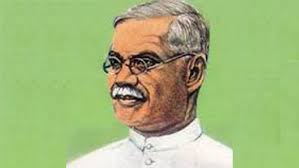
In memory of Anagarika Dharmapala, whose 152nd death anniversary
Dharma Hewamadduma
(Former Act Secretary Ministry of Health and Adl Secretary Ministry of Justice.) dharma.hmd@gmil.com
When he was born on Sept. 17, 1864 the Sinhalese had been deprived of their energy, confidence and spirit due to the colonial rule of the Portuguese, the Dutch and the British in that order for about 450 years but owing to his mission awakening the Sinhalese they were able to stand on their own feet moving among other nations of the world with pride and respect.
Born as the scion of famous businessman Muhandiram Don Karolis Hewavitharana of Hiththatiya, Matara and Mallika Hewavitharana and having received his education at S. Thomas’ College, Mt Lavinia, young Dharmapala (then Don David) joined the government service as a clerk, a respectable job a native could obtain at that time.
Instead of remaining in that position and later entering the much-coveted Ceylon Civil, an elitist circle among the Ceylonese, Dharmapala chose a mission for the cultural emancipation which inspired a weak willed nation to clamour for political liberation. After renouncing the luxurious life which he could have enjoyed fully he launched a mass reawakening movement.
Then, he resigned from the Public Service and came to associate erudite Buddhist scholars such as most Ven. Hikkaduwe Sri Sumangala, Col. Henry Steel Olcott and studied Buddhism and the oriental languages such as Pali, Sanskrit, Hindi etc. and dedicated himself to social service.
Dharmapala was as brave as a lion and had no fear or hesitation in his mission and with great effort and enthusiasm, burning midnight oil he explored the ways and means of achieving aspirations of the Sinhalese. His was a ‘One man Cultural Revolution’. His service to the nation was nonpareil because he did all this work not for his own benefit but purely for the benefit of the nation with an honest motive.
Initially, joined the Buddhist Theosophical Society headed by Col. Henry Steel Olcott and ‘The Sandaresa ’ and The Bauddhaya’ newspapers to jolt the Sinhalese into fighting for their rights.
His mission, however, was not confined to Sri Lanka. In 1891, after visiting the places of Buddhist worship in India he saw with his own eyes the sad state of the sacred places like Buddha Gaya, Saranath, Lumbini , Kusinara etc. deserted and pillaged.
Although there had been hundreds of millions of Buddhists during the days of the Buddha, Dharmapala noticed that the Indians no longer remembered the Buddha.
He was shocked to see the activities of heretic Mahantha and the deterioration of the Buddhist Order and determined himself to re-establish the Buddhist Order in India. Accordingly, he set up The Mahabodhi Society. As a result of his services to the religion and the Buddhist Order, after forty years, millions of Indians were able benefit from the teachings of the Enlightened One.
Dharmapala’s mission in India to revive Buddhism and conserved places of worship associated with the Buddha compares with the introduction of Buddhism here by Arahat Mahinda Maha Thera in the 3rd Century B.C. There was no one of the calibre of Emperor Chakkravarti Asok or Devanampiyatissa to help him with that stupendous task. He laboured against numerous odds.
He used his own mode of expression to handle and attack whoever in Sri Lanka or abroad when such persons behaved improperly. Once a so-called noble Englishman travelling with him in the first class compartment in a train sipped a glass of liquor and smoked a cigarette and sending rings of smoke much to the consternation of Dharmapala, who politely asked the white man to refrain from doing so, but to no avail. At his tether’s end, Dharmapala sprang to his feet and threw out the glass and the bottle of liquor out of the window of the train while roaring: "If you continue to act in this manner you too will be thrown out."
Another incident is etched indelibly in the minds of grateful Sri Lankans. He was summoned by the British Governor to the King’s House at 1.00 p.m. he had to wait for the Governor till 2.00 p.m. When the Governor came late he at once refused to stay with him. He thundered: "I lost my valuable time due to a fool like you who is not punctual. Therefore I do not want to have a word with you …" So, saying he walked away leaving the Governor red-faced.
He had to fight quite a battle to save Buddhagaya from the clutches of Mahantha. When his guardians at Buddhagaya were assaulted by unruly elements instigated by Mahanta he promptly resorted to legal action and launched an effective campaign to conscientize the world Buddhist population about the travails of Buddhists in India. With the help of the Indian National Congress, he succeeded in regaining the rightful place for the Buddhists in India.
When at the Chicago Parliament of World leaders of different faiths in 1893 he delivered an attractive and appealing lecture on Buddhism before a host of reputed intellectuals of the world and he was able to convert, to the amazement of everyone, a person from another religion to Buddhism.
On his return journey at Honolulu, where he met Madame John Foster after having a discussion on Buddhism she was so pleased to contribute lavishly for the propagation of Buddhism. On another occasion when he attended a religious festival abroad he met Madame Blavatsky, who also donated similar donation for the uplift of Buddhism.
Setting up Buddhist schools in place of Missionary schools, publishing newspapers such as ‘Bauddaya’ (The Buddhist) and 'The Mahabodhi', delivering lectures throughout the country, he began to arouse patriotism and religious conscience among the Sinhalese.
Due to the renaissance and reformation resulting from his activities many Buddhist leaders such as Ven. Walpola Rahula, Ven. Madihe Pannnaseha, Ven. Baddegama Wimalawansa, Ven. Bambarende Sri Seevalee, Ven. S. Mahinda, Prof. Gunapala Malalasekers, Henry Pedris, Piyadasa Sirisena, E.W. Adikaram, P. de S. Kularatna, Chandraratna Manawasingha, L.H. Metthananada launched a popular movement to bring about religious and cultural revival of the Sinhalese.
More than these services and the movement he started to awaken the Sinhalese and weaken the British domination, his forceful language coupled with his lion’s roar helped mobilise the masses and empower them.
"You Sinhalese people come forward to free the Buddhagaya! Do not always lie down as an idiot or a bull … Rise up! Do not wear bent combs on your head like buffalos! Discard English names and use Sinhala ones! Don’t imitate aliens! Always sit upright! Have self-respect! You Sinhala ladies wear the Osariya (Kandyan sarees) instead of long skirts like the Portuguese! If you are scared of aliens make a scarecrow of such persons and hit them!" Dharmapala’s lectures were replete with such exhortations.
Hurt by the movement launched by him as described above, anti national elements with a colonial mentality started a campaign of slinging mud and insulting him with the intension of demoralizing him.
They alleged that he always travelled all over the world to promote the business of his father’s company e.g. Don Carolis & Sons co. But the people did not believe them. Anybody who visits India, England, America, Germany, Japan, and Honolulu can experience the service rendered by him for the Buddhist order.
When he met Madame John Foster in 1928 she gave him Rs.391, 032 to be spent for the uplift of Buddhism and later an amount of Rs.86.000/- was added to it as interest .He received 1/5 from his father’s company Don Carolis & Sons Co. Ltd. as his share and with that money he established a Fund in his name for the propagation of Buddhism all over the world.
After spending his valuable time, funds and energy for the religion and the nation he received respect and recognition from other countries. But while he was under arrest in Calcutta Sir Ponnambalam Ramanathan he made a forceful speech behalf of the Sinhalese in the Legislative Council when the British were on a witch hunt against the Sinhalese following the 1915 riots.
When he received insults from such people he was thoroughly disgusted and said "… After sometime Sudda fellows (English people) will leave this country but they will create an alien, anti national class which will ruin the country even more gravely than how Suddas did it …" Today we see that his prediction has come true!
His disgust was so severe that, he ultimately said "… Due to my some previous Karmic force I had to live with such wicked people here. My wish is not to either be born in this country or even to die within this territory. After my death ungrateful people of this country will not even get an opportunity to see my dead body."
So saying Anagarika Dharmapala left for Dambadiva (India) and passed away at Isipathana. Those who went to bring his dead body could only bring his ashes to Sri Lanka.
Looking at the present scenario in the country one can say that the degeneration of the Sinhalese commenced from the date the Anagarika Dharmapala left this country. This state can be rectified on with the birth of a capable leader who is strong enough to awaken the nation in a state of stupor.
Grateful Sri Lankans will never forget their mentor, Anagarika Dharmapala, who accomplished his mission to inspire them with patriotism and morality similar to those of national heroes such as Dutugemunu, Gajaba, Dhatusena, Vijayaba, Perakumba, Rajasingha, who fought foreign invaders to protect this land. Without genuine heroes how can a nation survive?17 09 2016 - The Island
P4.02
Ven. Madihe Pannāsīha Mahanayaka Thera's concepts
Relating to Dhamma School Education
Ven. Siri Vajirārāmaye Nānasīha
The photograph was taken in early 1920s, Most Venerable Pelene Vajiranana Maha Thera (centre), Ven. Narada Thera (3rd from right), Ven. Kamburugamuwe Mahanama as Samanera (extreme right), in the first row standing is young Dudley Senanayake (2nd from left) and young J. R. Jayewardene (end from right). Young Bernard Soysa is also in the picture.
To mark the 13th death anniversary of the Most Venerable Madihe Pannāsīha Mahanayaka Thera a newly constructed four-storeyed building was dedicated to his memory on September 10th, 2016 at the Siri Vajiraramaya temple, Bambalapitiya on the guidance of the Most Venerable Tirikunamale Ananda Mahanayaka Thera, the current incumbent of Sri Vajiraramaya. The building, which is named 'Atipūjya Madihe Pannasiha Mahanāhimi Samaru Sadaham Pahaya', was declared open by the Maha Sangha including the Supreme Patriarch of the Sri Lanka Amarapura Mahanikaya, the Most Venerable Aggamahapandita Davuldena Gnānissara Mahanayaka Thera. It will house the senior section of the Siri Vajiraramaya Dhamma School.
"Our children are still very good" (Ape lamayi tavamat bohoma hondai) are words often uttered by the late Madihe Pannāsīha Mahanayaka Thera. He said so in all sincerity because he had immense faith in our children and youth for the future of our country. He considered the children and youth, if correctly motivated and handled, as the wealth of the country. Accordingly, the Most Venerable Mahanayaka Thera initiated many programmes to develop them from early childhood.
Training, he said, began at home as the parents are called the first teachers (pubbācariya). Hence, the concept he developed was that every home should be, virtually, a pre-school. The notion of a 'school' - pāsala brings to mind a formal type of education. He coined the term ladaru- gurusevana, with the teacher playing the role of an akka (sister) or nanda or punci-amma (aunt) in order that the children get the feeling that the pre-schools were mere extensions of their home environment.
Formal education starts with the admission of a child to a day school and later a Dhamma School. The Mahanayaka Thera used to remind that when children get admitted to schools, the parents in the olden days do not ask the Principal or Head master to provide a good education to the child; but, instead, the request was to help mould (hadala denna) the child to be a good person. Character formation was paramount and in this regard five principles were formulated by him as the aim of Dhamma school education. These five principles are as follows:-
1. Observe the five precepts always and endeavour to observe the Eight Precepts on Poya (full-moon) days;
2. Encourage to respect the Sangha, parents, teachers, and elders;
3. Train to lead a simple lifestyle and to promote good neighbourliness;
4. Develop restraint, good behaviour, and a sound knowledge of the Dhamma;
5. Produce a generation of students who are kindled by devotion to the Buddha-Dhamma, inspired by what is indigenous, motivated by national pride, and enlivened by a love for one's language.
These principles, according to him, should form the core of any Dhamma school education. More than theoretical book knowledge, the Dhamma schools, he believed, have the responsibility to nurture saddhā in the minds of the children, especially of those in the primary section. Intense confidence in the Buddha, Dhamma, and Sangha, which is saddhā, is referred as the seed (saddhā bījaṃ) that has to be planted with care and circumspection in order to ensure the healthy growth of a child.
'A healthy mind in a healthy body' is a very old dictum and the Most Venerable Mahanayaka Thera was fully appreciative of this. Hence, a scheme was worked out to provide every child attending the Dhamma School at the Maharagama, Siri Vajiranāna Dharmāyatanaya a glass of nutritious herbal porridge – kola-kanda. Today, there are over 7000 children attending that Dhamma School and one could imagine the magnitude of the operation.
Turunu Saviya meaning 'Youth Strength' was another important innovation of the late Mahanayaka Thera to harness youth strength for their betterment and that of the country. Even a handbook was prepared and published. In a way, it is an indigenising of the Boys Scouts movement to cater for and meet the needs of the country's teen-age population. The programme is implemented fully at the Siri Vajiranāna Dharmāyatana Dhamma School and could be emulated.
Both the President and the Prime Minister have emphasized on many occasions the need for a moral based education to our children. With my long term association in this regard, I wish to make two recommendations that could be implemented forthwith. First is to appoint a Special Committee with representatives of the Maha Sangha, the Ministry of Buddha Sasana and Ministry of Education and chaired by an erudite Maha Thera outside the Sasanarakshaka Mandalaya to harmonise the syllabi of the daily schools and the Dhamma schools for the teaching of Buddha Dhamma. In fact, this was a major recommendation of the Presidential Buddha Sasana Commission of 2002. The second is to prohibit the holding of Tuition classes until 2.00 pm on Sundays and on Full Moon days. The latter is of symbolic value because such an action by the State will give the right message regarding the concerns of the Government and its desire to uplift the moral values of our people.
It is very timely that a comprehensive programme of work based on the concepts articulated by the late Most Venerable Aggamahapandita Madihe Pannasiha Mahanayaka Thera and mentioned above is implemented for a better Sri Lanka. This would be the most fitting tribute to that towering personality. It is never too late.11 09 2016 - Sunday Island
P4.03
Vitalization of Buddhism and nationalism
The role of Piyadasa Sirisena (1875-1946) a birthday tribute – Part I
Jagath Savanadasa
A recent doctoral thesis on the role of an opinion builder during the British Colonial era forwarded to this writer for scrutiny, reveals the transformative influence Piyadasa Sirisena wielded in a non-formal struggle for independence during the first four decades of 1900.
The thesis examines that era closely and also focuses on the main resistance that proved to be a thorn in the British administration of Ceylon.
If you take one striking example of history of those dark years, the Sinhala-Muslim riots of 1915 stands out.
The riots spelt serious trouble to the then administration. The repressive action to deter it, led to deep dislike of the Britishers. Especially the way the Buddhist leaders were taken out of their homes and imprisoned and the imposition of Martial Law which normally is the most stringent and any violators of this harshest of all such legal enactments sentenced to death.
The Colonial Government, if history is examined in it true perspective, overreacted to the situation that originated in Kandy following the decision to divert the sacred Dalada Perehera, a pageant dear to Sinhala Buddhists for ages. What began as a relatively reasonable reaction, erupted into a degree of aggression against the Muslims who began the whole episode of demanding a change in the route of the Perahera, which passed a mosque.
This angered the Buddhists and they set forth to attack the Muslim shops, beginning with those in Kandy. The rioting spread to Colombo. It could have been stopped with the arrest of a few unruly elements. But instead the administration enforced Martial Law which was too extreme and harsh.
The ‘Dalada Perahera’ it needs to be stressed had been a vitally important and sacred Buddhist pageant. It is widely acknowledged as one of the greatest religious pageants in the world.
A trial-at-Bar before a three member bench of Judges was held with Sirisena in the dock, but he escaped the death penalty. His wife had put up a bold front in her evidence in support of his work. According to the thesis, the presiding judge was told that Sirisena was already (he was then only 40 years old) a rising nationalist and a leader of the movement against the British administration.
The head of the three judge bench perhaps was influenced by the view that Sirisena’s popularity amongst the indigenous people was high and that he should be punished to deter him in future.
Hundreds had gathered at the trial at bar in Hultsdorf., After sentencing to a prison term of two months, the thesis notes that the judge had shaken hands with Piyadasa Sirisena on his way out of court, an unusual gesture. Possibly the judge was impressed by Sirisena’s stature and his public image and in a way the judge acknowledged this fact.
The arrest of Buddhist leaders like D.S and F.R Senanayake, D.B Jayatilleke, Hewavitharana brothers and several others that included Piyadasa Sirisena aggravated an already angry Buddhist populous.
The 1915 riots proved to be a severe blow to the British Government since their rather brutal reaction was severely criticized by the Ceylonese leadership.
News of the entire episode had reached England and the Government was not happy about the way that the local administration had reacted to the situation.
History of British Colonial rule is full of excesses and the brute force the British had utilized in curbing opposition to their rule. Another such glaring example was Jallianwala Bagh massacre of innocent Indians by General Dyer who feared or misread the mood of the Indians who had gathered in peaceful protest. The river of blood of some 600 Indians killed caused huge protests and riots, turned the tide against British rule in India,and there was no turning back of the struggle to free India.
History influences Piyadasa Sirisena
How did Piyadasa Sirisena come to the forefront of the secondary force indeed the non-formal movement that evolved itself into a rising threat to the British administration? When we look at the post Kandyan Convention history (after 1815) the British it is evident began tightening their hold in the island. In this process two factors emerge. They initiated a two pronged approach to imposing their writ.One was to appease a segment of the populous which displeased another who unfortunately were the under privileged or the poorer of the two factions.
The English were past masters of divide and rule. They not only actively created class distinctions but also in a less discriminating manner paved the way for ethnic divide. This they did with singular success in India, but with disastrous consequences which led to millions of deaths.
A classic pattern of subjugation
The British administration in Ceylon also made use of yet another instrument of subjugation at their disposal. This was the Christian Missionaries whom they used with telling effect to conduct a campaign against Buddhism.
Yet in another respect the missionaries established numerous Catholic and Christian schools in the island which were well organized and had funding from the Church.
Ceylonese-Prisoners in their own land
Ceylon, before the conquest of this land by the three European powers had for centuries a culture and civilization of their own under their own kings. This civilization largely centered on a Buddhist way of life, while tolerating all other religions. A change to this traditional mode of existence took place with the forcible and intrusive entry into this land by foreign powers of which the last were the Britishers who ruled the longest.
With the alienation of a major segment of the population and the conversion of Buddhists into Christianity along with the propaganda waged to discredit Buddhism, there began grumblings of discontent in the Maritime Provinces. Around 1860 such discontent grew especially on account to repetitive anti-Buddhist publicity and misinformation from the Catholics in particular, who used a new and potent weapon, the print media for the purpose.
The Buddhists Clergy to the forefront
It is relevant to state that the emergence of the Sinhala and English print media in and around the mid 19th century was a land mark development and impacted on society of the time.The first Sinhala press began in distant Koggala at a time when printing was in its most primitive form. But it was highly praiseworthy that a pioneering Buddhist priest named Bullegama Dhammalankara established a small press with aid given by the King of Siam. This press published a tabloid named Lanka Loka in 1862. This was soon followed by yet another named ‘Lakmini Pahana’. Curiously the second named publication was at the outset pro-British but both these publications made history.
But to get back to the developments in countering anti Buddhist propaganda, it was the Buddhist clergy who took the lead to counteract it. Three leading monks of the time Ven. Migatuwatte Gunananda, Hikkaduwe Sri Sumangala and the Chief Priest of the Ambagawatte Temple were the leaders of the counter ‘war’ conducted to combat anti- Buddhist attacks. They used a visual medium of convincing power – posters that proved to be a major boost.
The Panadura Wadaya
By the 1870’s the Sinhalese Buddhists in the Western coastal areas began to join in the agitation against the Christian propagandists. The culmination of this combative and challenging situation was the Panadura Wadaya or the great Buddhist-Christian debate that took place in 1873, which was truly convulsive in its nature and ignited the sentiments of the Buddhists. The news of this ground-breaking event crossed the shores of this land and led to overseas interest. Deeply impressed by such Buddhist resistance an individual named (Colonel) Henry Steel Olcott an American entered into correspondence with Ven. Migettuwatte Gunananda
The subsequent path finding visit of Colonel Olcott to this country and his eventual role in pioneering Buddhist education is too well known to be repeated.
Angarika Dharmapala the great revivalist
Around the late 1800’s there came into prominence Angarika Dharmapala inarguably the greatest Buddhist revivalist of this land whose sustained endeavor in various parts of the country to awaken the Buddhists from their long and protracted slumber was unprecedented in its depth and strength.
Dharmapala also made representations to the rulers in England on the plight of the Sinhalese in the face of British transgressions of fairplay and justice. He probably made the British Government aware of the true situation facing the Sinhalese and the Buddhists. A similar protest missive was addressed to the British leaders in England by Sir Ponnambalam Ramanathan. Sir Ponnambalam one of the greatest Ceylonese of the time was actively conscious of the injustice of the British administration of this country and the suppressive atmosphere that prevailed.
Part 2 continued below.03 09 2016 - The Island
The role of Piyadasa Sirisena (1875-1946) a birthday tribute – Part 2

It was in this back drop of suppression and loss of freedom that Piyadasa Sirisena and his unique communication skills began to play a pervasive role in gradually changing the mindset of the mass of the Ceylonese. He was like a fresh wind that revived the masses. A modicum of resistance amongst the English educated elite too surfaced. They became more articulate and openly discussed self-governance. Indeed they ventured into publishing English newspapers around the mid 1850’s a decade before the first tabloid was published.Whilst one newspaper was supportive of the British government another opposed it. But it was moderate opposition.
Also in the meantime the wealthier of the Buddhists were openly supportive of Anagarika Dharmapala and his daring anti British activities.
Amongst this segment were those who had enriched themselves through coconut plantations, transportation of produce through the use of carts, manufacture of toddy, plumbago mining, the supply of labour to estates besides the production of Arrack.Radicalism
In more than one way Anagarika Dharmapala it could be rightly stated, though was a great Buddhist campaigner and a fearless leader of the Sinhalese,seemed inhibited with radical ideas and thoughts.
He expressed the view that the British rulers had virtually robbed the Ceylonese of the political, religious and economic and cultural rights.The British administration was increasingly aware that besides leading the masses, Dharmapala was also emerging as a formidable opponent of their rule. His rousing rhetoric and anti-government forays were a disturbing factor to them.
The wealthy business community of Buddhists were also aware that the British were against him and they began to desert him so as to safe-guard their own interests. This according to the thesis in question affected Dharmapala so much so that he left the country. But Dharmapala was the path finder and a great leader in taking this island towards the goal of self-rule and political emancipation.
Piyadasa Sirisena
Piyadasa Sirisena who was born nearly ten years after Dharmapala was deeply impressed with the role that Dharmpala was playing in the uplift of the defeated people of this country, and at a very young age he began to be a keen follower and admirer of his.
Sirisena’s career path makes interesting reading. He was obviously talented as also selflessly inclined towards the goal of restoring the lost heritage of this land. His earliest emergence into the limelight was through the expression of his thoughts in praise of Ceylon’s age old civilization, religion and culture.
Dharmapala whom he came into contact at a young age was conscious of the talent of this youth and appointed him a Sub Editor of the tabloid named‘The Buddhist’ which he published. But Sirisena’s first entry into the literary field was through yet another Sinhala publication called ‘Sarasavi Sandarasa’ which gave the initial opportunity to him in the demonstration of his inborn talent in writing.
This was the beginning of a remarkable career that helped revive, the spirit of the Sinhalese, that they were inheritors of a great civilization and culture.
His maiden novel which was first serialized in ‘Sarasavi Sandarasa’ in 1904 named Rosalyn and Jayatissa was a clear depiction of his innermost intentions. Though a romantic novelist was an interspersed with a clash of two cultures and was an attack of the harmful western influences that were eroding our society. It was in a crux anti-Christian in tenor and tone. Though two other Sinhala novelists emerged during the same era, it is Sirisena who is widely considered the father of the Sinhala novel on account of Rossalyn and Jayatissa and the subsequent literary works of his.
A three dimensional approach
Piyadasa Sirisena demonstrated his ability in literary skills in three directions, Poetry, novels and through his newspaper.
Midway in his career he was also involved with the other national leaders in speaking at anti-government agitational campaigns. Through this medium he was able to convince the masses of the need to restore national self-respect and pride.
Anti-Liquor drive
Besides the above-mentioned contributions of his, Piyadasa Sirisena also became a Temperance worker and indeed a flag-bearer of the Temperance movement in which both the formal and non-formal leaders of the drive for political emancipation pooled their resources for the good of the people of this land.
History clearly shows that the anti-liquor lobby had played an important role and combined effectively with formal leadershipto gain independence.
In the frontline it were D.S. Senanayake, F.R. Senanayake, Sir D.B. Jayatilleke, Dr. C.A Hewavitharana and others which ultimately led to independence from British rule in 1948.
Sinhala Jatiya
One of the most potent and influential Sinhala organs of resistance and anti-British sentiment was the newspaper Piyadasa Sirisena edited which he began publishing in 1903 as a tabloid.
But Piyadasa Sirisena did encounter financial difficulties in publishing the ‘Sinhala Jatiya’ regularly, despite the support of a growing Sinhala reading public.
By the mid 1920’s Sirisena’s image as a patriot and nationalist was firmly established. He regularly interacted with the national leaders particularly with the Senanayake’s of Botale which family was in the forefront of both the formal and informal struggle for independence and the Buddhist revival.
Piyadasa Sirisena, historians were of the view was also one of the founders of the Sinhala Maha Saba which Professor Viswa Warnapala states presaged political formation in this country.
Prodigious output of literary work
Piyadasa Sirisena authored 20 novels some of which sold thousands of copies.Indeed Rosalyn and Jayatissa sold more than 35,000 copies which remains a record unmatched in this country.
He was also the first in this country to publish detective stories in Sinhala which were very popular among the literate Sinhala of the time, besides several books of poems.
This is quite apart from the newspapers and magazines he edited from time to time.
Though in later years the Peradeniya intellectuals like Prof. Ediweera Saratchandra did not consider Sirisena to be a great novelist, there was another segment which had a different view. Among them were Dr. Gunadasa Amarasekera and Prof. Nandasena Ratnapala two prominent literary personalities.
The thesis referred to express the view that Sirisena’s friendship with D.S. Senanayake was one factor which caused a sense of dislike among the so called intellectuals. Many of the leaders of the Peradeniya faction were left oriented indeed some of them were dyed-in- the wool Marxists. Piyadasa Sirisena did not like Marxism and openly stated this on many an occasion. Sirisena’s alignment with the rightist political leaders of the time was possibly a bone of contention with the Peradeniya school.
In a book titled ‘Nosalena Kadapath’ (published 2008) Dr. Amarasekera notes the significant inspiration Sirisena provided to this nation and its people through his novels during the Colonial era.
In retrospect Piyadasa Sirisena was indeed a great opinion builder whose inspiration was of vital importance in the nation’s drive towards independence. Though Prof. Saratchandra did not consider Piyadasa Sirisena a great novelist but he did concede that he was a giant in Ceylon’s freedom struggle. This is indeed a tribute of noteworthy and lasting value from the greatest dramatist of our time.
Perhaps it is good to end this essay with the words of the father of the nation D.S. Senanayake who in his funeral oration stated that Piyadasa Sirisena died when this nation was nearing the gates of freedom for which he had made many a sacrifice and nearly lost his life in the process.10 09 2016 – The Island
P4.04
Piyadasa Sirisena - A clarifying reply
G.A.D. Sirimal
I believe the Neil Perera, who has written the above captioned letter is the same one who called me his ‘ Nodding Friend‘ has stated, recollecting from memory ‘The procession proceeded along the traditional route and when they came to the junction where the mosque was situated, the police had requested them to take another route. The Buddhist leaders who were present held a short meeting and decided, come what may, to proceed on the traditional route past the mosque. Several started to throw stones….’
In reality the Buddhist – Muslim conflict started in Gampola in 1913, where a dispute arose between the Indian Moors and Buddhist temple authorities of Wallahagoda Dewale. The Indian Moors had objected the Buddhist Perahara passing the mosque with music. The Buddhist authorities had agreed to alter the time and day of the procession to avoid any disruption of worship. Yet the Indian Moors had refused and representations had been made to the local judiciary. Two years or so later, on the night of 28th May 1915, a Buddhist procession with music, on a Police permit authorizing it, was proceeding along Castle Hill Street, Kandy when it was opposed by Indian Moors who objected to the procession passing the mosque. From there onwards the riot spread to other villages and engulfed the entire island. Here I must mention I am from a village called Karahandungala, at Nawalapitiya, a predominantly Muslim populated village. My father told me, although there were troubles in the town, our house was protected from any attacks by our neighbours’ who were Muslims.
The Colonial rulers – British Governor, had engaged the army comprising Indian Panjabi soldiers to curb the riots, and it is my view, that as Punjabis were Muslims they may have been ruthless in handling the Buddhists. This high handed action of the Colonial Rulers was condemned by Tamil leaders of the stature of Sir Ponnambalam Ramanathan, who fearlessly supported the Sinhala Buddhists. It is during this time that the Senanayakas, W.A. de Silva, D.B. Jayatilaka and host of other Buddhist leaders were charged for treason and Captain Henry Pedris was found guilty and executed by a firing squad. With such atrocities which could not be tolerated any further, a secret memorandum drafted by Sir James Peiris to the Secretary of State for the Colonies, pleading to repeal of the Martial Law, describing the atrocities committed by the authorities was carried in the soles of the shoes by E.W. Perera, a famous lawyer, and successfully convinced Colonial rulers; and as a result Governor Chalmers and also the Brigadier who carried out the operations were removed and transferred. This gave rise to a national feeling, which led to the fight for Independence. The balance is known history.
This is a brief account as far I have read and heard, subject to correction.13 09 2016 - The Island
P4.05
Sri Lanka, ambassador for Buddhism over the years
Randima Attygalle
Henry Olcott and Madame Blavatsky: Architects of the Buddhist Theosophical Society of Ceylon
The universally relevant Buddhist prayer, sabbe satta bhavanthu sukhitatta (may all living beings be happy) transcending religious and ethnic barriers expounded by Lord Buddha 2600 years ago, has remained valid to this date as Sri Lanka prepares to host the 14th UN Vesak Day celebrations on the theme of ‘Buddhist Teachings for Social Justice and Sustainable World Peace’. The notions of social justice and sustainable world peace which could only be attained through virtuous human behaviour had been proliferated in the Noble Eight-fold path and suttas such as Vasettha Sutta which articulates that mankind is biologically the same and divisions in human society are mere classifications. The Kanhakatthala Sutta states that when people are given equal opportunities irrespective of their caste, creed or other social parameters, they will perform equally well.
Sri Lanka’s contribution to world Buddhism spanning 23 centuries, is shaped by multiple events and individuals who became catalysts in the revival of the Buddhist tradition since the time of our ancient monarchs to more contemporary Buddhist scholars, philosophers and statesmen. Buddhist scholar Dr. Ananda W.P. Guruge delivering a lecture in 2015 (the first in a series of public lectures to mark the 2600 Sambuddhatva Jayanti) titled, ‘Sri Lanka’s role in the spread of Buddhism in the world’ notes: “In no other country has Buddhism had an unbroken presence extending to over twenty-three centuries.”
Elucidating on the significance of this year’s Vesak celebrations, Prof. Asanga Tilakaratne, from the Department of Pali and Buddhist Studies, University of Colombo and committee member, UN Vesak 2017, says: “It is an expression of Sri Lanka joining the world Buddhist network in a very big way and as a host country of this year’s UN celebrations, it’s particularly of significance to us as the call for Vesak to be accepted by the United Nations General Assembly (UNGA) in 1999 came from Sri Lanka when the former Minister of Foreign Affairs, Lakshman Kadirgamar, tabled a proposal at the UNGA requesting for the adaptation of Vesak Day and at the 79th Plenary Meeting of the UNGA on 15th December in the same year.”
The Vesak Day resolution was adopted as 54/115 on December 15, 1999 and implemented for the first time in 2000 at the UN Headquarters in New York with the representatives of 34 countries. In 2016, the Vesak Day was declared as an ‘Optional Holiday’ by the UN for the first time. “This year as the host country of UN celebrations, we will be lobbying again for Vesak to be a UN declared international holiday in keeping with what the late visionary leader championed,” notes Prof. Tilakaratne.
Ven. Welivita Saranankara Thera: Played key role to re-establish Upasampada here
The seeds of contemporary Buddhist revival in the country as the Buddhist scholar explains, were sown as far back as the mid 18th century. “Although many trace its beginnings to the arrival of Theosophists, Colonel Henry Steele Olcott and later Anagarika Dharmapala who was greatly influenced by the former, the Buddhist revival during colonial rule can be traced back to the times of Ven. Welivita Saranankara Thera who persuaded King Sri Vijaya Rajasinha to bring monks from Thailand to re-establish Upasampada or higher ordination in the country.” Welivita Saranankara Thera worked to reform the Sangha by resuming practices such as pinda patha (alms begging) and his followers were called Silwath samagama or the company of pious ones. The reforms of the learned Buddhist monk also led to the founding of Siyam Nikaya with its headquarters in the Kandyan monastries of Malwatta and Asgiriya.
The founding of Parama Dhamma Chethiya Pirivena, Ratmalana in 1845 was another milestone during this period, followed by Vidyodaya and Vidyalankara pirivenas as Buddhist institutions of higher studies. “The establishment of Dodanduwa School for both Buddhist girls and boys by Dodanduwe Piyaratanatissa Thera long before the Buddhist Theosophical Society of Ceylon initiated several Buddhist schools, speaks of the progressive mindedness of our learned monks. It also mirrors the fact that equal education for men and women was never a taboo in our country,” observes Prof. Tilakaratne.
The middle and late 19th centuries saw a revival in Buddhism led by a new elite emerging under the colonial system and intelligentsia comprising both laymen and the clergy. It is also interesting to note that some of this intelligentsia were educated in Christian missionary schools. The series of public debates between Buddhist monks and Christian priests held between 1860 and 1870, among which Panaduravadaya led by Migettuwatte (Mohottiwatte) Gunananda is well known, also fuelled a newfound zest to revive the traditions.The establishment of the Buddhist Theosophical Society of Ceylon by Colonel Henry Olcott and Madame Blavatsky was a turning point as this became a voice for the Sinhala Buddhists. “Since the architects of this society and later their follower, Anagarika Dharmapala were fluent English speakers, they could lobby for the Buddhist interests in this country, by being heard by the British rulers,” says the scholar who cites the feats such as gaining recognition for Vesak as a national holiday for the first time and creating a Buddhist flag, facilitated by this forum.
Prof. Asanga Tilakaratne
The Pali-English Dictionary which was published in London in 1875 by Robert Childers, based on the lexicographical work of Waskaduwe Sri Subhuti Nayaka Thera further gave Buddhism the international drive. The lay organisations which rose in the country including the Maha Bodhi Society, the Young Men’s Buddhist Association (YMBA), All Ceylon Buddhist Congress and World Fellowship in Buddhism (WFB) which was the brainchild of Prof. G.P. Malalasekera also propelled Buddhism to gain international attention. The Buddha Jayanthi celebrations of 1956 also became a turning point.
“Over centuries as a nation we have been global ambassadors of Buddhism in diverse capacities and this year’s celebration of UN Vesak as a host country is a means of reaffirming it and taking the sublime message of Dhamma to the entire world,” reflects Prof. Tilakaratne who notes that the time had come to make Buddhist philosophy present in every aspect of governance including economic, environmental and social planning. “A culture is never underdeveloped. It’s the human being who becomes underdeveloped due to his lack of will to do the correct thing, to make correct decisions on behalf of fellow human beings. Buddhism guides anyone to make wise decisions and choices,” he adds.sundaytimes.lk/170507
P4.06
Anagarika Dharmapala: A True Visionary
Ven. Aggamaha Pandita Dr. Walpola Piyananda offers some little known facts on the Anagarika
Buddhism in the 21st century is indebted to the visionary work of Anagarika Dharmapala. Visiting the temple at Bodh Gaya and the Sri Maha Bodhi tree in India he was appalled by the sorry state of those holy sites and he dedicated his life’s work to the preservation of the places where the Buddha lived and taught. He was also responsible for the establishment of the Pali Language Department at Calcutta University and he tirelessly propagated the Buddha’s teaching around the world.
Anagarika Dharmapala had the ability to foresee the necessary developments to insure the health and well-being of the Dhamma in the future. He saw four that would keep the Buddhasasana strong and enable to grow.
Firstly, in our Theravada tradition, in order to fully study the teachings of the Buddha, an in-depth understanding of the Pali language is necessary. With this knowledge the deeper meanings and subtle nuances of the Buddha’s actual words are illuminated. Dharmapala realized the importance of the study of Pali when he was young. At that time there were no formal academic studies of this ancient tongue at the university level. In 1907 Dharmapala worked hard to persuade the Indian education minister Vice Chancellor Dr. Asutosh Mookerjee in Kolkata to establish the first Pali Studies Department at Calcutta University. He made arrangements for Pali scholars from Sri Lanka to staff this newly formed department. The first monk to teach in this department was Ven. Suriyagoda Sumangala. The Pali department educated such noteworthy Indian scholars as Dr. Nalinaksha Dutta, Dr. Sukumar Dutta, Dr. B.C. Law, Dr. B.M. Baruwa, Dr. Anukul Chandra Banarje, and Dr. Dipak Baruwa. Sri Lankan scholars were Ven. Dr. Walpola Rahula, Dr. D.A. Hettiarachchi, Dr. Wimalananda Tennakoon and Dr. Siripala Leelaratne. From Calcutta University, these scholars took Pali studies to New Delhi, Varanasi, London, and Sri Lanka – and eventually to colleges and universities around the world. Many scholars benefitted from what Dharmapala established – including me, since I also studied Pali at Calcutta University when I was a young monk.
Dharmapala also arranged for Indian laypeople to go to Sri Lanka to study and be ordained as monks: Rahul Sasrithayayar, Shanta Shastree and Ananda Kushalyana. The Indian monks were Ven. Bengali Buddharakkhita, Bihari Dhammarakkhita, and Jagadepa Kassapa. Sri Lankan monks were Metiwala Sagaratana, Uruwala Dhammaratana, Udakandawala Saranankara Dhammajothi were novices who went to India to study with their teachers and became monks. Dharmapala’s student, a British man, became Ven. Sangharakkhita and was the editor of the Maha Bodhi Magazine. As a Buddhist minister he later started the Western Buddhist Order in England. His ministers teach and perform many social welfare activities around the world.
Secondly, Anagarika Dharmapala had the inspiration to visit the political leaders of the Buddhist countries of Tibet, Bhutan, Sikkim, and Sri Lanka. He pleaded with them to have their children study English, science, and other subjects in schools abroad – and upon their return teach in their native lands. He advised the leaders not to allow missionaries to invade their countries and convert the young people to Christianity. He knew from experience such indoctrination would destroy Buddhist values and undermine their national culture.
Dharmapala learned this lesson from personally observing what had happened in Sri Lanka. It was a Buddhist country for nearly two thousand years where the weight of four hundred years of British colonialism and their Christian missionaries caused the Sasana to decline. At the end of the 19th century Buddhism was on the verge of extinction in Sri Lanka when Anagarika Dharmapala and his American mentor, Col. Henry S. Olcott, stepped in to save the day at the end. They traveled throughout Sri Lanka raising money to establish Buddhist schools to strengthen the peoples’ confidence in their native traditions.
Thirdly, Anagarika Dharmapala urged the re-establishment of the Bhikkhuni Order in the various Buddhist countries where it had ceased to exist; he wrote extensively of this in his published diaries. He once said, "Buddhism should utilize the services of Datasil Mata and Bhikkhunis to propagate the Dhamma, and to spread the Buddhist life around the world."
It wasn’t until decades after his death that this sage advice was taken to heart and now Theravada Bhikkhunis are thriving in the United States, Europe, and other countries of the Western world – as well as in Sri Lanka. The contributions of bhikkhunis to the societies in which they live are numerous. They provide instruction in meditation and the Dhamma. They offer valuable social services for their local communities strengthening the bonds between Buddhist lay people and the Sangha. I am very proud that I myself had a hand in reinvigorating the custom of Bhikkhuni ordination in Sri Lanka and transplanting it to the United States.
A story told to me by one of my teachers, Ven. Ananda Maitreya Maha Nakake Thero is an example of Anagarika Dharmapala’s innovative way to strengthen Buddhasasana. Ven. Ananda Maitreya was a teacher at Ananda College in Colombo, Sri Lanka when Dharmapala came to his room for a visit. Ven. Ananda was a sitar player, but he played in secret, knowing that music was frowned upon by the conservative elements of Buddhist society. Dharmapala saw his sitar case under the bed and asked if he played the instrument. Ven. Ananda replied sheepishly that yes, he did play it sometimes, but very poorly. Dharmapala replied, "Then you must learn to play it well! Music can be an extremely effective vehicle for propagating Buddhism. Songs with Dharma themes can be composed and performed with devotion influencing and elevating the hearts and minds of a multitude of listeners – now and in the future."
Finally, Anagarika Dharmapala’s promotion of the healing properties of the Buddhist Dharma strengthened the Buddhasasana. One of the Buddha’s titles was the Medicine Buddha, for the help he gave to people in alleviating their pain and suffering. He and his friend, Swami Vivekananda of India attended the World Parliament of Religion in Chicago in 1888. Dharmapala and Vivekananda were invited by the Rockefeller and Foster families to visit for a healing. Vivekananda channeled energy to heal a member of the Rockefeller family. In Hawaii, Dharmapala used the energy of Metta to heal Mrs. Mary Foster, who became his benefactor. Dharmapala knew that the Buddha used Metta to accomplish healings and understood that the energy of Metta was the most potent force in the Universe.
In summary, Buddhism wouldn’t be the same today if it wasn’t for the foresight, vision, and dedication of Anagarika Dharmapala. His ability to see beyond the present moment shaped the future course of the Sasana, and it still guides and shapes it today.17 09 2017 - Sun Island
P4.07
Visakha: The Chief Female Benefactor of the Buddha
Dr. Asoka Bandarage
This essay is written in celebration of the centenary of my alma mater, Visakha Vidyalaya, the renowned Buddhist girls’ school in Colombo, founded by Mrs. Jeramias Dias and named after the chief female benefactor of the Buddha.
The Buddha remarked, "Visakha stands out foremost among my women lay supporters… of the Order."1 The generosity (dana) of royal and wealthy patrons such as Visakha and Anathapindika, the Buddha’s chief male lay disciple, contributed greatly to the preservation and spread of the Buddha’s teachings (Dhamma) over the centuries. In light of contemporary debates over such concerns as the ethics of wealth and the roles of women, it is inspiring to reflect upon the life of Visakha, the great Dhamma practitioner who was the Buddha’s chief benefactress.
Visakha was born into a wealthy family in the Maghada kingdom and grew up in Saketa, a lovely city built by her father near Savatthi, located in the Kosala kingdom. In Savatthi, she married into a family of great wealth. In addition to her riches, Visakha was renowned for her beauty, charm, poise, and physical strength. She possessed the five maidenly attributes of beauty – exquisite hair, teeth, skin, youth, and form – that her husband Punnavaddhana had required of his bride. After marriage, Visakha gave birth to ten sons and ten daughters, who in turn gave birth to a great many grandchildren and great grandchildren.
Visakha was an exemplary wife and mother, and a compassionate caretaker of animals. She was also a person of wisdom, kindness, generosity, and other attributes of inner beauty. Though she lived in a patriarchal society, Visakha maintained her own independent business and was known for her managerial and communication skills. Among all of Visakha’s virtues, most noteworthy was her devotion and support for the Buddha and the sangha – the monastic community of monks (bhikkhus) and nuns (bhikkhunis).
Visakha first met the Buddha, listened to his teachings, and entered the path of the Dhamma when she was just seven years old. From then on, until her death at the age of 120, she used her wealth and talents to tirelessly and generously serve the sangha. Visakha’s father-in-law Migara was a devout disciple of the Niganthas, a sect of naked ascetics. The story of how she convinced him to accept the Buddha’s teachings attest to her sense of humor, intelligence, and audacity.
One day, a Buddhist monk came to Migara’s doorstep as he was eating out of a golden bowl and Migara refused to offer him any food. Embarrassed, Visakha said to the monk, "Pass by, Venerable Sir, my father-in-law eats stale food." The enraged Migara demanded an explanation. In her calm voice, Visakha explained that Migara was eating the benefits of his past good deeds without doing anything to accrue further merit. Visakha also said that, given her unshakeable faith in the teachings of the Buddha, she did not feel comfortable living in a house where monks were not welcome. If she did not get permission to invite the monks to the house, she would leave.
Reluctantly, Migara agreed to invite the Buddha and the monks to a meal at his house. When he heard the Buddha’s discourse at the end of the meal, Migara entered the Dhamma path. He expressed gratitude to his daughter-in-law for helping give birth to his spiritual liberation and declared that henceforth Visakha would be like a mother to him. Thus, Visakha came to be known as Mother Visakha or Migaramata, the mother of Migara. In time, she built the magnificent Pubbarama (Eastern Monastery) and donated it to the sangha. The monastery came to be known as Migaramatupasada, the terraced abode of Migara’s mother.
Visakha always tended vigilantly to the well-being of the sangha, attending to the needs of both monks and nuns. She requested the Buddha to grant her eight boons. As long as she lived, she wished to give robes to monks during the rainy season, rice gruel to the monks daily, meals to monks who entered Savatthi, meals to monks who left the city, meals to sick monks, medicine for sick monks, meals for monks tending the sick, and clothes for nuns to wear while bathing. The Buddha granted Visakha these eight boons when she disclosed her pure intention. Her request was not motivated by self-promotion. Instead, she wished to develop the five spiritual faculties (pancha indriya) – faith, energy, mindfulness, concentration, and wisdom – and the seven factors of enlightenment (sapta bhojanga) – mindfulness, keen investigation, energy, joy, tranquility, concentration, and equanimity.
As the leading female disciple of the Buddha, Visakha played an influential role in activities pertaining to the sangha. A number of monastic precepts were promulgated due to her intervention. For example, she questioned those monks who refused to ordain novices during the rainy season. She told the Buddha, "The Dhamma is timeless. There is no time when the Dhamma cannot be followed." Thereafter, the Buddha allowed ordination during the rainy season. Visakha played a especially important role in managing the bhikkhuni sangha. Sometimes the Buddha allowed her to settle disputes among the nuns. Some precepts for the nuns were set forth on her advice.
The story of how Pubbarama came to be built is fascinating. One day, while Visakha was listening to a Dhamma discourse at Jetavana Monastery, built by Anathapindika in Savatthi, she set aside a valuable jeweled cloak that was part of her bridal jewelry and forgot it there. When she discovered the loss, she refused to take it back and instead sought to auction it off to raise money to support the sangha. When she could not find anyone in the whole of Savatthi with the means to buy her expensive cloak, worth some 90 million pieces of gold, Visakha bought it back herself. With that money and an additional 180 million, she bought land and built Pubbarama at the eastern gate of Savatthi. The building had two floors, with 500 rooms on each floor, and a pinnacle of solid gold at the top that could hold 60 water pots. It is said that the building was very tastefully furnished and completely carpeted. Pubbarama was donated to the sangha in the 31st year after the Buddha’s awakening.
On the day that Visakha dedicated Pubbarama to the sangha, she circumambulated the monastery with her children and grandchildren, singing elatedly. Seeing this unusual behavior, some monks asked the Buddha whether Visakha had lost her mind. The Buddha responded that Visakha had not lost her mind; she was simply reciting some verses of exultation over the fulfillment of her aspirations in past and present existences. The Buddha then spoke a verse extolling the merits of putting one’s resources and abilities to good use. This well-known verse is known as "Visakha Vatthu":
Just as from a collection of flowers many garlands can be made by an expert florist, so also, with wealth, faith, and generosity, one who is subject to birth and death can do much good.
Pubbarama is mentioned frequently in the Buddhist texts. The Buddha spent many rainy seasons there during the last 25 years of his life and delivered many important discourses. In the Agganna Sutta, which was delivered to two brahmins, the Buddha refuted caste ideology. He explained how humans became bound to the wheel of samsara life after life and how the practice of Dhamma, which is universal, allows anyone from the four castes to attain enlightenment. It was also at Pubbarama that the Buddha gave permission for the patimokkha, the basic code of conduct for the sangha, to be recited in his absence.
One full-moon night, while the Buddha was residing at Pubharama and the kaumudi white lily was in bloom, the Buddha delivered the Anapanasati Sutta to a vast community of silent monks. In this discourse, which is central to the Buddha’s teaching of meditation, he explained mindfulness of breathing in detail:
O bhikkhus, the full awareness of breathing, if developed and practiced continuously, will be rewarding and bring great advantages. It will lead to success in practicing the Four Establishments of Mindfulness. If the method of the Four Establishments of Mindfulness is developed and practiced continuously, it will lead to success in the practice of the Seven Factors of Awaking. The Seven Factors of Awakening, if developed and practiced continuously, will give rise to understanding and liberation of the mind.3
Over time, due to a confluence of factors, Buddhist teachings and culture disappeared from India. These factors included internal dissension, loss of patronage from the royalty and wealthy donors such as Visakha and Anathapindika, the revival of Brahmanism, and Muslim invasions. Like most other Buddhist monasteries and sacred sites, Pubbarama was destroyed. Thanks to the pillars built by Emperor Asoka in 3 BC, important Buddhist sites throughout the Indian subcontinent can still be identified.
The ruins of Pubbarama and the stupa that houses Mother Visakha’s ashes are yet to be excavated. Ironically, today what now marks Pubbarama, the site where the Buddha spoke out against caste ideology and taught mindfulness of breathing, is a broken Asokan pillar in the shape of a Shiva lingam, worshiped by Hindu villagers. Appreciation and respect for Visakha’s contribution to human spiritual advancement calls for the excavation and restoration of Pubbarama by the Indian authorities, with the support of the international Buddhist community.
Sakyadhita (International Association of Buddhist Women) Newsletter
1. Anguttara Nikaya 1, chap.14.
2. Dhammapada, verse 53.
3. Anapanasati Sutta, Majjhima Nikaya 118.10 12 2017 - Sunday Island
P4.08
Ratmalane Sri Dharmarama Nayaka Thero
The centennial celebrations of a great scholar
Prof. K.N.O. Dharmadasa
The second principal of the Vidyalankara Pirivena, the scholar monk who raised the institution to national and international fame, Ratmalane Sri Dhammarama Nayaka Thero (1853 – 1918) passed away on the 3rd of May 1918. All Sinhala scholars owe a debt of gratitude to this great scholar for the contributions he has made to the field of Sinhala scholarship to facilitate the growth of Sinhala writing and to explicate many of the problematic areas of Sinhala usage. His was an extremely dedicated life which was completely dedicated to the pursuit of knowledge and to the imparting of this knowledge to the students who sought it. Quoting the late Kiriwattuduwe Sri Pannasara Nayaka Thero, one of Sri Drarmarama Thero’s students at Vidyalankara, who was later to be a Principal of the institution, Martin Wickramasinge places on record these memorable words of the worthy student:
"I can recall how the venerable thero (Sri Dhammarama) even while lying down in the sick –bed was imparting knowledge to us from two pm in afternoon to eight PM in the night. His great qualities were strict punctuality, offering his criticisms without fear or favour, respecting free and independent ideas, extreme devotion for the teachers and the cultivation `scholarship were The characteristic features of his personality Continuing his eulogy of Sri Dharmarama Nayaka Thero, Wickramasinghe adds that as a young man he learnt the rudiments of classical Sinhala grammar by reading Dharmarama Thero’s Sidat Sangara Sannaya, one of the most well-known aides to the study of this basic text which is held in great esteem even today after over a century of its publication. Furthermore Wickramasinghe writes that he was able to understand the problems associated with the use of Sinhala orthography after going through the explanations given by the Nayaka Thero about traditional rules of Sinhala spelling. Yet there were some points of controversy. The scholars of the Vidyodaya Pirivena tradition (which was the other great seat of Oriental learning at the time) held different views on some of the rules followed by the Vdyalankara School (following the lead given by Dharmarama Thero). In the year 1902 there was a debate on some of these points which was published in the newspaper Sarasavi Sandaresa. Be that as it may, Dharmarama Thero goes down in history as the scholar who waded through the Sinhala classics and came out with a reasonable explanation about the rules governing the use of Sinhala letters. This was a prime need at a time when the Sinhala language was entering a period of mass scale printing and the printers had to follow clear usages with regard to orthography.
As scholars of modern Sri Lankan history are aware, the second half of the 19th century saw the emergence of a cultural revival where Sinhala scholars, both laymen and Buddhist monks sought to revive the traditions of learning and scholarship that had gone into decline during the preceding centuries of foreign invasion and the civil strife they brought in their wake. One of earliest scholars who recognized the need to disseminate existing knowledge of the scholarly tradition to energetic young monks was Walane Siddhartha Thero (1811 – 1868) who established an institution of Oriental learning in Ratmalana in 1843. Two of his brilliant pupils. Hikkaduwe Sumangala Nayaka Thero (1826 – 191) and Ratmalane Dhammaloka Thero (1826 – 1887) in turn founded two seats of Oriental learning, the Vidyodaya Pirivena (1873) and the Vidyalankara Pirivena (1875) respectively in the very suburbs of Colombo. These Pirivenas attracted many young men both lay and clerical who were taught the best traditions in scholarship in the fields of Sinhala, Pali , Sanskrit and Buddhist studies .These two institutions were so successful in their mission that in a few decades, offshoots of these institutions came to be established in many parts of the island so that, as reported by the Report of the Director of Education , by the year 1917 there were 62 well established Pirivenas in various parts of the island.
The early Days of Vidyalankara
The beginnings of the Vidyalankara Pirivena, set up in a small cadjan thatched building were very modest. When Dhammaloka Thero founded this institution, he had with him his star pupil Dharmarama Thero. Dharmarama Thero had been born in Kalapaluwawa , a village close to Colombo and had been sent to Dhammaloka Thero by a benefactor who recognized the talents of the young monk. Dhammarama Thero fulfilled the expectations of all concerned and became a highly erudite monk. When he obtained his (upasmpada) Higher Ordination from Malvatte Vihara, the headquarters of the Siyam Nikaya, he had made such a good impression on the senior monks who sat on the interview board that he was given special honours by them.. Returning to his temple the Purana Viharaya of Ratmalana with his teacher, he stayed there imparting knowledge to those who came as students. Dharmarama Thero made a special name as an exponent of the Dhamma. The fame of the teacher and pupil spread in the area and they were invited often to spend the Vas season (rain retreat) especially because of the preaching talents of Dharmarama Thero. As the story of the Vidyalankara Pirivena goes, Dhammaloka Thero and Dharmarama Thero had spent the Vas season in Peliyagoda on the invitation of some Dayakas and it is said that recognizing the benefits of establishing a seat of Buddhist learning in their area, the Dayakas invited the teacher and pupil to be their mentors when it was established. The two Theros agreed and the institution was founded in the following year(1875). There is a moving account of the early years in an article which appeared in the journal Prabhashodhaya in 1937 . (I translate)
The two Theros, teacher and pupil started teaching in a cadjan thatched hut built in a Partly cleared piece of land not very far from the city of Colombo. The hut was almost full with the beds in which the two Theros slept in the night. Adjoining this hut was a smaller cadjan thatched hut where the teaching was conducted. In a corner was a couch where the teacher was to sit and in front of it was a row of benches for the students. Old robes were folded and used as cushioning. This is an ancient custom dating from the days of the Buddha. The two monks who, following the admonitions of the Master, were happy with whatever they got and were not moved by praise or criticism. They started teaching their pupils - laymen and monks in these two huts. Teaching was done in the mornings and afternoons till nightfall. The benign service rendered by the two Theros was reciprocated by the pupils with much appreciation and devotion."
While reading that account there are some crucial facts we have to keep in mind about the time when this seat of learning was established. As the writer of that article reminds us sixty two years after the incident "It was a an inauspicious era in which knowledge of ethics and good counsel were not much known, a time when books were rare, a time when true facts of Dhamma were adulterated and the darkness of ignorance spread far and wide that the teacher Ratmalane Dhammaloka Thero who was verily an embodiment of compassion, together with his pupil Ratmalane Dharmarama Thero, established the Vidyalankara Pirivena in Peliyagoda. Special mention is necessary about the paucity of texts for study. The editing and bringing out in print the ancient classics, Sinhala , Pali and Sanskrit started only a few decades earlier still had only a few of the classics had printed. Most probably, they were using palm leaf manuscripts and several had to share one manuscript in studying them.
Editing Classical Texts
One of the earliest texts to be edited and printed was the 13th century Sinhala grammar the Sidat Sangarava, which was still the standard grammar when it came to writing. While there were several earlier editions, Daharmarama Thero decided that a more detailed explanation of the rules of grammar was necessary and brought out his own companion to the study of the Sidat Sanagarava known as Sidat Sangara Vistara Sannaya in 1902. Before that Dharmarama Thero had brought out a part of the massive Pansiya Panas Jataka Potha in 1883. the 13th century Sinhala classic the Dharmapradipikava, which was a Parikatha (explanation of selected words) of the Pali Mahabodhivamsain 1886; the Mahabodhivamsa Grathipada Vivaranaya of the 12th century was edited and printed later in 1910. Editing ancient manuscripts for printing was a laborious process. The palm-leaf manuscripts usually hidden away in temple libraries were sometimes partly destroyed by elements because some of those who were in charge of these libraries, did not know the value of the manuscripts. As for the manuscripts very often they were bad copies of the originals. Being copied from time to time over the ages, mistakes had crept in so that if one compared several manuscripts, one found them disagreeing with each other in some sections. An editor therefore had to have a sound knowledge of the language of the particular time when the original work was compiled. He had to compare several manuscripts and using his discretion he had to select the most appropriate words and passages that would appear as the original work. Dharmarama Thero was an expert when it came to the task of editing manuscripts for publication. Therefore his editions of the Dharmapradipikava and Selalihini Sandesaya (1908) along with his edition of the Pancika Pradipaya (1896) are considered standard works by scholars even today. The last mentioned work was compiled by the famous scholar Totagamuve Sri Rahula Thero in the 15th century. Dharmarama Thero mentions in his long Introduction to this edition ,that Sri Rahula Thero had consulted 80 works, in Pali and Sanskrit to compile this work of 167 pages. As mentioned by Dharmarama Thero he consulted almost all of those 80 books in arriving at a correct version of the text. This feat alone is enough testimony to the editors capacity as a scholar in Pali, Sanskrit and Sinhala.
In 1905 Dharmarama Thero brought out his edition of the Kavyasekhara, the Maa Kavya (great poem) composed by Sri Rahula Thero himself. The explanatory paraphrase (Vyakha) he has added is held in great respect by scholars even today. During the last years of his career, the venerable thero turned to the editing of the texts of Pali scriptures and their commentaries. Being a highly competent Pali scholar, the first work he started editing was the text of the Majjhima Nikaya of the Tripitaka. This task was undertaken on the invitation of D.B. (later Sir D.B.) Jayatilaka who himself was a distinguished alumnus of the Viyalankara Pirivena. Next Dharmarama Thero edited the commentary of the Majjhima Nikaya entitled Papancasudani. These works were published posthumously in 1921. When the Nayaka Thero expired in 1918 there were several other works which he had completed and they were subsequently published by his devoted pupils. Some of them were, The edition of the Kavadaesha Purana Sannaya, a work of the 12th century held in much esteem by scholars of Sanskrit and published in 1925 and the classical Pali work Maha Rupasiddhi Sannaya.
Sasnskrit Scholarship
Dharmarama Thero’s competence in the Sanskrit language and its poetic tradition was displayed in no small measure when he successfully completed an extremely difficult task in 1891. That was the restoration of the Sanskrit stanzas which had become extinct in the Epic Poem the Janakiharana which was attributed to one Prince Kumaradasa , a Sinhalese contemporary of the great Sankrit poet Kalidasa who lived in the 5th century. The Sinhala paraphrase of the poem was the only ancient text that was available to the Thero who boldly undertook the task, having full confidence in his ability to bring the task to a successful fruition. He completed the work, despite being saddled with the work of teaching in the Pirivena and even becoming the Principal of the institution after his teacher’s demise in 1887. Significantly, a copy of the original Janakiharana Epic was later discovered in Chennai and scholars say that Dharmarama Thero’s restoration compares well with this copy.
The great scholar, Ratmalane Dharmarama Thero has done yeoman service to Sri Lankan scholarship in Sinhala, Pali and Sanskrit. Scholarship in our country in present times, has been built on the firm foundations established by dedicated scholars like Dharmarama Thero in the preceding period.08 04 2018 - The Island
P4.09
Col. Olcott’s Services to Buddhist Education
Visitors from foreign lands have conferred great benefits to the welfare of the people of this land from ancient times. Arhath Mahinda Thera introduced Buddhism and established the Bhikku Sasana and Theri Sangmiththa brought a branch of the Sacred Bodhi tree and inaugurated the Bhikkuni Sasana. Col. Olcott came to this land and revived Buddhism and Buddhist education.
When on May 17, 1880, Col. Olcott and Madam Blavatsky landed in Galle, it would not have been even dreamt that this gentleman would be the pioneer of Buddhist education in this land.
It was Col. Henry Steele Olcott, the apostle of the Theosophical Society, started in New York in 1875, that brought about a renaissance of Buddhist education in British Ceylon. This revival of learning brought about a resurgence of the people which culminated with the country achieving independence. The colourful Russian lady, Madam Helene Pavlov Blavatsky was Olcott’s companion.
The American Theosophical Society had as its motto, “There is no religion other than truth”. The general policy of this society was the establishment of peace in the world. Workers of this movement were bent on finding the truth, with no regard to race, caste and religion. As apostles of this society, were such vigorous personages like Olcott and Blavatsky.
A few weeks after arriving in Galle and taking up the Five Precepts at Vijayanandaramaya, Weliwaththa in Galle, and finding shelter in the Budhdha Dhamma and Sangha, they resolved to work for the service to the downtrodden masses of this country.
They understood the pathetic plight of the Sinhalese Buddhists. Nearly four centuries of foreign domination had denationalized the people of the land. The British had firmly established their government, and their language, religions and customs in the country.
Education in the land was so organized as to produce the necessary clerical hands, in order to help the rulers to carry-on their administration. In short, school children were trained to be clerks in the government service or in the mercantile firms administered by the British.
To re-orient the outlook of the people, Col. Olcott knew that schools should be established in all parts of the country, with a view to fostering love for religion, country, language, customs and culture.
It must be mentioned that at this juncture, the few places for Buddhist education were the Vidyodaya Pirivena, the Vidyalankara Pirivena and the Parama Dhammachethiya Pirivena at Ratmalana. There were also two Buddhist schools.
Of these, one was at Panadura and the other one was at Dodanduwa. In his efforts to establish schools to educate Buddhist children, Col. Olcott was guided by great Buddhist monks like Hikkaduwe Sri Sumangala Thera.
For the sole purpose of educating Buddhist children, Col. Olcott, with the aid of these monks and lay gentlemen, started, the Buddhist Theosophical Society (BTS) in 1880.
There were also philanthropic laymen like Don Carolis Hewawitherana, Don Amaris Silva Batuwanthudawa, Don Spater Senanayaka, Jeramius Dias, S.D.S. Gunasekara, Anagarika Dharmapala and other prominent Buddhists, to help Col. Olcott. For the sole purpose of educating Buddhist children, Col. Olcott, with the aid of these monks and lay gentlemen, started, the Buddhist Theosophical Society (BTS) in 1880.
The work of the BTS was such that; although when the society was started, there were not more than five or six Buddhist educational institutions, by 1900, as much as 142 Buddhist schools had been established. Of all the schools established by the BTS with the guidance of Col. Olcott, the school opened up in 1886 at Prince Street, in Pettah, Colombo was the nearest and the dearest to this American gentleman. It was named Ananda. As this school became popular, and consequently, students seeking admission to it increased, it moved to a site in Maliban Street and then to Maradana. Col. Olcott came to this land and resuscitated Buddhist education and this culminated in Ceylon achieving Independence. Thus, the work of Col. Olcott in Ceylon can be said to be not second to the services of Arahath Mahinda Thera and Theiri Sangamiththa to the land.
(Adapted from an article published in 1966, in a publication of Ananda College, Colombo)
P4.10
Ceremony to commemorate Sangharaja Thera
Nimala Samarasinghe
• This ceremony will be followed by the 72nd Sri Sangharaja Perahera.
• Saranankara Samanera could not obtain the help of the king to foster Buddhism.
• Ven. Saranankara Samanera Thera did not like the ways of Ganinnanses.
An artist’s impression of Ven. Welivita Sri Saranankara Sangharaja Thero
Ven. Welivita Sri Saranankara Sangharaja Thero will be commemorated at a ceremony to be held at Malwatte Maha Viharaya in Kandy on July 27 (Friday), which is marked as Esala Poya in the Buddhist calendar. Ven. Thibbotuwawe Sri Siddhartha Sumangala Maha Nayake Thera is expected to preside over the ceremony, which is scheduled to begin at 2.30 pm.
This ceremony will be followed by the 72nd Sri Sangharaja Perahera which will parade the streets of Kandy. This ceremony is patronized by the Mahanayake Thero. Assistance will be provided by the senior members of the Karaka Sabha, Ven. Mahopadyaya Agga Maha Panditha Aluthgama Dhammananda Nayake Thero and his pupil Ven. Ketayapathane Piyadassi Nayake Thero, Karaka Sabha member P.B. Dissanayake, Governor Central Provincial Council Tikiri Kobbekaduwa, L.H. Harischandra, President Sri Sangharaja Gunanusmarana Sangamaya Sarath Perera, Secretary Chapa Weeraratne, Treasurer of the Sangamaya Kusuma Weeraratne, President of the Kantha Sangamaya, Secretary to the Governor Kesara Senanayake, Major H.M.T. Hitisekara, District Secretary Palitha Bandara, Divisional Secretary Parakrama Jayawardena, Commissioner of Buddhist Affairs and representatives of various Buddhist societies in Kandy, Kandy Municipal Council, Sri Sangharaja Daham Pasala and Sri Dalada Maligawa.
Ven. Welivita Saranankara Sangharaja Thera was born in a village called Welivita near Thumpane in Kandy District on 18th June 1698.
His father was Mudlier Kulatunga. He was given the name Kulatunga Banda. He was ordained at the Swiyapoda Raja Maha Viharaya by the Viharadhipathi Kithsirimevan Rajasundera Gurunnanse who was also the Viharadhipathi of Poya Malu Viharaya of Malwatte Maha Viharaya.
There were monks who received higher ordination during this time. Only novices were in-change of Viharayas. As king Veera Parakrama Narendrasighe (1707-1739), who ruled the country during this period, was in close association with Rev. Jacome Gonsalves, the missionary from Goa to Sri Lanka. The Catholic literature of the Catholic Church predicted the complete eradication of Buddhist doctrine within few years. Saranankara Samanera could not obtain the help of the king to foster Buddhism, but he was successful in getting the help of the king to inaugurate the first pirivena at Niyamakanda in Udunuwara.
Decline in the Buddhist order
Ven. Saranankara Samanera Thera did not like the ways of Ganinnanses, priests who were ordained, but had wives and children in Viharayas. He organised a separate Bhikku clan called ‘Silvath Samagama’. The church did not like this Silvath Samagama and went on a murder spree by poisoning many Samaneras of this samagama. A conspiracy hatched by the chief priest of the Christian Church to poison the Sangharaja through Kaffirs was exposed and information was sent to the Dutch Governor who ruled the coastal areas. He deported the Christian chief priest to his homeland. This was narrated in the book Mandaram Puwatha.
The first Sri Sangharaja Perahera was held on July 25, 1947, starting from Daluggolla Raja Maha Viharaya, Ampitiya, where the remains of Sangharaja were cremated
All aspirations of Ven. Saranankara Thera were fulfilled after King Keerthi Sri Rajasinghe (1747–1782 AC) ascended the throne.
The king was able to obtain the help of the Dutch to provide the ship ‘Tharka’ for the emissaries to travel to Siam (Thailand) to bring Bhikkhus for higher ordination.
King Dharmika of Siam sent 21 Bhikkhus, eight novices and three Siamese ministers by a Siamese ship which landed at the Trincomalee harbour on Esala Poya Day in 1746 AC. Sri Lankan Ministers returned to Colombo by the Dutch ship. The historic ‘Upasampadawa’ was held at the ‘Visumgrama Seema Malakaya Uposathagaraya’ of Malwatte Maha Viharaya in 1753 by Upali Maha Thera of Siam. These efforts helped establish a clan of Bhikkus called ‘Shiamopali Maha Nikaya’, (combination of two words “Shiam” and “Upali” became ‘Shiamopali’).
Annual pageant
Ven. Aluthgama Dhammananda Thera of Malwatte Maha Viharaya inaugurated the ‘Sri Sangharaja Gunanusmarana Sangamaya, Kandy on 15th May 1947, at a meeting held at Sri Pushpadana Society Hall. This ceremony was presided over by Ven. Rambukwelle Sri Sobitha Maha Nayake Thera of the Malwatte Chapter. The monk decided to hold an annual perahera (Pageant) to commemorate Sangharaja along with other activists.
The first Sri Sangharaja Perahera was held on July 25, 1947, starting from Daluggolla Raja Maha Viharaya, Ampitiya, where the remains of Sangharaja were cremated. Here a Chaithya was constructed by King Keerthi Sri Rajasinghe enshrining the ashes a Sangharaja along with the sacred relics the Gautama Buddha.
The Sangharaja statue was unveiled by Pananwala Basnayaka Nilame of Srimath Upulwan Devalaya while a pageant organised by C.B Nugawela, Diyawadena Nilame paraded the streets of Kandy and concluded at Mawatte Maha Viharaya.
27 07 2018 - Daily Mirror
P4.11
Britisher who unearthed Buddha’s relics at Sarnath
Bond between Sir John Marshall and Anagarika Dharmapala strengthened Indo-Lanka ties
Randima Attygalle
At the founding of the Archaeological Department in Hyderabad in 1914, Anagarika Dharmapala, the Lankan Buddhist revivalist and Founder of the Maha Bodhi Society, paid a fitting tribute to Sir John Marshall, Director-General of the Archaeological Survey of India from 1902 to 1928.
“The Imperial Archaeological Department under the directorate of Sir John Marshall is doing religious work in conserving the ancient buildings in different parts of British India. Sir John Marshall is indefatigable in his labour of love. A classical scholar and archaeologist with a scientific knowledge of architecture, he has been able to do much in restoring the neglected buildings of antiquity in India. Under his supervision the Sanchi Topes are being gradually restored, and excavations are being carried out at ancient Taxila in the Rawalpindi district.”
During his excavations in ancient Taxila between 1913 and 1914, Sir John Marshall unearthed authentic relics of Lord Buddha. The relics which were enshrined at the Mulagandhakuti Vihara in Sarnath, built under the auspices of Anagarika Dharmapala came to be revered relics of the Blessed One. In April this year, the relics from Sarnath found by Sir John Marshall along with the second relic found by A.H. Longhurst of the Archaeological Survey of India in 1929 (in a large stupa at Nagarjunakonda in the Guntur District of the then Madras Presidency and later enshrined at Sarnath), were brought here for public exposition during Vesak. The first exposition of the sacred Sarnath relics here at home, was “yet another manifestation of the shared Buddhist heritage of India and Sri Lanka, which forms a spiritual bond between the two nations”, as India’s High Commissioner Taranjit Singh Sandhu observed. It also marked the sacred relics’ first exposition in Sri Lanka, since they were discovered by British archaeologists in colonial India and handed over to the Maha Bodhi Society of India for custody.
Interestingly, Marshall had worked closely with Anagarika Dharmapala on the design of the Sri Dharma Rajika Vihara in Calcutta. A fund was set up to facilitate the building of the viharaya. In ‘Return to Righteousness - A Collection of Speeches, Essays and Letters of Anagarika Dharmapala’, edited by Ananda Guruge, the Buddhist patriot notes that the design of the viharaya was based on the Ajanta Temple architecture and is “exquisitely done”. Dharmapala further documents in one of his essays: “When the temple is erected, it will be an object of attraction in Calcutta. We have to thank Sir John Marshall for the kind services graciously rendered.”
Exposition of Sarnath relics during Vesak this year and (on right) arrival of the Sarnath relics in Sri Lanka with Indian High Commissioner Taranjit Singh Sandhu paying homage. Pix by Indika Handuwala
The author further notes that the construction of the vihara according to the design will require “at least a lakh of rupees” and fervently hopes that “those who love Lord Buddha will, with a cheerful heart, freely give to the Vihara fund”.
Later, in an article in ‘The Buddhist Annual of Ceylon’ (1921), Dharmapala documents his sentiments: “Thanks of the Maha Bodhi Society are due to Sir John Marshall, Director-General of Archaeology, for the kind-hearted sympathy and inspiring advice given to the General Secretary throughout the construction of the Vihara.”
An alumnus of King’s College, Cambridge, Marshall, before assuming duties as the Director-General of Archaeology in India in 1902, had worked in Greece, South Turkey and Crete. Marshall is credited with modernizing the approach to archaeology in this Asian quarter, by introducing cataloguing and conservation of ancient monuments and artefacts. He also engaged native Indians in excavations in their own land. His excavations in Harappa and Mohenjo-daro (the main cities of the Indus Valley Civilization), Taxila, Sanchi and Sarnath shed new light on the cradle of the Asian Civilization. Marshall who was honoured as a Companion of the Order of the Indian Empire (CIE) in 1910, was knighted in 1915.
The excavations at Taxila which commenced in March 1913 were extensive, lasting 20 years. “One of the reasons of the prolonged and extensive work at the site was Marshall’s desire to unearth as totally as possible an early historic city site to throw light on the day-to-day life of the people,” writes Dilip K. Chakrabarti in his work ‘A History of Indian Archaeology from the beginning to 1947’. The author further observes that “Taxila was also a place where Marshall with his experience in classical archaeology would feel at home”.
In the preface of Marshall’s own report on Taxila in 1951, he notes: “It is upwards of forty years since I visited Taxila and I still remember the thrill I got from the sight of its buried cities. At that time I was a young man, fresh from archaeological excavations in Greece and filled with enthusiasm for anything Greek; and in that far-off corner of the Panjab it seemed as if I had lighted all of a sudden on a bit of Greece itself. Doubtless the illusion was prompted in large measure by Taxila’s historic associations with Greece, for it was in Taxila that Alexander the Great halted and refreshed his army before advancing to do battle with Porus.”
Sir John Marshall
It is a little known fact that Marshall visited Sri Lanka in 1917 to present a relic casket excavated from a stupa in Taxila, to the Buddhists of the island as a gift from the Indian Government. The exposition of Sarnath relics (excavated from Taxila but enshrined in the Sarnath viharaya), a century later here at home, early this year, seemed to be a symbolic reminder of the goodwill extended by him towards Buddhists across the world.
The Times of Ceylon (February 2, 1917) which gives an account of Marshall’s arrival in Kandy together with Lady Marshall on February 1, 1917 notes that the couple had stayed at the ‘Old Palace’ and visited the Maligawa. The February 3 edition of the newspaper provides an elaborate description of the presentation of the relics which took place in the Audience Hall or the Magul Maduwa. “A pretty archway had been put up just at the entrance to the Hall and every detail had been attended to,” it says. The crowds which thronged the temple precincts “presented a scene of animation”.
The relic, according to the account, had been accepted by the Diyawadana Nilame, P.B. Nugawela. Later, the relic was taken in a grand procession of 35 elephants and native dancers along several streets of Kandy and were exhibited to the public in the evening.
Dr. Rohan Fernando
Throwing light on the discovery of the relics which Marshall presented to the Dalada Maligawa, Dr. Rohan Fernando, the author of ‘Buddhist Heritage in India and Sri Lanka - Rediscovery and Restoration’ tells the Sunday Times that the relic was found in a grey vase. “Marshall’s own work book – ‘Guide to Taxila’ documents that this vase contained a miniature casket of gold together with three gold safety pins, and some small beads of ruby, garnet, amethysts and crystal. Inside a miniature gold casket, again, were some beads of bone and ruby with silver leaf, coral and stone and along with them a bone relic.”
The Taxila excavations, as Dr. Fernando further explains, had been highlighted by The Times (UK) on February 26, 1916 to the effect: “The excavations now being carried out by the Archaeological Survey in India among the miles of ruins which represent ancient Taxila, famous in the time of the Buddha as the principal university town in India, have resulted in the discovery of a casket containing bones with an inscription indicating that they are those of Gautama himself.”
The words of the Basnayake Nilame of the Dalada Maligawa, in his address at the historic ceremony a century ago: “You Sir, are not the first to favour the people of Ceylon with a mission of this nature. Mahinda of revered memory brought similar relics and a branch of the sacred bo tree centuries past. It will be our great pride to place your great mission side by side with his and we can assure you that the people of Ceylon will ever hold your memory in the same esteem that we who are privileged to receive you will feel today,” continue to reverberate as a tribute to the archaeologist whose goodwill transcended religious and geographical boundaries.
24 06 2018 - Sunday Times
P4.12
Path to inner happiness - Ven. Ajahn Brahmavamso Maha Thera
Samangie Wettimuny
Venerable Ajahn Brahmavamso Maha Thera (known to most as Ajahn Brahm) is the Abbot of the Bodhinyana monastery, Western Australia and the spiritual director of the Buddhist Society of Western Australia. Reproduced below is an interview the Daily News conducted with the internationally acclaimed Buddhist monk during one of his visits to Sri Lanka.
Q: Though there were thousands of Arahants during the period of the Buddha, today we scarcely hear of them. What could be the reason? Is this due to complex social developments that have taken place in the modern world?
A: If one has a lot of high qualities and merit, he/she is more likely to be born in the time of the Buddha. The best students study in Colombo or the top students manage to go to Oxford, Cambridge or Harvard. Similarly the very top students managed to get into the ‘best university’ which was in the time of the Buddha! When you have the best teacher and the best facilities you get the best students. The reason is not the situation of the current society. In fact in the time of the Buddha the society there was very prosperous. But it too had many social and political problems. I think it is a wonderful time for Buddhism now, because we have prosperity in many countries. But people have realized that just material prosperity does not give them much happiness. You have money in most homes, but most of the times people will say. ‘Is this all?’ Is this all we need?”.
Recently there was an article of an English woman who bought a huge mansion after winning a lottery. (Nearly 42 million pounds.) The mansion was so huge with many rooms that she found it really difficult to find where her children were! So she sold the mansion and bought a very small house. It was because she realized that in a small house she’ll be with her children and her husband, but in the mansion she’ll be alone.
Even in Sri Lanka, (though people think that this is a poor country) there are much better houses now. You can travel around the world and have a lot of pleasures. But most of the people feel that there is something missing - what is missing is inner happiness or inner peace. In order to seek inner peace people have turned to Buddhism and there is a revival of Buddhism in the modern world.
Q: There is a view point that it is medically advisable to consume a little bit of liquor. Is not this contradictory with the words of the Buddha who was of the opinion that consuming intoxicants is obnoxious?
A: That particular scientific evidence was disapproved about two or three years ago. It is now known as a myth. In fact the idea that consuming liquor was good for one’s health came from a research project which was done in California.
They found in a big survey that many people who took a moderate amount of alcohol seem to have less cardio vascular diseases and so the statistics implied that if you take alcohol, your heart condition was much better. But two or three years ago this evidence was reexamined.
They found out that lots of people who took wine, especially red wine were the ones who had a high income. In this particular income level those who take red wine and those who do not were examined. It was found that those who do not take wine had better health. Today ask any scientist in the field, he’ll tell you that alcohol is one of the greatest poisons. It is the one which causes most number of social problems. It is far worse than heroin or cocaine. It is not a good thing to take. Give some whisky to a dog, not even the dog would drink it!
Science has proved what the Buddha said so many years ago.
Q: We like to offer Dhana to pious monks. Doing so means we want to acquire merit. Isn’t this another kind of craving?
A: It is. It is called spiritual materialism. In one sense it is good. It is used to make merit. Giving is not a form of business. It is not like investing in the stock market expecting high returns. However this is what most people do. They like to give alms to monks who have achieved the Sovan status or to an arahant because high returns are guaranteed.
The Buddha said it is wiser to give it to the Sangha than to a Buddha. He has said that more merit can be acquired by giving it to both Sangha - Bhikku and Bhikkuni.
So it is better to offer Dhana to a monastery, instead of offering it to an individual. Because of this it is my custom to return any personal donations. Even when anything is given to me such as medicine I always share them with my fellow monks and nuns.
Q: In Buddhism we are often said to forget the past and live in the present. But if the past is not to bind us where can duty lie? For example we are bound by duty to look after our parents because they brought us up in the past?A: The PRESENT moment is important. Your parents are right here in front of you. They are not your parents only in the past. They’ll be your parents even in the future. Buddhism says, let go of your past. Otherwise your parents might have said something to you which you are not happy with, but that does not mean you should not care for them right now.
So what we do in Buddhism, always, is to let go of the past, so that we can actually forgive. The past of many people is a place of anger, guilt and remorse. It is because of this that many people have psychological problems.
Buddhism is the only religion which says that you can forgive yourself and you should forgive yourself. It is the only religion which does not practise punishment.
Q: The Buddha has said that it is alright to consume meat if the animal has not been deliberately killed for your consumption. But if all of us do not consume meat none of the meat stalls would function. Isn’t this contradictory? If the Buddha said that we should not consume meat, then there won’t be any meat stalls?
A: Remember that a Buddha never tells people what to do. He always advises people, advises them to be compassionate. So Buddhism is not a religion which says that you should not do this or that. It is called dictatorship and we all know the problems that may rise when there is a dictator. Societies where you are often told what to do would never be successful, because you have to think what to do, and why to do, rather than be told what to do.
In many countries, even in Sri Lanka, many rules have been imposed. For example traffic rules. We often see traffic rules being violated. Rules tell you what you should and should not do. Less people understand why. So they break these rules. So the Buddha was wise, as he never set rules - he did not say do it or not do it, but just explained why it is bad to commit evil deeds. He advised people to be compassionate and wise and be thoughtful.
Q: The Buddha himself consumed meat?
A: He consumed what was offered to him as dhana. So he did. The reason for that was because as a monk you have to eat what you are presented. I was a very strict vegetarian once I became a monk, but since I became a monk in Thailand I was told that I cannot survive as a strict vegetarian because I cannot buy my own food, I cannot order my food, instead I have to take what I am given. The worst meal given was a boiled frog! We used to eat snakes, grasshoppers, ants and many disgusting things. The fact is you have to survive on what you are given.
Q: Motherhood is held in high esteem in any society. But the same enthusiasm is hardly seen when a baby girl is born to a family. People are not very happy about it. What is the Buddha’s view about being born as a woman? Is it those who commit less meritorious deeds in this birth that are born as women in their next births?
A: The idea that you are born a woman if you have less Kamma is not true at all. Women have equal opportunities around the world. They have a different life and credentials in the Last Path. No way can it be said that it is better or worse.
In Australia right now the Head of State is a woman. The Governor General is a woman. Sri Lanka had the very first woman prime minister. So women also can reach great heights.
Q: But it has not conferred on them much importance. It is firmly believed that those who are born as females have committed less meritorious deeds in their previous births and that being born as a woman is insignificant.
A: No, no, no, no. A thousand times no (laughs). Even in the time of the Buddha many women became fully enlightened, became great teachers. They were praised by the Buddha. So women have the full opportunities in Dhamma. The Kamma which you have done in the past will give you a healthy body, a weak body, a sick body, a wealthy family, or a big family etc. But as far as Buddhism is concerned it does not matter what gender or what country you are born into. It is what you make of them. You may say that I had very bad kamma in my past life as I was born in London, and not in a Buddhist country! But nevertheless I struggled and strived and was happy to find Buddhism and became a monk!
Q: Does it mean that gender into which you are born does not depend on your past Kamma?
A: Sometimes it depends on your past Kamma and also on your aspirations. The two causes for rebirth are your Kamma and also what you want to be born as. Sometimes people feel that they need to be reborn as a female in order to develop certain Paramitas. Even Ananda Thera was reborn as a female in one of his previous births. So it should not be considered as something bad. Different ends, but not bad.
Q: But the Buddha initially did not want to establish the Bhikkuni Sasana.
A: If the Buddha did not want to, why did he establish it?
Q: Isn’t it because Ananda Thera kept on insisting that Bhikkuni Sasana be established?
A: The Buddha’s wisdom is so strong and powerful, it does not need to be persuaded. The very idea that the Buddha needed somebody else to convince him was wrong. It does not make any sense to me.
The Buddha planned it from the very beginning. After Buddha’s Enlightenment Mara came to see him as he knew that the teachings of the Buddha would be a great burden to him. So he did not want the Buddha to teach.
The Buddha told Mara that he was going to establish a four-fold committee - Bhikku Sangha, Bhikkuni Sangha, Lay Upasaka, and Lay Upasika. Also when Mara came to the Buddha three months before Great Parinirvana, the Buddha told him that he had now established Bhikku Sangha, Bhikkuni Sangha and many thousands of white clad male disciples and female disciples. The point here is that the Buddha planned from the very beginning to initiate/set up a four-fold committee.
Q: The Buddha imposed eight major conditions on Bhikkhunis, but such conditions were not imposed on Bhikkus. This certainly makes us feel that the Buddha had a low opinion of women?
A: He did seem to impose eight major conditions for Bhikkhuni. For Bhikkhus also some conditions were imposed. Some were more strict for monks, some were more strict for women. So it goes both ways. Nevertheless, there is an argument that Bhikkhunis are discriminated against. This is not my argument. Some scholars have begun to argue whether these were actually included in the original teachings of the Buddha. One of their arguments was that ‘Bhikkhu Vinaya’ was preserved very accurately simply because ‘Bhikkhu Sangha’ had continued without much interruption since the time of the Buddha. Since the Sangha Vinaya was very important to them they kept and preserved it. In a country like Sri Lanka too the Bhikkhuni Sangha disappeared about 900 years ago from the island. Bhikkhuni Vinaya had no real interest because it was just an academic exercise since there were no Bhikkhunis. This implies that the Bhikkhuni Vinaya could not have been remembered as accurately as Bhikku Vinaya as it had gone in to disuse. So they argue that what we now see as Bhikkhuni Vinaya could not be as authentic as Bhikkhu Vinaya.
Q: Some religions advocate killing of animals to propitiate gods and bring good luck. Can such offerings really bring people good luck?
A: Any god or any higher being would hate to see anybody suffer for them. This is such an ancient criteria. So all religions - Hinduism, Christianity, Islam, especially Buddhism should be subject to rational discussion. Just because such things are written on ancient books many years ago, they should not be accepted. Rational discussion has to take precedence. Two types of religions are found in the world today -those which bend the truth to fit the faith and those which bend the faith to fit the truth. I am not talking about Buddhism, Islam, Christianity or Hinduism or any particular religion. Real religions should be always willing to bend the faith to fit the facts.
Q: How did the Buddha explain the original mind, the radiant mind and the pure mind?
A: There is no such thing as an original mind. An original mind is impossible. The idea of an ‘original mind’ is like the idea of a god, an original being and everyone-even philosophers years and years ago said that there was an original god. What caused it? The idea of anything original is philosophically bankrupt logic. It cannot happen. The Buddha always said that Sabbe Sankara Anichcha. All things are impermanent, subject to change, even the universe is one of a series of universes. The whole idea of ‘origin’ is like the simile of an ant who is walking on a football. The ant goes round and round the football looking for the beginnings or the end of the ball. The football is round. It does not have edges. In the same way, time or life does not have edges. It goes on and on and on.
As the Buddha said the mind that is free from hindrances is called ‘Radiant’ or ‘Prabashwara Chitta’. This is the mind you experience in deep meditation when the five hindrances disappear.
The pure mind is the mind of an arahant- pure from defilements.
Q: Does the pure mind die?
A: The pure mind does not die, because it is not born. It finishes, it ends, it ceases.
Q: Jhanas are a result of ‘letting go’. It is achieved in different stages. What if one develops a liking to be in that stage or rather gets attached to these stages?
A: Can you get too attached to letting go? If you love to be in that stage you can’t get them. If you desire them, it becomes impossible. If you stop desiring, then they happen. Which is why it cannot be attachment, if you get attached to them, they’ll go! They are not born by attachment, they are destroyed by attachment. Even if you look at ‘Prasarika Citha’ in Deega Nikaya, the Buddha said anyone who indulges in jhanas (Here I use the word ‘indulge’ because it is wrong to see the word ‘attached’) can expect four sequences- Sovan, Sakadagami, Anagami, Arahat. This is what happens, said the Buddha in ‘Prasarika Chitha’ if you indulge in the jhanas.
Q: Buddhists believe in rebirth. Compared to the past, the human population has increased today. How can you explain this?
A: Buddhists do not believe in rebirth, they know that rebirth is a FACT. The human population has increased, the animal population has decreased. So where do you think that all these human beings have come from? Many human beings alive today had their previous lives as animals. Do you think there is a huge distinction between animals and human beings? Animals and humans are not that far apart. It is not only animals that are reborn as animals, humans too, are reborn as animals.
Q: People generally like to know what their future would be like. So they go to astrologers. According to them, when they know what their future would be like, they can even take precautionary actions if some mishap is supposed to occur. What is the view of the Buddha with regard to astrologers?
A: You go to an astrologer, he gives a prediction and you take measures to ensure the prediction does not happen. This means the prediction is wrong to begin with!
Most of the times, the prophecies of the astrologers are self-fulfilling. If they were really good fortune tellers there would not have been so many deaths in the tsunami a few years ago, there would be no problems from terrorist attacks in the world, or from floods or from earthquakes. How many astrologers predicted the credit crunch? So too, a Cambridge scientist who did the same using evidence. I’d say that astrologers are 99 percent false. Sometimes the predictions are accurate. But most of the times they are inaccurate. If you really want to look after your future, if you want a happy, healthy and successful future, the advice of the Buddha is to look at the place where your future is being made which is right now- the PRESENT.
So if you are studying for an exam, don’t waste time going to a fortune teller, stay home and read your books!
03/10-03-2011 - Daily News
P4.13
Enlightenment knows no gender discrimination
Samangie Wettimuny
Venerable Ajahn Brahmavamso Maha Thera, abbot of the Bodhinyana monastery, Western Australia and the spiritual director of the Buddhist Society of Western Australia in a special interview with the Daily News discusses topics ranging from gender equity to intricate matters related to the Dhamma.
Q: Natural disasters/accidents are constant occurrences today. Thousands of people die together at the same time and at the same location as a result of natural disasters or accidents. Do you think all of them have committed the same bad Kamma to die at the same time and in the same manner? Please explain.
A: No. That is a misunderstanding of the law of Kamma. Sometimes these things have other causes, not just kamma from a previous life. The most powerful and useful answer to that question is that when we are born we can die at any time for many different causes. We call it a natural disaster because it is part of nature. That is as human beings we can die at any time for many different reasons. So what the natural disasters tell us is we should be prepared to die on any day and we never know when this is going to happen!
Q: But why does it happen at the same time and at the same place?
A: Because many people have to die at the same time and the same place! It is part of natural law. When the storm comes through the forest many trees get uprooted at the same time. So it is part of the law of nature. And it is also because we do many things together. I was recently in Korea. Many children at the start of their lives died in the ferry disaster. And in Korea too they asked me the same question and I said it is not just some bad kamma in the past. It is because when we are born we can actually die together because we travel together- we go on journeys together and live in houses together. So whenever a disaster happens it does not just take one life, it takes many lives at the same time.
Q: Executioner or hangman is a post. Does the hangman commit the sin of killing a living being by simply following an order of government/law.
A: Yes, they do. They do create bad kamma for doing that and so does the government /the person who signs the execution order. And it is strange to find Buddhist countries still have the death penalty. It should be an embarrassment for Buddhist countries. Not only that it is being well proven that death penalty does not act as a deterrent because people who are crazy enough/ angry enough to kill another person never think about the consequences when they are committing those terrible acts.
Because of that, the idea of death penalty being a deterrent is not very valid. Sociology and psychology have proven that several times. So instead of asking a person to do that terrible act on behalf of the government, instead of putting Presidents and Prime Ministers in a terrible situation where they have to sign the legal form, where judges have to make their decision, surely we can take off this terrible responsibility by putting aside the death penalty.
Q: The Buddha has laid down three conditions about partaking of meat. One can consume meat if these three conditions are met. However this in a way justifies meat consumption. Your view?
A: First of all I should mention that these three conditions were laid down by the Buddha for the monastic community of monks and nuns. They were never meant to apply to the lay community. And if you are a monk or a nun sometimes you have a very poor choice of what you eat. You have to eat what the local people give you.
So that rule is especially for the monks and nuns -to give them an opportunity not to refuse food they were offered by whoever made the offering. So as long as you know the animal was not killed especially for you, you have never seen or heard that they were killed for your consumption, then you may accept that alms from lay people.
If you are a lay person, you have much more control over what you eat. You can go and choose your menu. You can actually go out and buy the food which you like. But as I mentioned before the monks and nuns cannot do that. So that is why that rule is there for them. That was never meant for lay people. Even now I do eat fish and meat, but I would never do that if I were a lay person and had more control over my diet.
Q: People consume meat because meat is available in meat stalls. Most of the people will not consume meat if they had to kill the animal. Meat availability indirectly encourages people to consume meat. Do you agree?
A: Yes, yes, Indeed. It is an indirect encouragement -in one way yes, in another way no. For example in some places in the world such as mountainous areas, land could be used only for grazing purposes (to graze sheep and goat). And to take that away from people means a lot of the earth’s land would not be used. It is true that many places that they use to graze sheep or cows could be utilized by growing grain and other sort of crops, but in some part of the world we cannot do that. Many generations that have lived, had to slaughter animals. And sometimes that is part of our life, unfortunately we cannot live a perfect life, this is not a heaven, it is a human habitation. One of the important things is that we should not waste the food. Just see how much food in our society is wasted.
Q: Children are ordained with the consent of parents. But the child is too small to take a decision. There is an argument that novice monks (Samaneras) are deprived of their childhood. How would you respond to this argument as a Buddhist monk.
A: They are deprived of certain things, but they gain other things. There are always benefits and losses with whatever you do. When you get married, you lose a lot of your freedom, but you gain other things in a marriage as well! We should find out which is the best – more gains or more losses and that depends on individual choice.
And sometimes those children who were ordained when they were very young make wonderful teachers/ wonderful monks and afterwards they would say ‘Wow, what a wonderful opportunity that was!” The others who don’t want to stay as monks for the rest of their lives, can disrobe afterwards.
I am sure that in Sri Lanka too such ones are allowed to disrobe. But they too will get a chance to mould their lives and get a good moral upbringing. So I don’t think that they are deprived of their childhood, we should never think like that. We should talk about what they gain as well.
Q: No matter how much meritorious deeds one has committed during his/her life time, the next birth of the person is decided by the Chuthi Citta (last thought.) That means Chuthi Citta is the sole determinant of one’s next birth. Considering that as a base, a virtuous person is prone to fall into a bad birth if a bad thought crosses his mind at the last moment of his life. Is this justifiable?
A: Ask any doctor, death is not a moment, but a process which will last five or ten minutes. It is when the body starts to turn off and when organs start to stop working. Death is a process which takes many minutes. This is however not the case with instantaneous deaths. But this is the case with any natural death. That is why doctors usually can’t give an exact time as to when a person dies. Sometimes when you ask doctors “when did that person die?” they cannot usually put a minute or second on it. They would say “some time between nine and ten past nine.” That is the period when the process of dying had started and completed.
So in such cases of natural death- that means in most cases of death- last thoughts are the things that come to one’s mind at the moment of death. It is the process of thinking that lasts many minutes. Usually if you had fine thoughts in your whole life, at the time of your death these attitudes and inclinations would come out.
When you think you are dying the main events of your life will flash in front of you. I have had this experience, and I wish many other people too had it! When I was only about 19, I fell off a cliff. I thought death was sure. However to my immense surprise the cliff was only about two metres, but I thought it would be about 100 metres! It is amazing that I had that experience as well. What was interesting was that I had experienced what it was like to die! So what happens is the main events in your life will come up in front of you at the moment of death. So beware of sins. Don’t misbehave.
Q: The Buddha has said “When one’s mind is well composed and wisdom never fails does the fact of being a woman make any difference.’’ This is fine proof that the Buddha had given equal status to both men and women. However I have often come across social media posts which state that one of the adverse effects of sexual misconduct is that you are likely to be reborn as a woman in the next birth although you are a man in this birth. Isn’t this contradictory and places women in a degraded position. Has Buddha ever mentioned so in any of the Suttas?
A: I cannot remember a Sutta like that. Sexual misconduct is bad kamma and it is likely to give you a bad rebirth. And in some societies/religions being reborn as a woman is a very bad rebirth. But being reborn as a woman in the modern society is actually equal to being a man. Your opportunities, your respects are pretty much equal to being a man. I am not quite sure about Sri Lanka’s situation yet. But in Australia being reborn as a man or a woman is pretty much equal, you have the same opportunities, same life, same freedom.
Q: But the physical vulnerability is inevitable irrespective of where they are born?
A: No, men and women are equal now in all respects. Many women have actually served in the Australian army. They could be very terrifying sometimes. (laughs) Never underestimate their power. That is only a belief that the women are vulnerable, and men are strong. In some societies it is the opposite way round.
Q: So you are positive that the Buddha has not mentioned so in any of his Suttas?
A: As far as I know No. But there had been particular times and particular places, where the position of women were inferior. But the Buddha tried his best to raise them to an equal status. Buddha said men and women are both able to gain the very highest goal-Nirvana. When a girl was born to the king he told the king “Don’t feel sad that you have not had a son but had a daughter.”
Most of the Buddhist teachings were considered controversial in the society he was living, but these teachings had always helped improve the society. Is it right that the woman who has the same abilities, who does the same amount of work be paid less? No. It is not right. You should actually say that.
Nuns should say that it is wrong that a woman who has faith in Buddha Dhamma and the Sangha who really wants to live the monastic life to its fullness is denied of that opportunity. Let’s open the door. A person who wants to commit herself one hundred per cent as a woman in a monastic life should be given that right. I am supporting it, that’s one of my jobs.
Let’s have equity. It is a modern country. One of the great virtues of Buddhism as revealed through scriptures is that it is way ahead of its time when it comes to equity between the sexes. Having no caste system and having kindness to all beings, the religion was way ahead of the time.
A country like Sri Lanka that actually employs some of those ancient principles is such an advanced nation. Still we have a long journey to go, a hard journey, but we have the foundation. We had Bikkhunis from the very beginning. One of the great stories was that just after the Enlightenment Mara came to the Buddha and said ‘You Enlightened One, Take it as it is. Don’t try to teach others. Too much difficulty for you, just meditate, enter Parinibbana and disappear!”
And then the Buddha said “I would not enter Parinibbana till I establish the four communities - a strong thriving community of Bhikkus, a strong thriving community of Bhikkunis, a strong thriving community of lay men and a strong thriving community of lay women. After achieving my goal I can enter Parinibbana.”
In the Chapala shrine three months before the Buddha entered Parinibbana Mara came again and said “now you have done that. So your job is over.” Then the Buddha said ‘So now I can go’ and in three months he entered Parinibbana. What I want to tell here is that it is one of the purposes of his teachings - to establish the Bhikkuni Sasana.
Let’s start now. One of the things which I have to say here is that since you do have bhikkunis in Sri Lanka, please support them, don’t just keep inviting the bhikkus, invite the bhikkunis as well for your Danas, because when you give them the support they would flourish and when they flourish they would get recognition.
When they get recognition enough lay people would support them. Media would support them. Then the Maha Nayakes will come on board. Don’t wait for the Maha Nayakes to support the Bhikkunis, let the lay people support them first.
03 07 2014 - Daily News
P4.14
Remembering Ananda Mivanapalana
In April 1953, a dream dissolved into nothingness when Ananda Mivanapalana breathed his last with tragic suddenness. His last murmured words "Peace", both harked back to his unfulfilled vision of the Shanthi Valley School and signalled the Buddhist equanimity with which he faced the inevitable.
To understand the man and his vision we must go back to his roots and the fervour of Buddhist consciousness that centred round Ananda College in the first few decades of this century. H.D. Albert (as he was originally named) was an exceptionally bright schoolboy, of humble origins, from a little village off Horana. He found a place in Ananda College where he was supported by his older brother Surveyor, H. Don David, a truly self-sacrificing man who never married as he spent his youth supporting his younger brothers and sisters till they stood on their own feet. Young Albert fulfilled all his expectation. As a schoolboy, intoxicated with the nationalist ferment of Ananda, he boldly discarded his English name and renamed himself Ananda (after his beloved school) Mivanapalana (after his little village).
His life long friend Gunapala Piyasena Malalasekera had similarly jettisoned the colonial label of George Peiris. Mivanapalana was a brilliant student and carried away so many prizes that, one year, he had to hire a rickshaw to carry the load home to his proud brother. He was an avid reader all his life. His well-thumbed prize books, carrying Ananda's proud crest, now adorn the bookshelves of his children.
Lawyer
When Mivanapalana completed his schooling he continued in Ananda as a teacher. He belonged to an enthusiastic band of young teachers and students, overwhelmed by the fervour of Buddhist nationalism inspired by the charismatic Kularatne, who unstintingly gave their all to build Ananda into a national monument imbued with Buddhist values and Sinhala traditions. Mivanapalana and his friends, inspired by Kularatne, renounced Western clothes and proudly adopted Arya Sinhala dress. In this group were G.P. Malalasekera, D.T. Devendra, W.E. Fernando and D.C. Lawris who wore it all their lives as a badge of national pride and distinction. Today, it is hard to imagine the incomprehension which greeted this acceptance of "village garb" by "educated gentlemen"!
While yet a teacher Mivanapalana qualified as a lawyer. The law was his chosen vocation as he relished the cut and thrust of debate - in classroom, in friendly conversation and the courts of law. Early on he battled the hidebound, black coated legal establishment and won the right to appear before the bench in Arya Sinhala dress - the very first lawyer to do so.
Mivanapalana was a very successful lawyer who developed an unrivalled expertise and a wide practice in transport and insurance law. He pioneered in establishing the General Insurance Co., among the first wholly Ceylonese insurance firms. Many successful insurance executives and entrepreneurs began their careers under his tutelage, characteristically, his company head office was in the Olcott Building of the Buddhist Theosophical Society.Mivanapalana was closely associated with Malalasekera in the foundation and activities of the All Ceylon Buddhist Congress. This was the first Buddhist organization in colonial Ceylon with an all-island scope. Its annual conferences held in provincial centres were important public occasions which focused on vital issues that concerned the entire Buddhist community - and provided a forum for grass-roots participation. In 1952 the ACBC took the initiative to call the very first major international gathering of Buddhists which established the world fellowship of Buddhists. Mivanapalana was one of its founding fathers.
Buddhist philosophy was the motive force in Mivanapalana's life. He read widely and discussed it tirelessly with his friends and scholars. In the early 1940's the course of his life was changed by an extraordinary personality - Henry Van Zeyst, an intensely spiritual young Dutchman, who had left a Jesuit monastery and come to Ceylon in his search for Buddhism, Van Zeyst entered the Sangha as Bhikku Dhammapala and many yet remember his tall, noble figure in dark brown robes. Mivanapalana became his foremost acolyte. The partnership of Dhammapala and Mivanapalana made a tremendous impression on Buddhist school children in the mid-1940's. Dhammapala spoke to them in simple English, brilliant with human cameos and an impish humour that made Buddhism real and meaningful to the young. It shook them out of the lazy complacency, dull sermons and half-understood ritual that Buddhist practice in most schools had slipped into. Dhammapala would have achieved nothing without Mivanapalana's organizational genius and unflagging generosity.
Their partnership and the fervent enthusiasm they inspired among their following of school children, inspired the formation of the All Ceylon Buddhist Students Union (ACBSU) - run by students themselves. For many years it was a lively, vital and vocal organization with its own journal (BEES) and enthusiastic conventions, playing an activist role in Buddhist schools. Dhammapala encouraged thought, doubt and outspoken debate in true Buddhist tradition. ACBSU was free of dogma and ritual it was a heady era for thinking young Buddhists. It is significant that many who began as ACBSU student leaders rose to prominence in the wider world - Dr. W.M. Tilakaratna, Dr. H.S.S. Nissanka, Stanley Tilakaratne, Dr. Vinnie Vitharana, Dr. Siri Gunasinghe, Asoka Devendra and the late Dr. K.H.M. Sumathipala and Henry Dissanayake.
All philosophies and psychology were of absorbing interest to Mivanapalana. His immense library had books of Hindu, Greek and Christian philosophy and psychology with copious marginal notes made in his characteristic spiky handwriting as he read deep into the night. He was an active member of Dr. Ratnavale's Rotherfield Psychological Society, which he frequently addressed.
Dhammapala, however, gradually began to feel that life in the Sangha was not his path to salvation. Convinced Buddhist though he was, Mivanapalana stood by his friend in this traumatic period of spiritual striving. This path led to various Indian teachers, among them Krishnamurthi, and finally back to a finer more mature understanding of Buddha Dhamma.
Education was Mivanapalana's other great love. He was an exponent of both mental and physical education. He was an enthusiast of physical culture, devoted to "pumping iron" decades before it became today's fad, and even found the time to head the All Ceylon Weight Lifters' Association and organize Indo-Ceylon championships.
Brilliant student though he had been, Mivanapalana did not trust the formal education imparted in schools. He was convinced by the books of the radical educationalist A.S. Neill who believed in freeing the potential of children from the fetters of examinations. His own children were never admitted to school until they wanted to go themselves. They had the run of his vast library the conversation of his many friends and the opportunity of travelling widely in their homeland and India. They have all gone on to lead successful and fulfilled lives - thus proving the validity of Mivanapalana's convictions.
Mivanapalana's personal generosity knew no bounds. It was as widespread as it was unobtrusive as he never sought personal, glory , titles or tamashas. Many families and needy students owed their livelihood and later success to the help he gave them.
His friends were legion - from Prime Ministers to school children. He was a vigorous correspondent, writing to his friends and children often and at length on all matters that interested him - from the philosophic to the domestic, and everything in-between.
He travelled far and wide in the countryside addressing meetings in this cause. Fortunately, he lived to see the fruition of this vision and the establishment of the first Central Schools.
While in India, Mivanapalana was impressed by the non-formal and holistic education imparted in the Theosophical Schools at Adyar and the beautiful mountains of Rishi Valley. They aimed to develop the child's personality without compulsion and to impart knowledge without the sharp spur of competitiveness. He returned to Ceylon determined to replicate these institutions in an inspiring location. He purchased a vast extent of wooded hills and valleys in Rangala, remote from urban centres, and established the foundation of a self-sustaining education community, staffed by idealistic youths serving both village children and others bold enough to hike the hills in order to awaken their consciousness and latent abilities within the community of "Shanthi Valley", as Mivanapalana named it.This wonderful dream was never to be fulfilled.
A Friend
08 04 2007 - The Island
P4.15
Henri van Zeyst - A Forgotten Buddhist Pioneer
Shravasti Dhammika
Henri van Zeyst was one of the last of that generation of Westerners who came to Asia to join the Buddhist monkhood before the Second World War. Of the many who came, few lasted long. Henri went to Sri Lanka, then Ceylon, and was still there 50 years later, although not as a monk. Those who came then and in later decades and did stay, usually flourished and became known to Western Buddhists through their writings on Buddhism and translations of Buddhist texts; Nyanatiloka and Nyanaponika, Nyanamoli, Nyanavira and Bhikkhu Bodhi being amongst the more famous. Henri van Zeyst remained little known outside his country of adoption, despite his numerous writings.
Henri was born in Utrecht, the Netherlands into a pious Catholic family in 1905. He was a brilliant student and in his early teens decided to study for the priesthood, to the delight of his parents. A younger sister eventually became a nun. Educated throughout in Catholic schools and colleges, he spent his final years of studies in philosophy and theology and the first year of his priestly ordination in an Italian monastery near Florence. In his early ’30s he was sent to London to be in charge of a new foundation of his Order, where he was also teaching Dogmatic Theology to the scholastics of Christus Rex Priory in North London.
As part of his continuing intellectual development Henri did a course in comparative religion and came into contact with Buddhism for the first time. Gradually some of the uncertainties he had about aspects of Catholic doctrine but which up until then he had resolved to accept on faith, began to be aggravated by what he learned about the Dhamma. He was startled to discover that this sophisticated philosophy with its lofty ethical ideals dispensed with the notion of a soul and even with a divine arbiter. When he learned that there was actually a Buddhist temple in London, on Gloucester Road in Kensington, he started surreptitiously visiting it in his spare time. The monks there gave him books to read and did their best to answer his questions. The more Henri read the more he found himself agreeing with aspects of Buddhism which directly contradicted what he had always believed and had dedicated his whole life to. Neither fervent prayers for strength and guidance, nor fears about alienating his family, friends and teachers, nor concerns about what he would do with his life if he left the Church, could stop the fading of his faith.
Once Henri told me of the discomfort he felt when he succeeded in dispelling the doubts of a man who had been losing his faith, when he himself no longer believed. The pressure of living a lie was becoming unbearable. Something had to break and eventually it did. Convinced that the Dhamma, and not the Church, had the most credible explanation of reality, Henri decided to leave. Late one night he put all the monastery keys on his desk together with a letter saying that he was never coming back and stole into the night. He took a room in a small hotel and slept almost continuously for three days, the tension of living a lie for so long having utterly exhausted him. A few days later he booked passage on a steamship and left for Ceylon. The first port of call was Marseille in southern France and he looked forward to exploring the city and walking around without his clerical garb. But as he walked down the gang-plank he saw, to his utter amazement, his parents, the family priest and another cleric waiting for him on the pier. It seems his fellow priests in London had sensed his cooling religious fervor and despite his efforts to keep it secret, had also come to know of his visits to the London Buddhist Mission. When he disappeared they reasoned that one of the things he might have been considering was becoming a Buddhist monk. A check of passenger lists of steamers heading to Asia uncovered his name. The Church in Holland was notified and they arranged for his parents, his family’s priest and a senior cleric from his Order to be driven at breakneck speed through Holland, Belgium and France to meet the ship when it arrived. When Henri saw his parents he retreated back on board and they and the two priests came up to meet him there. Several hours of pleading and arguing followed. The senior cleric assured Henri that he was just tired and after a good rest and some counseling everything would be back to normal. Henri replied that it wasn’t a matter of tiredness; he simply no longer believed. Finally his mother announced tearfully but firmly: “If you go you will never see me or your father again.” He never did either, although in early 1965 he made a trip back to the Netherlands where he had a happy reunion with his siblings. As a gesture of reconciliation they bought him a green Volkswagen and even in the 1970s and early 80s he could still be seen driving it around Kandy.Henri arrived in Ceylon on the 26th of August 1938 with no money, no knowledge of the country he was determined to become a monk in, and only the address of the Maha Bodhi Society, given to him by one of the monks in London. Nonetheless, the natural hospitality of the Sinhalese soon helped him find his way and on the 10th Oct 1938 he took his novice ordination at Maligakanda in Colombo and was given the name Dhammapāla. Immediately he began a period of intensive study of Dhamma, Pāli and Vinaya at the Wikramashila Pirivena in Pallewela, on the outskirts of Gampaha. On the 5th of December two years later he received his higher ordination. In those days many of the educated class in Ceylon were looking forward to the very real possibility of full independence after the war and there was a surge of interest in the nation’s history, culture, language and particularly its religion. The presence of an impressive-looking European monk (Henri was 6ft. 4in) who had not only adopted Buddhism but had actually become a monk as well, attracted an enormous amount of attention. The fact that he was not British gave him extra appeal. Soon he was surrounded by a crowd of helpers and admirers, the foremost of these being the famous lawyer and educator Ananda Mivanapalana.
In 1942 Dhammapāla became seriously ill and had to be hospitalized. During this time he was devotedly cared for by Richard Abhayasekera, later to become one of the founders of the Buddhist Publication Society together with the famous German monk Nyanaponika. After recovering his health Dhammapāla and Mivanapalana founded the All-Ceylon Buddhist Students Union, an organization that was to have a profound influence on a whole generation of high school and university students, many of whom went on to become senior figures in politics, the civil service, education and law.
One of his students from that time has written: “Dhammapāla spoke to [the students] in simple English, brilliant with human cameos and an impish humour that made Buddhism real and meaningful to the young. It shook them out of the lazy complacency, dull sermons and half-understood ritual that Buddhist practice in most schools had slipped into.” Another organization inspired by Dhammapāla was the Kandy Buddhist Association which continued to conduct its activities up to the 1980s. One of the highlights of his teaching during this period was a three-day debate he had with the Rev. Clifford Wilson, Vicar of Christ Church, Galle Face, organized by students of the University of Ceylon. Although the audience was a mixed one, both Buddhists and Christians, the general consensus was that the Rev. Wilson had been bettered. At the end of the event he good-naturedly bowed to Dhammapāla and said: “Venerable sir, I take my hat off to you.” The crowd, which had increased exponentially each day of the debate, roared its approval – at Wilson’s magnanimity and at Dhammapāla’s victory.
While Dhammapāla’s regard for the Buddha’s teachings never faltered, he was increasingly dismayed by how it was practiced and understood in Ceylon. The general state of the Sangha disheartened him even more. Talking about his feelings at this time Henri once commented to me: “I finally came to the conclusion that you can practice the Dhamma without the Buddhism. In fact, I thought and I still think that you can only fully practice the Dhamma without the Buddhism.” In 1947 he disrobed, to the great sadness of his many admirers.
Shortly after he disrobed Henri decided to go to India to visit Buddhist sacred sites and to explore the country’s rich and diverse spiritual heritage. He met some of the great saints of the time; Ramana Maharishi, Anandamayi Ma, Sivananda Sarasvati and even Sai Baba, then just a young man little known outside the district where he lived. The Hindu saint who impressed him most was the gentle, smiling Ram Dass with whom he stayed with for some time. He also he met J. Krishnamurti in Varanasi, an encounter that would have an influence on his understanding of Buddhism. The two remained friends for many years and met for the last time during Krishnamurti’s tour of Sri Lanka in 1980.Henri had no patience for the ritualistic practices and supernatural claims of religions; he would occasionally jokingly describe himself as “a Kalama Sutta Buddhist.” However, he did acknowledge that he had once been witness to what would normally be considered a miracle. During his time in India he had heard about the then 21-year old still little-known Satya Sai Baba and had gone to meet him. As he walked along the dusty road to the ashram he saw the swami coming towards him, took out his camera and took a picture of him. When the two met Sai Baba told him that the picture would not come out and that he should take another one. When Henri cocked the camera to do so he found that his film was finished. Sai Baba crouched down, made a small pile of dust and suddenly pulled a roll of film out of it. Henri was utterly astonished. Even until recently, finding a roll of film in a remote Indian village was difficult; in the 1940s it was virtually impossible. When Henri related this story, and I heard him do so on several occasions, he would always end by saying: “You can believe it or not. I don’t care. But that happened to me!” although he never attempted to give a rational explanation for the incident.
When Henri returned to Ceylon he was uncertain what he could do to make a living. Having lived in monasteries since his teens he had little experience of the real world. He took several teaching jobs, and worked for the General Insurance Co. in Colombo. During a trip to Adyar to attend Krishnamurti’s talks the next year Henri met a Tamil Christian woman Miss Leela Victor, a teacher at Methodist Girls’ College in Colombo, and the two married in 1949. In 1956 an opportunity presented itself which was almost tailor-made for Henri. As a part of the Buddha Jayanti celebrations of that year the Government of Ceylon undertook to publish what was to be called The Encyclopedia of Buddhism. It was an ambitious project and some of the world’s best Buddhist scholars were recruited to help. Henri was invited to join the staff. A plan for the encyclopedia was drawn up, and after a specimen fascicule was circulated amongst scholars and Buddhist leaders met with wide approval, it was decided to proceed with the project. Henri’s entries appeared from the first fascicule onwards and are some of the most readable in the encyclopedia. He wrote on a variety of subjects but he became best known and appreciated for his articles on Buddhist doctrine.
The editor of the Encyclopedia was Dr. G.P. Malalasekera, but after he was appointed Ceylon’s ambassador to the USSR and later his country’s Permanent Representative to the UN he was only occasionally in Ceylon and rarely visited the Encyclopedia’s offices when there. As a result Henri became in effect the editor as well is its administrative secretary. By the late 60s there were troubles with the encyclopedia. The original vision of an in-depth coverage of all schools proved to be overly ambitious and the need to cut back the scope was recognized, the government’s interest in the project had waned, and the budget for the project had been drastically reduced. Henri realized that it was time to leave and in 1968 he did.
In the early 1970s Henri began a fruitful relationship with the man who was to become his last ‘disciple’, Mr. Kuruppu. Kuruppu owned a printing business and had a deep interest in all schools of Buddhism. Years before Henri had planned to write an eight volume magus opus on Buddhism but the project never got beyond the planning stage. While still a monk he had written a substantial tome at the request of the publishers M.D. Gunasena but for some reason it was never published. In 1980 Henri contacted Gunasena asking if they still had the manuscript and if so they could return it seeing as 40 years had gone by without it appearing. They replied that after a great deal of searching they had found the manuscript and for R.15,000 he could have it back. Kuruppu by contrast, told Henri that anything he wrote, he, Kuruppu, would publish. And so he did. Over the next few years Henri wrote nearly a dozen books, all which were published and distributed.
In 1984 Leela died and shortly after Henri, already frail although still mentally as alert and sharp as ever, underwent an unexpected change. He began wearing his hair in a feminine manner, dressing in a sari and said that from then on he would like to be addressed as Pushpa, a common Sri Lankan woman’s name. Friends and acquaintances were dismayed and some began keeping their distance from him. By this time I had moved to Singapore but I had heard what had happened. In a long letter Henri wrote to me explaining the decision he had made he said: “All my life I have wanted to be a woman.” I was deeply saddened by this and other things Henri wrote, not because of his unexpected change of identity but because it was clear that he had been fighting and denying this inner longing for much of his life. In 1985 at the invitation of the much loved meditation teacher Godwin Samararatne Henri moved to the Nilambe Meditation Centre in the hills some 20 kilometers out of Kandy where he built a small hut with room enough for himself and his helper, Chandra. Two years later at the height of the radical JVP insurrection there was an attack at Nilambe during which one of the founders of the meditation centre, Parakrama Fernendo, was murdered and Henri’s hut was set on fire, although it was never established who was responsible for this or why. It was thought best for Henri to leave and arrangements were made for him to stay with Pat Jayatilleke, a long-time friend and wife of the late philosopher K.N. Jayatilleke. Henri died in her home on the 15th September 1988.
I knew Henri van Zeyst well and counted him amongst my best friends. Many a Sunday afternoon he, Leela and I, sometimes joined by a guest of his or a friend of mine, would sit discussing Dhamma or theology, Western philosophy or psychology, Henri contributing most to these subjects. While he had a profound knowledge of and appreciation for Buddhism he could be critical of it as it is traditionally understood and practiced. He also believed that Krishnamurti’s teachings helped clarify some aspects of the Dhamma, a not unreasonable position. His discourse was always precise, clear and informed and often spiced with a cheeky humor. He could become just slightly agitated when mentioning what he took to be the irrational in religion, but other than such moments he was always cheerful and sanguine. Despite this, I always had a vague feeling that there was some aspect of Henri’s personality that needed to be resolved or at least articulated but which wasn’t being. Only later what this was became apparent.
Although Henri van Zeyst is almost unknown beyond Sri Lanka, and even there those whose lives he changed are growing fewer by the year, he deserves a place in the history of modern Buddhism, especially the Western experience of Buddhism.
You can read more about him and some of his writings here http://henri-van-zeyst.buddhasasana.net/
P4.16
King Ashoka the Great and his memorable edicts
Lionel Wijesiri
Today we celebrate the arrival of Arahant Mahinda and the introduction of Buddha Dhamma in Sri Lanka. This event was the outcome of the dissemination programme of the Buddha Dhamma by the great Indian King Ashoka, the third monarch of the Mauryan dynasty.
He has come to be regarded as one of the most exemplary rulers in world history. The British historian H.G. Wells has written: “Amidst the tens of thousands of names of monarchs that crowd the columns of history ... the name of Ashoka shines, and shines almost alone, a star.”
Ashoka ruled over India from 273 to 232 B.C., and it was an India that comprised not only most of what we know as India today, from the Himalayas to almost as far down in the peninsula as Chennai, but also Afghanistan, Baluchistan, Kashmir and Nepal. It may even have extended across the mountains into Chinese Turkestan.
After King Ashoka embraced the teachings of the Buddha, he transformed his polity from one of military conquest to one of Dharmavijaya - victory by righteousness. By providing royal patronage for the propagation of Buddhism both within and beyond his empire, he helped promote the transfiguration of Buddhism into a world religion that spread peacefully across the face of Asia.
Reformation
In his edicts, King Ashoka spoke of what might be called state morality, and private or individual morality. The first was what he based his administration upon and what he hoped would lead to a more just, more spiritually inclined society, while the second was what he recommended and encouraged individuals to practice. Both these types of morality were imbued with the Buddhist values of compassion, moderation, tolerance and respect for all life.
King Ashoka gave up the predatory foreign policy that had characterized the Mauryan Empire up till then and replaced it with a policy of peaceful co-existence. The judicial system was reformed in order to make it fairer, less harsh and less open to abuse, while those sentenced to death were given a stay of execution to prepare appeals and regular amnesties were given to prisoners.
State resources were used for useful public works like the importation and cultivation of medical herbs, the building of rest houses, the digging of wells at regular intervals along main roads and the planting of fruit and shade trees. To ensure that these reforms and projects were carried out, King Ashoka made himself more accessible to his subjects by going on frequent inspection tours and he expected his district officers to follow his example. To the same end, he gave orders that important state business or petitions were never to be kept from him no matter what he was doing at the time.
He believed that the State had a responsibility not just to protect and promote the welfare of its people but also its wildlife. Hunting certain species of wild animals was banned, forest and wildlife reserves were established and cruelty to domestic and wild animals was prohibited. The protection of all religions, their promotion and the fostering of harmony between them, was also seen as one of the duties of the state. It even seems that something like a Department of Religious Affairs was established with officers called Dhamma Mahamatras whose job it was to look after the affairs of various religious bodies and to encourage the practice of religion.
Law Maker
The great conception of the ancient Indian civilization was the King could not be and was not a law-maker. The king of the land was to act according to the laws prescribed by the ancient sages and he could not override them. His authority amounted to proclamations explaining existing laws or reviving those which had fallen into disuse. It is in this context that we should view King Ashoka’s Rock and Pillar edicts which are important from a political, economic and religious point.
The enactments issued by Ashoka were not randomly placed. Each one was set up to portray a particular message. One edict - the Bhabru Rock Edict, which was placed near in Jaipur state, is a very interesting one. Here, King Ashoka expressed his faith in the Buddha, Dharma and the Sangha and also refers seven examples of Buddhism which were dear to him and he wished that his subjects should also follow them.
The second passage of the Edict, the Traditions of the Noble Ones, emphasizes the idea of time, a recurring theme throughout Ashoka’s selections. It relies on the past to show how venerable, time-tested, and pure the traditions of the Dhamma are. In the four discussions on Future Dangers, he presents a warning -- it is imperative to practice the Dhamma as soon as one encounters it. By no means should the practice be put off because there is no guarantee that opportunities for practice will exist in the future.
These “dangers” are broken down into two categories. The first set of dangers includes death, aging, illness, famine, and social turmoil in one’s own life. The second category of dangers centres on the religion of Buddhism itself - Buddhism will degenerate as a result of improper exercise by its practitioners. The point of these passages is to give a sense of urgency to the practice of Buddhism, so that an effort will be made to take advantage of the teachings while one can.
The next passage presents the ideal of inner safety, an ideal already embodied in the lives of those who have practiced the religion in full. It stresses that true happiness comes not from relationships, but from the peace gained in living a solitary life, existing off alms and free to meditate in the wilderness.
The fifth passage analyses the ideal presented into three qualities; body, speech, and mind. While the passage best expresses the goal of training ones actions in body, speech and mind, the sixth passage contains what is considered to be the most succinct expression of the Four Noble Truths; suffering, its cause, its cessation, and the path to its cessation. The last passage shows how these goals may be realized by focusing on two main qualities -- truthfulness and constant reflection.
Ideals
What a masterpiece! The inscriptions in the edict underlie every aspect of Buddhist practice. King Ashoka wanted to inspire his subjects. He wanted to tell his subjects that practice in Dhamma builds upon the qualities in everyone -- the lay follower and the monk; men, women and children. The message also emphasizes again the theme of time, or more appropriately, the timelessness of the Dhamma. Whoever in the past, future or present develops purity in thought, word or deed, will have to do it in this way, and this way only.
27 06 2018 - Daily News
P4.17
Biographies of Our Sinhala Sangha fathers
Buddhist Monks Heroes of Sri Lanka’s Freedom Struggles
For millennia, Buddhist monks have played the historic role of defending the nation’s integrity. The Buddha had exhorted his disciples to wander from village to village instructing the people for their good and well being (Carata bhikkhave carikam bahujana hitaya bahujana sukhaya). The Buddha himself had taught how the righteous ruler should behave governed by the Ten Duties of the King (dasaraja dhamma), measures conducive to the welfare of the people.
Monks, therefore, played a leading role in all national and cultural activities. They were architects (example: the nine-storey Lovamahapasada), Chief Justices, sculptors and painters. As the intelligentsia, monks took a strong interest in national and political activities such as the selection and appointment of righteous kings. They provided the answers to the questions posed by European colonials on the Sinhala Constitution, laws and customs.
The untiring efforts of Velivita Saranankara in restoring the higher ordination in 1753 with the assistance of Siamese monks laid the foundation for the resurrection of the education of monks across the country.
Monks as freedom fighters
It was often the monks that stood up for the country. During the anti-colonial struggles, several rebellions were launched against the British under the leadership of monks to liberate the country in 1818, 1834 & 1848. Giranegama Nayaka Thera of the Dambulla Temple acted as the leader of the Dambulla district. Nine monks were arrested in this revolt. Kudapola Thera was questioned, and shot dead in yellow robes. Several hundreds of other people were executed. Even on the last day the country was lost to the British, it was a monk who rose up to defy the British. Variyapola Sumangala Thera tore down the Union Jack, trampled it.The English learnt early on, that the unity and solidarity of the Sinhalese was due to this close relationship between the laity and the monks and that the monks were sometimes the leaders and the freedom fighters. Governor Maitland wrote, “the influence of the priest is very great, even greater in many instances than that of the mudaliyars (local administrators) themselves.”
Resistance continued by Buddhist monks in the 19th century. They established new centers of learning and global contacts and gave birth to the International Buddhist movement. In the late 19th and early 20th century, they were in the forefront of social concerns.
Buddhists in the reform movement
The working class movement in Sri Lanka was closely associated with the Buddhist movement. The secretary of the first trade union formed in 1893 was Bultjens, a Burgher convert to Buddhism who later became the first principal of Ananda College founded through the activities of the Buddhist Renaissance. The meetings of the strikers were addressed by other Buddhists. In their strike in 1912, the railway workers were helped financially and organizationally by the two leading lay Buddhist leaders, Anagarika Dharmapala and Walisinha Harischandra who organized a mass meeting of the strikers at the Buddhist Maha bodhi College.A protégé of another Buddhist school, A.E. Goonesinha was the major trade union leader leading several key strikes. His political journal, Swaraj, had articles written by Bhikkhus. The demand for Independence, as well as universal suffrage was strongly advocated by monks and the Buddhist movement. N.M. Perera, Philip Gunawardena and S.A. Wickremasinghe, the founders of the Lanka Sama Samaja Party all studied in Buddhist schools, indirect outcome of monk movements in the 19th century and which inculcated patriotism.
Monks in anti-imperialist struggle
Many activist monks in the 20th century such as Kotachene Pannakitti, Naravila Dhammaratana, Bambarende Siri Sivali and Walpola Rahula actively took part in Indian Independence politics. Thus, Naravila Dhammaratana and Mapitigama Sangharakkhita took part in mass demonstrations against the British in India. The monk Saranankara became the student union leader of the Calcutta City College.
The British subsequently jailed him in Calcutta. In prison, he met with the Indian National Congress leader, Subhas Chandra Bose and Communist activists. After his release, he was exiled from Bengal and he moved to Benares. In 1936, when he returned to Sri Lanka, he became a member of the LSSP, which had been just formed.Balangoda Ananda Maitreya Thera, another prominent monk supported anti-imperialism and campaigned for social justice, while Naravila Dhammaratana Thera publicized radical ideas in regular articles in the Silumina, the most widely read newspaper. When the Communist Party was formed in 1940, Ven. Saranankara joined it and later became its Vice President. He chaired in 1940, the first meeting of the Ceylon Trade Union Federation. He made a seditious speech and was again imprisoned for two years.
The monk Kalalle Ananda Sagara pointed out that as most monks were the sons of farmers and workers, this gave them added strength. The capitalist class he said was now alarmed at this alliance of the working class and Bhikkhus. These views presaged theoreticians of the Third World like Franz Fanon who argued for alliances between different social groups, the workers and the peasantry and lumpen elements to confront the colonial state. Monk publications like the Kalaya edited by Ven. Kotahene Pannakitti agitated for reform and used not only Buddhist history and theory, but also drew on contemporary Western writers. These monks were very cosmopolitan.
Monks’ Declaration of Independence
A crucial step of the mass entry of Buddhist monks into the political field since the 1940s was the formation of the Lanka Eksath Bhikshu Mandalaya. These Bhikkhus rejected the partial independence negotiated by D.S. Senanayake, and made their own Declaration of Independence. Many Bhikkhus also supported the general strike of 1946. The general demand was complete freedom from the British until Sri Lanka became a completely free dharmik nation that would fit into ”Asian civilization”.But this renewed vitality of the monks was not just one of only harking back at the past, but of also incorporating modern knowledge. Thus one of the most influential documents in the 1940s, Bhikshuwage Urumaya (The Heritage of the Bhikkhu) by Ven. Walpola Rahula after a survey of the role of the Bhikkhus in 2500 years of history made a call for a historical continuation of the heritage of the Bhikkhu, after imbibing modern knowledge.
Monks demand free education
One of the first important social struggles of the Bhikkhu organization in the 1940s was its support for the demand for compulsory free education in the country. It held widely attended meetings throughout the Island and raised public opinion. An important consciousness raising exercise was a several miles long petition to the government drawn up by the monks with signatures of Buddhists, Hindus, Muslims and Christians.The passing of the Free Education Act in The Legislature was seen as a victory of the monks’ agitation against establishment figures. As the prominent Tamil leader V. Nalliah put it, the passing of the Free Education Act was a result of the “agitation by Bhikkhus for the advancement of Buddhists and Hindus” and pointed out that even in Europe that Catholic priests had worked against such “noble movements”. The monks also now openly allied themselves with workers and reform causes, as for example their support for the Tamil worker Kandasamy killed in an agitation.
Monks in reconstruction
Thus the movement initiated by monks in 1946 attracted more and more monks to social reform and welfare activities. Ven Kalukondayawe Pannasekhara Maha Nayake Thera led a campaign for temperance and against other social ills as gambling and corruption. He also organized a “grow more food” campaign through the temples. Ven. Heenatiyana Dhammaloka Nayake Thera initiated a rural reconstruction movement under the leadership of monks in almost all important temples in the country. These societies settled disputes in villages. In many temples, medical centres and adult schools were opened, harking back to the temple’s historical role as center of learning and health provider. Homes for the aged and the needy were launched under the leadership of monks. The 1940’s set the tone for the subsequent political role of monks in the decolonization and reconstruction agenda. The struggle for independence and social reforms continues.(This article first appeared in the Buddhist Times – January 2003)
https://sinhalasangha.wordpress.com
P4.18
Ven. Buddhaghosha Thera
A great scholar and commentator
Rupa Banduwardena
The Buddha was born to the world to relieve the suffering of man. India, the birthplace of Buddhism reached the zenith of her glory during the Buddha's time. It encouraged learning and provided a great scope to all intellectual activities, including the fine art of writing.
Buddhaghosa wrote a guide to Theravàda doctrine called the Visuddhimagga.Ven. Buddhagosha Thera was a great commentator. History records that Emperor Asoka built the Mahabodhi Temple to mark the site of the supreme enlightenment. Ven. Buddhagosha Thera, the great writer, is said to have resided in the monastery before he came over to Sri Lanka.
According to the Mahavamsa he is believed to have seen the light of the world as a Brahma in close proximity to his temple in the kingdom of Magadha, in the early fifth century. As a member of Brahman family he had mastered the Vedas. With a philosophical mind he toured India participating in intellectual debates.
Ven. Revata opposed him vehemently at a debate over Vedic doctrine where he cited examples from Abhidhamma, which opened a new chapter in the life of Ven. Buddhagosha Thera.
He became a Bhikkhu developing a keen interest in the study of Tripitaka and its commentaries. He visited Sri Lanka to study Buddhism in depth. He had heard that the Dharmadweepa was in the proud possession of a large volume of literature on Buddhism consisting mainly of the Pali Canon and Jataka stories. These were the first literary works to be introduced to the island. Arahat Mahinda Thera brought the Theravada doctrine to Sri Lanka. He was closely associated with Mahavihara where Theravada reigned supreme.
Learning
Mahavihara which had resisted all heresies proclaimed that it was the headquarters of Buddhist learning, Sumangala Vilasini records that it was the practice of all Bhikkhus to come to Mahavihara and recite the texts and commentaries. Besides, foreign Bhikkhus and scholars too had visited it to fulfil their ambitions. Among them Ven, Buddhagosha, the great scholar, was the most reputed personality. He was one of the most intellectually gifted personalities of the era, to visit Mahavihara.Another prominent feature was that most of the authors of literary works were Bhikkhus and Pali was the language the Bhikkhus used originally in their studies. Hence Buddhist scriptures were mainly in Pali, though the influence of Sanskrit was noticed in the style and language of certain works. The Mahavamsa and Mahabodhivamsa are cited as good examples of Pali works.
Ven. Buddhagosha Thera on his arrival at Mahavihara, was astonished by the large volume of literary works preserved by the Bhikkhus here. After perusing them carefully, for a few months he wished to translate the Sinhala commentaries into Pali for which he had to seek permission. The outcome was Visuddhi Magga, “the path for Purification”, the great work of his, based on loving kindness and subsequently Sila, Samadhi Pragna the truth of Buddhism. That it reached a very high standard could be judged from the remarkable acceptance of the sacred text by the past and present Buddhists. He elaborates Pragna by comparing it to different parts of a tree. He was highly convinced by this most important concept in Buddhism.
Characteristics
Bravery and impartiality were prominent characteristics in his writing. His literary works were Pali-centred. More correctly, it was the Pali commentaries found in Mahavihara that were highlighted in his literary works. In other words, it was the literary and cultural scenario prevalent at Mahavihara at the time that helped him no his work.Major works of Pali canon such as commentaries on Vinaya Pitakas and Jataka Attakatha were committed to writing by him. Another chronicle Samantha pasadika of great historic value is said to have been compiled by him. Then there is Padya-Chudamani attributed to Ven. Buddhagosha Thera describing the life of the Buddha from his birth to the passing away in 10 chapters.
Attasalini is another work written during his stay at Mahabodhi before coming to Sri Lanka.
Thus Ven. Buddhagosha Thera made an impact on Mahavihara tradition upholding Pali the language shared by all Theravada learning centres. Hence his arrival and the significant role he played, is said to be of great historic, religious and cultural importance in the annals of Buddhism.
26 10 2014 - Sunday Observer
P4.19
Ven. Buddhangala Ananda Maha Thera
Former soldiers becoming Buddhist monks is not unheard of in the history of Sri Lanka. We have examples from the time of King Dutthagamani whose army fought successfully with invading foreign forces and some of them finally ending as Buddhist monks. But with the departure of the most venerable Buddhangala Ananda Maha Thera, formerly, Major General Ananda Weerasekera, we are witnessing the end of a legend who combined his army discipline with that of the Buddhist monastic order and lived an exemplary life of virtue, concentration and wisdom (sila, Samadhi, panna). Born in 1943, as the eldest in a family of six and having completed his school education at Nalanda Vidyalaya, Colombo, Ananda Weerasekera joined the army in 1964 as a junior officer and completed his distinguished career as a Major General, winning such honours as the Uttama Sewa medal and the Purna Bhumi medal doing his way.
One of the highlights of his army service was to have been appointed the Commissioner of Rehabilitation of the participants of the 71 insurrection. This was both a new experience in the recent political history of the country and a new experiment involving the harder path of reforming instead of punishing those who took arms against the state. Ananda Weerasekera accepted this challenge and completed his mission successfully. There were two predominant concerns in his life, they are: his country and his religion. The army career culminating as Major General is testimony of his love and service to the country. He served as the commanding officer of the North Central Province at a point when the country was suffering very badly due to separatist terrorism. He dedicated the most active phase of his life to safeguard sovreignity and integrity of the country and the nation. Born into a good Buddhist family of Mendis and Sumana Weerasekera and receiving his school education at Nalanda College, one of the leading Buddhist schools of the country, Ananda Weerasekera dedicated his life not merely for the protection and safeguard of the precious religious tradition of the country but also, perhaps, even more importantly, for learning and practice of this sublime teaching, which finally made him to choose the monastic practice as his way of life.
He obtained a special permission from the University of Kelaniya to follow Masters of Buddhist Studies at Postgraduate institute of Pali and Buddhist Studies (PGIPBS) and completed this course fulfilling his keen interest to acquire systematic knowledge in Buddhism which he inherited as his religion by birth. This knowledge, no doubt, enabled him to engage in Buddhist activities with a sense of confidence. One such activity deserved to be recorded here is his service to the higher studies in Buddhism as a member of the Board of Management of PGIPBS. In 2004, as the then director of the institutes I invited him to join the highest administrative body of the institute, and he served a complete three year term (2004-2007) contributing to the wellbeing of the institute with his substantial knowledge and administrative experience. He was an ardent supporter of the Damrivi Foundation, a Buddhist social organisation for social, economic and spiritual development, of which his younger brother Rear Admiral Dr. Sarath Weerasekera, the Hon. Minister of Public Security of the country at present, among others, has been a founding member.
After a successful service to the security and wellbeing of the nation, Major General Ananda Weerasekera entered the monkhood fulfilling a long-cherished desire for a life of more serious practice and service and guidance from the Dhamma to those who needed it. He entered the monkhood in 2007 at Buddhangala Forest Hermitage as a student of the Nayaka thera of the monastery and was conferred Full Admission – Upasampada – in the following year, thus becoming a full member of the Sangha. Although his admission to the Sangha was described in the press (Sunday Observer, May 13, 2007 by Premasara Epasinghe) as “a very strange transition”, it was only very natural for Ven. Ananda who had cherished ideas of renunciation particularly after the demise of his beloved wife and mother of his children. The choice of the forest hermitage far away from the hustle and bustle of city life as his residence was in accordance with his inclination to live a life dedicated to practice in meditation, teaching and dissemination of the Dhamma.Venerable Ananda had, from his early days, a great skill in oratory which he used very effectively as a forceful communicator. Although he had all the skills to be a popular preacher of the Dhamma, Ven. Ananda accepted invitations to go out very selectively. He was happier to teach and guide those who visited the Buddhangala monastery without disturbing his own peace and seclusion. I remember once he gave a memorable speech to the Buddhist Studies students of the University of Colombo when I visited him with them at Buddhangala in one of the annual educational field trips.
The Venerable was an equally forceful and clear communicator in writing. Among practically dozens of writings on the Dhamma, one attracted much attention and admiration of the readers was his translation into Sinhala of the life story of the Thai Buddhist nun ‘Silamata Chai’ who was believed to have attained the Arahanthood.The life of the late Venerable Ananda, both as a lay person and a member of the Sangha, was substantial, fruitful and memorable. This note coming from a junior friend, who had the privilege and honour of teaching him academic Buddhist studies, is necessarily incomplete, but only a humble tribute to him on behalf of all those who came into contact with him in particular in Buddhist-related activities. May the late Venerable Buddhangala Ananda Thera attain the supreme bliss of Nibbana!
Professor Asanga Tilakaratne, Chairman: Damrivi Foundation
30 12 2021 - The Island
P4.20
Nicca vata sankhara – Ayya Vayama Bhikkhuni
All compounded things are impermanent.
Bhikkhuni Seri who was with Bhikkhuni Vayama almost from the time she established Dhammasara Nuns Monastery in Perth in 1998, was her care giver for these past many years. She sent me an email three weeks ago with pictures of a celebration in their Centre. The message was that Bh Vayama was now on palliative care. On Nov. 24 came an email with the message “Ayya Vayama Bhikkhuni passed away on November 20 at 4.25 p m.” The sad news, though it surprised and caused an initial pang, did not get me mourning.
Ayya Vayama’s connection with Sri Lanka
Bh Vayama, when in her teens, developed an interest in Buddhism through wide reading. Completing her university education in Sydney in social sciences, she chose a career of social service. But the desire to know more about Buddhism grew stronger so she came to Sri Lanka as a tourist in 1977. She met Ven Nyanaponika, resident in the Forest Hermitage in Udawattakele, Kandy. He advised her to read more and study the religion. She did that on her return. In 1984, she was back in Sir Lanka, but this time to spend an entire three months at Nuns’ Island, Parappaduwa, under the tutelage of Ayya Khema Bhikkhuni, who got built an island nunnery on the Ratgama Lake in Dodanduwa. The young woman returned to Australia to almost immediately come back to Sri Lanka with the firm conviction her life had to be one of renunciation; in robes. She was ordained a ten preceptor in Parappuduwa in 1985 and was Ayya Khema’s assistant and helper. It was then that we met her and were immediately struck by her composure and her manner of meditating. Tall as she was, Ayya Vayama would sit ramrod straight but look completely relaxed and remain thus for one hour, two hours, with not the slightest shifting of position.
After two years in Parappuduwa, Ayya Vayama moved with a Sinhalese ten preceptor to a place in Dickwella which soon became a centre for meditation and Dhamma discussion. After 18 months they moved to Ambalangoda where they lived for five years fully engaged in Dhamma work. Ayya Khema had returned to Germany and those of us who were on the Nuns’ Island Committee maintaining the Island, persuaded the two of them to return to Parappuduwa, which they did, rather reluctantly, feeling committed to their supporters in Ambalangoda. Nuns’ Island flourished again, but Ayya Vayama who bore the brunt of keeping the trees pruned, the boat engine serviced, the water pumps working, found her time for meditation eaten into. She decided to move on and went to the London Monastery Amaravati at the invitation of Ven. Ajahn Sumedho. She lived happy and successful in her religious commitment for a year, when she was delegated to accompany a nun returning for a visit to Australia.
An anecdote is relevant here. Just before she left Sri Lanka for good, Ayya Vayama invited three of her friends/supporters (me included) to visit Anuradhapura and Polonnaruwa, on a four day stay. On our second day in Anuradhapura, early that morning, we went to Ruwanveliseya to sit quietly in reflection and meditation. We sat apart. Imagine my surprise when I heard two lots of pilgrims comment on a statue that had not been there the last time they visited. I was amused, I must admit, since the statue they were referring to was Ayya Vayama seated deep in meditation in the stillness of the early morning in that hallowed place. I savour most the two hours we spent one early morning in veneration at the Gal Vihara, Polonnaruwa, seated opposite the mighty stone statues. It made all the difference to be in the presence of this saintly ten preceptor in deep brown robes, palpably radiating metta.
Return to Australia
While back in her home city, Sydney, she received an invitation, more a summons, by Ajahn Brahmavamso on behalf of the Buddhist Society of Western Australia, to pioneer a nuns’ retreat in Perth. This was a major step to take, a huge responsibility to assume, a burdensome task to agree to, but she faced the challenge of setting up a place for nuns to train and practice in Australia. Just then a businessman, who wished to remain anonymous, donated to the Society 600 acres of bush about 100 km north east of Perth.
Ayya Vayama took on a monstrous challenge – supervising the building of a nuns’ retreat within a huge expanse of remote bushland, living alone in a caravan originally and then training and ordaining others desirous of leading a life of renunciation. Support there was in plenty but she lived alone on the 600 acres for about two years.
“How could you?” I asked. “Weren’t you afraid and lonely?”
“Not at all! I was in the Dhamma. How could I be afraid?”Buildings were complete in 1997, along with roads and paths. A stream which flowed through the land was dammed for collecting water. Wild life was no bother; kangaroos coming over often for tidbits of food; poisonous snakes slithering around but the nuns and novices walked back and forth from the main building to their kutis at all times, with apparently no fear.
Ayya Vayama was much into teaching and preaching and conducting meditation courses at this first Australian Theravada Forest Nuns’ Monastery in Gidgegannup, named Dhammasara. But totally inexplicably, this devoted and saintly Buddhist nun showed signs of a debilitating illness taking hold of her – Multiple System Atrophy. I say inexplicably because such an illness would be the last affliction one would expect such an excellent person to develop. But as the Buddha taught, karma and vipaka work on human beings in strange ways. In 2012 Ayya Vayama and former pupil Ayya Seri moved to live in the house of a female lay supporter, which they named Patacara Bhikkhuni Hermitage, in Pilbara Crescent, Western Australia. Its official founding was on June 23, 2011.
These two ten preceptors were ordained bhikkhunis on October 22, 2009, the first such in the Theravada Tradition in Australia. The ceremony was conducted by Ven Brahmavamso with Ayya Tathaaloka – Bhikkhuni from California.
Visits to Sri Lanka
“I am delighted to be back in Sri Lanka” said Ayya Vayama, no sooner I greeted her in 2005. “My thoughts were constantly with people affected by the tsunami and more especially those who supported us in Dickwella, Ambalangoda and Dodanduwa.” She had been particularly concerned about those she felt could have been in the way of the waves. She made enquiries and was greatly relieved to be told that those who suffered had lost only property.
“I was very happy when Dr Upulmali Govinnage, a supporter of our monastery in Perth, offered to have me accompany her on her visit to Sri Lanka. It was such a great offer because I could revisit the places I had lived in and meet those who supported me, to whom I am ever grateful. As I told my supporters in Dickwella when I met them on Tuesday, they could rejoice in seeing their ‘sil maeni’ again, continuing on the Path and progressing well.”
Ayya Vayama, accompanied by Ayya Seri and their Thai benefactress resident in Perth, visited the Island again in 2012, but very sadly for us, Ayya Vayama was in a wheelchair. That did not restrict her at all in inviting her devotees from the three places she lived in, and her Colombo devotees and friends to meet her at the Colombo hotel they were staying in.
I am one of the very fortunate adcertainlyirers of this truly pious and wonderful bhikkhuni to whom she extended her hand of friendship. She has stayed in my Kollupitiya flat and continued corresponding. She told me the biggest favour I did her was bringing her to Colombo by car when she left Dodanduwa for good. She dreaded walking to the bus on that day of goodbyes. She has been not only an inspiration to me but a friend too, who shared jokes and giggles. Such her humaneness! One noticeable distinguishing feature was the aura of sanctity and peaceful serenity that was around her. A sense of quiet happiness emanated from her.
She was a strict adherent to the vinaya rules. I tried giving her clear soup for dinner when she stayed with me. “No, that’s food. I will have plain tea or kothamalli.” Travelling to Australia, she was to stop over in Singapore. I attempted slipping in $50 into her cloth bag for a taxi or gilampasa. Again a strong no; “If my friend does not fetch me from the airport, I will just stay put.”
I watched the funeral of Ven Bhikkhuni Vayama which Bhikkhuni Seri informed me would be live stream broadcast. A wicker like casket was surrounded by flowers; many Sri Lankans and others were present; monks too. Ajahn Brahmavamso spoke, so also Bh Seri and several lay women. Ven Brahmavamso Thera and Bh Seri removed two deep brown parcels (robes, I believe) from either side of the casket. And that was the end of the funeral service of 90 minutes.
We are proud that a person who was ordained as a Theravada Ten Precept Sil Matha in this land of ours – Sri Lanka – contributed much to the spread of Buddhism in Australia. Ayya Vayama, aged 69 and a nun for 35 years, certainly was happy and unshackled by the worries that often coil around us. A wonderful person is no more, and prematurely. But no sorrow since her journey in samsara will be very short; she will surely attain Nibbana that she strove for, and helped others to strive for too.
Tesam vupa samo sukho –
Their (formations) calming and cessation is bliss.
05 12 2021 - Sunday Island
|
3 ~ End of Aloka Personalities Page 4 ~ 5
“Greater in battle than the man who would conquer a
thousand-thousand men, Gautama Buddha |

| JOURNAL | NEWS | LETTERS | BOOKS | PERSONS | HISTORY | SLIDES |
© Aloka MCMXCIX-MMXXII