 NEWS - Page
4
INDEX
NEWS - Page
4
INDEX| JOURNAL | NEWS | LETTERS | BOOKS | PERSONS | HISTORY | SLIDES |
 BUDDHISM RELATED NEWS :
Page 4 BUDDHISM RELATED NEWS :
Page 4 |
| N4.01 Marvellous Mihintale but not a UNESCO World Heritage Site |
| N4.02 Celebrating The International Wesak day - May 12 to 14, 2017 |
| N4.03 Rs. 2.5 mn for Katina Pinkama! - An elderly woman who is a devout dayika |
| N4.04 Buddhism – the correct interpretation - Gautamism, Buddhaghosism, Beggism etc. |
| N4.05 ‘Gautamism’ not Buddhism - "Gautama" is the Sanskrit for the Pali surname |
| N4.06 Buddhism - the correct interpretation 2 - the correct interpretation of Buddhism |
| N4.07 Gotama or Sakya: no puzzle - Apropos the question |
| N4.08 Are Buddhist monks above the law? - Buddhist monks pledge to abide by the Vinaya |
| N4.09 Embracing a “world-centric ethic” based on the Dhamma |
| N4.10 This Vesak celebration will be like no other - Sri Lanka hosts the United Nations Day |
| N4.11 The glory of Vesak in Colombo - Strangely enough, cosmopolitan Colombo |
| N4.12 Washington meditation centre to honour Ven. Madihe Mahanayaka Thera |
| N4.13 'Rebel’ monk’s endeavour for social justice - I never see what has been done |
| N4.14 All alight for Vesak - With the island all alight for Vesak |
| N4.15 The Sound of Silence - Meet a community of monastic Bhikkus |
| N4.16 The Proper Search for Happiness - When I was dragged from the bed |
| N4.17 Fa-hein’s Cave and the Making of a Myth - Myths have an important role |
| N4.18 Vesak at Berlin Vihara - The Berlin Buddhist Vihara founded by Asoka Weeraratna (1957) |
| N4.19 Cow unites Buddhists and Hindus for its protection - Buddhist and Hindu activists from |
| N4.20 Health reasons to not eat beef - Compiling up-to-date scientific evidence |
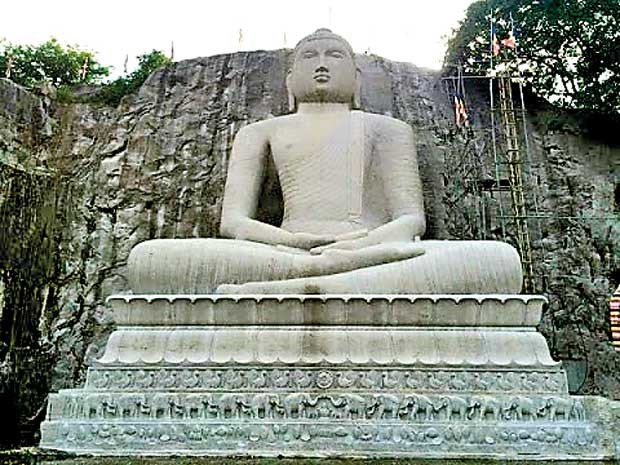
| N4.21 The Hindu who build 65ft Samadhi Buddha Statue - Devanayagam Eswaran was a unique human |
| N4.22 A masterpiece of compassion - Believed to be the world’s largest seated Buddha statue |
| N4.23 A Vesak thought - Vesak could not have dawned... |
| N4.24 Oasis of silence - In this tensed world, where most people around the globe seek... |
| N4.25 Vesak, Upasampada and Sri Pada - Vesak Poya marks the conclusion of the Sri Pada season... |
| N4.26 Let us unite in the spirit of the Dhamma this Vesak |
| N4.27 Pilikuththuwa Raja Maha Viharaya - Offering spiritual panacea among caves |
| N4.28 Ladakh, India’s first Buddhist-majority union territory, to be born |
| N4.29 Today is IL POYA, Last Katina Cheevara for Monks |
| N4.30 Buddhism or Buddhist Philosophy? - Some politicians say they follow Buddhist Philosophy... |
N4.01
Marvellous Mihintale but not a UNESCO World Heritage Site
National and religious attention is on Mihintale on this 19th day of June – Poson Poya day. It was on such a day 236 years after the death of the Buddha in 306 BC, that a momentous meeting took place between Venerable Mahinda Thera, son of Emperor Dharma Ashoka of India and the king of Lanka – Devanampiya Tissa (307-287 BC).
"Monks are we, O great King, disciples of the King of Truth.
Out of compassion for you have we come from Jambudipa"
said Thera Mahinda to King Devanampiyatissa after he had called out to him. The king stopped in his tracks, and looking up saw on a high rock a brown clad monk with four others similarly robed, and a lay person. The day being festive, the king had gone deer hunting to Missakha-pabbatha (now named Mihintale) eight miles north east of the capital city, Anuradhapura. He dropped his bow and arrow and saluted the saintly figure standing on a high rock. An intelligent conversation ensued. And thus the conversion of the king of Lanka and its people to the way of life as preached by Gautama Buddha.
UNESCO’s criteria and Mihintale’s uniqueness
I found with some surprise that Mihintale, though within the demarcated Cultural Triangle, was not a UNESCO World Heritage site. The selected are the ancient cities of Polonnaruwa, Anuradhapura and Sigiriya (1982); sacred city of Kandy (1988); Galle and its fortifications (1988); cave temples of Dambulla (1991) and the natural sites of Sinharaja Forest (1988) and Central Highlands (2010). Mihintale is not included as part of the sacred city of Anuradhapura. Thus for interest’s sake I went through UNESCO’s 10 criteria for selection of a building or place as a heritage site of outstanding universal value.
The first is that a site has to represent a masterpiece of human creative genius. We could pass that.
The second is exhibiting an important interchange of human values. There was a most significant interchange of values at Mihintale when Mahinda Thera preached to King Devanampiya Tissa the doctrine of the Buddha. What greater value than a philosophy and perfect way of life as preached by the Buddha. The values imparted on that Poson day more than 2300 years ago are fast spreading in the world as more acknowledge the Dhamma introduced by the Buddha.
The third criterion is to be a unique or at least exceptional testimony to a cultural tradition or to a civilization … Here Mihintale definitely scores. With the introduction of Buddhism to Lanka there occurred a resurgence of a civilization that was in the island, but with a socio–cultural impact which resulted in a new tradition and saw the development of sculpture, art, even painting with stupas and viharas being constructed.
The fourth criterion stipulates that to be declared a World Heritage site a place must be an outstanding example of a type of building, of architecture or a landscape which illustrates a significant stage in human history. Mihintale definitely does this.
Firstly it represents a significant stage in this island’s history and so of human history. It could be safely said that it is the most important historical event of the country because the people of the land, and the traditions and culture changed so much, with the introduction of the way of life as preached by the Buddha and transferred by Mahinda Thera, further cementing the ties between India and Lanka, and later lands in Asia which received Buddhism.
Regards the buildings, architecture and landscape, consider the hill of Mihintale with its towering Aradhanagala and the huge Ambatthala Chetiya or Maha Stupa. Consider the two unique rock-hewn ponds. Kaludiya pokuna, cupped by dark granite, 200 feet long and 70 feet wide, and roughly rectangular in shape. The water is so dark that its depth cannot be gauged nor the bottom of the pool seen. The other pond, named Naga Pokuna of almost the same size has at its farther edge where water meets rock, a five-headed cobra, etched in light relief. A flat long stone with a smooth surface is venerated as Mahinda Thera’s bed, so it is almost five centuries old.
Almost at the bottom of the hill is a stone trough for immersing patients in medicines in the believed-to-be first hospital in the world (885-887 AD). 1,840 steps which must have been hewn of stone buried in the ground long, long ago are still the same that pilgrims tread to reach the summit. Two large stone troughs 23 feet in length lie in the flat area toward the bottom of the hill. These are believed to be of the monks’ refectory used for dishing out cooked rice. Thus the wonder of buildings and ancient amenities in Mihintale of architectural significance.
The landscape as seen on Mihintale and down below is spectacular, immersed in an atmosphere of sanctity and history.
The fifth criterion is that the site has to be an outstanding traditional human settlement. Mihintale was an ancient settlement of Buddhist monks who lived a traditional life observing the vinaya rules set down by the Buddha. It is believed that Mahinda Thera refused to make his abode in the Maha Megha Uyana constructed for him in Anuradhapura. He and his followers lived in 68 caves dotting the hillside of Mihintale. So here was a traditional settlement, albeit of Buddhist monks. The existence of two ponds and the vast troughs for serving rice are further indications of a large community resident here.
The sixth criterion further promotes this fifth stipulation: to be directly and traditionally associated with living traditions. Yes, because Buddhism is a living tradition in this land and its beginning is traced to this site.
The seventh criterion goes thus: to contain superlative natural phenomena or areas of exceptional natural beauty or aesthetic importance. The hill of Mihintale has a charm of its own at all hours of the day and night. The verdant paddy fields and jungle areas interspersed with irrigation tanks and in the distance the dagobas (stupas) of Anuradhapura spread out below and visible from all edges of the flat spaces and precipitous inclines of the hill of Mihintale, is scenic.
The eighth criterion specifies the presence of outstanding examples representing major stages of the earth’s history, including the record of life. This is not relevant to the question at hand, as are the next two criteria which deal with natural resources and scenic beauty. Sri Lanka’s two World Heritage sites under these last two stipulations are the Sinharaja Forest and the Central Highlands of Sri Lanka.
To us Buddhists, Mihintale holds a special place in our minds, hearts and way of thinking and behaving. Buddhism which is the religion followed by more than 70% of the population was introduced at Mihintale with a very receptive and intelligent king understanding Ven Thera Mahinda’s discourse and questions.
Mihintale is wondrous seen in Poson Poya moonlight when the full moon appears extra large and a mite closer at hand. Mihintale is unique and wonderful in its stillness and natural beauty. Both now are sadly marred by insensitive pilgrims who throng the place, especially at the Poson Poya with scant respect for silence, genuine piety and regard for the surroundings.
Mihintale is significant as a national heritage site since it was here that a renaissance of sorts occurred in the third century BC. With the gentle religion introduced, a new way of life was adopted and a cultural heritage born of which we are duly proud.19 06 2016 - The Island
N4.02
Celebrating The International Wesak day: May 12 – 14, 2017
Arrangements are underway to celebrate the International holy Wesak day for the first time in Sri Lanka this year - 2017.
The Wesak day was declared an international holiday by the UN mainly due to the untiring efforts of a former Minister of Foreign Affairs, late Mr. Lakshaman Kadiragamar. He was a Hindu by birth. Subsequently he has embraced Buddhism through conviction and not due to compulsion or some other selfish reason. It is said that since he embraced Buddhism he has led his life, in accordance with the ‘Panchaseela’ {the five precepts} preached by the Buddha.
The General Assembly of the United Nations adopted a resolution to declare the Wesak day to be an international holiday due to a very convincing submission made by Kadiragamar on behalf of millions of adherents of Buddhism in the world. The Wesak day denotes the three major events associated with the life of the Enlightened One, the Buddha, viz, the birth, enlightenment and the Parinirvana. The Buddhist of Sri Lanka and the Buddhist the world over should be enormously grateful to this outstanding Sri Lankan for the everlasting contribution he made to elevate the holy Wesak day to be an international holiday.
Sri Lanka is the centre of Theravada Buddhism. Hence the government and the major Buddhist organizations in Sri Lanka - Young Men’s Buddhist Association, (YMBA), Colombo Maha Bodhi Society, All Ceylon Buddhist Congress, Buddhist Theosophical Society, All Ceylon Women’s Buddhist Congress etc, have made elaborate arrangements to celebrate the international Wesak day on a grand scale. In addition the leading Buddhist schools Ananda College, Nalanda College, Vishaka Vidyalaya, Dharmaraja College, Dharmapala Vidyalaya, Museaus Collage etc. have also undertaken to participate in these celebrations.
One of the important events organized in this connection will be an international conference to be held in Colombo, Sri Lanka from May 12 - 14 with the participation of delegates from eight major Buddhist countries in the world. The subject of the conference will be "Buddhist Teachings for Social Justice and Sustainable World Peace" The conference will be chaired by Indian PM Mr. Narendra Modi.
The other major Buddhist organizations in Sri Lanka and all other places of Buddhist worship have organized the traditional religious practices and other celebrations on a grand scale.
The "Buddhist Channel," the television and the radio broadcasting organization in Sri Lanka, Is the only Buddhist media organization in the world which is devoted, 24 hours of the day for the propagation of the teachings of the Buddha for the moral enrichment of the people of the world. The Buddhist Channel has organized a series of religious events and other celebrations from May 9 - 13 to celebrate this important event. This media organization is conducting its television and broadcasting activities without engaging in any other income generating commercial activities, thus depending only on voluntary contributions.
Apart from the religious activities organized by the temple, the Sambodhi Vihara where the Buddhist Channel is located has made arrangements to erect one hundred chambers/stalls along R.G. Senanayaka Mawatha in the stretch of road from D.S. Senanayake College up to the St Bridget’s Convent, dedicated to one hundred Sri Lankan National Leaders in appreciation of their national contributions for the development of the country. This display will be held from May 9 - 13.
Large delegations from major Buddhist countries are expected to participate in these celebrations.
One such chamber / stall has been dedicated to the National Leader Sir Baron Jayatilaka who has made an outstanding contribution in several spheres like the development of the Sinhala language and literature education, establishment of National Buddhist organizations, providing leadership for the national movement for the liberation of the country from colonial rule, founder of the temperance movement and as a diplomat.
The responsibility of erecting the stall dedicated to Sir Baron opposite the Sambodhi Vihara along R.G. Senanayaka Mawatha has been undertaken by the Colombo YMBA which was founded by him and where he served as president for nearly 30 years.
The other chambers / stalls dedicated to honour the other ninety nine national heroes of the country have been undertaken by other different organizations.
J.F. Ranjith Perera23 04 2017 – Sunday Island
N4.03
Rs. 2.5 mn for Katina Pinkama!
An elderly woman who is a devout dayika of her village temple came to me, as usual, for a donation to the Katina Pinkama. I obliged, and casually asked how much the pinkama would cost. She said it was Rs. 2.5 as if it were a very negligible amount. Probably sensing my surprise, she quickly added that all the temple buildings were painted every year with the best paint, but mentioned nothing about other expenses. She thanked me and went off.
I am still wondering how people could squander so much money in the name of Buddhism, which preaches simplicity and doesn’t approve of extravaganza.
In the time of the Buddha, monks went on charika (journey) and when the rainy season came, they remained in one place and engaged in religious activity till the rains were over. In Sri Lanka, however, monks DO NOT go on charika but remain in their own temples, some of them in mansions. People come to them with alms, listen to bana; monks don’t go out on pindapatha or to preach the dhamma. To my knowledge, for the vas periods monks interchange places of residence, e.g.: monks of Temple A go to temple B, B to C, D to B and so on. Hence vas visima in Sri Lanka is only a ritual custom or tradition. Monks who advise and guide gullible dayakas, are responsible for all the extravaganza.
I don’t know whether the people held a Katina Pinkama at the end of the vas season during the Buddha’s time. But the kapruka (a la the Christas Tree) is definitely a clever creation of some designing and imaginative monks, to make gullible Buddhists believe that they can go to heaven by doing so.
Why squander such colossal amounts on a Katina Pinkama when there are hundreds of monks in remote, without a proper place to live, area living under difficult conditions.
If one temple can manage to hold the Katina Pinkama with Rs 5,000 why can’t the others do so, say with Rs 10,000.00 or even Rs. 100,000? Buddhism, like all other religions, stresses simplicity but extravagant shows in Buddhist temple are becoming the order of the day. A problem in Sri Lanka is that nobody, from Mahanayakas Viharadipathies does not seem to put the house in order. I appeal to all Nayaka Theras to save Buddhism from errant monks and gullible dayakas.
S. Abeywicrama
15 10 2016 – The Island
N4.04
Buddhism – the correct interpretation
Gautamism, Buddhaghosism, Beggism etc., newly coined descriptions, emerged after Dr. Upul Wijayawardhna’s (UW) piece in The Island of 9th July 16 captioned "Gautama Buddha: Unbelievable stories".
A Buddhist scholar Dr. Rune E.A. Johansson says "Invalid generalization seems to be one of the cardinal sins of scholarly works. Views about Buddhism have very frequently been based on a very limited range of material.
Dr. Peter Masfield enlarges and comments "This is perhaps understandable given the quite daunting fact that Nikayas alone amount to more than five thousand pages of translation. It is only a fortunate few who, unencumbered by other pressures of academic life can find the time to read – and re-read for once is not enough…"
I quoted these abridged views of these foreign Buddhist scholars because if our own Buddhist scholars are unhappy about the interpretation of what the Buddha Taught, it would benefit us lay Buddhists, who are making the effort to understand and practice the Dhamma, which even the Buddha thought after His Enlightenment as Ghambira Dhamma, if what the Buddha taught is correctly and simply explained to us.
Prof. M.M.J. Marasinghe (MMJM) has been critical of the South Indian bhikku by the name of Buddhaghosa who was used by the Mahavihara fraternity to translate the Sinhala commentaries of the Pali Texts into Pali. It was also mentioned that the Sinhalese commentaries were destroyed after completion of the translation.
Dr. Paranavithane has said "Writing down of the Buddhist Canon in 1st century BCE was the greatest contribution that the Sinhalese people had made to the intellectual heritage of mankind". Who then destroyed the Sinhalese version and WHY?To economize space, I will give just one out of the many misinterpretations I have encountered.
Ven. Chandana Thera, of the University of Alberta, has quoted the alleged famine and the evil spirits that haunted the city of Vesali and that Buddha delivered the Rathana Sutta to Ven .Ananda and instructed him to tour the city reciting the discourse and sprinkling the Blessed water all over". Prof. MMJM in his letters of 21st May, 5th and 12th July by his researched articles "refutes this story by Buddhagosha Thera" and critically examined some of Buddhagosha Thera’s interpretations of important Teachings of the Buddha, and have described these as "Buddhagosha’s fairy tales". Prof MMJM’s reference to the interpretations of the Ratana Sutta historically, the capital city of the Vajjis, there was no evidence of a famine affecting the capital city of the Vajjis, which was the most powerful and well organized tribal oligarchies of the Buddha’s day" But he does not educate us as to why the Buddha preached the Ratana Sutta.
I found the answer in one of the "Buddhanusasana" books authored by Dhamma Guru Sarath Senanayake, who has very clearly explained that the Buddha would never request Amanussa (Bhoothas) to protect the people who offer them Poojas day and night. The Dhamma Guru explains that the reference to bhoothas in the Rathana Sutta are Loba, Dhosa and Moha and it is to these Bhoothas that we pay homage to day and night, and instructs us to control the rising of these bhoothas and listen to the Buddha explaining the Dhamma. I am quite satisfied with this meaningful interpretation. There are many such corrections about which I shall write if this letter gets published and commented upon. Before I conclude, I am astonished that Dr. Upul Wijayawardhna has become a Gauthamist and renamed Buddhism as Gautamism by his relevant article. Millions of Christians believe in the Resurrection of Jesus Christ and the Immaculate Conception by Mary. Did the learned doctor in his medical career come across such possibilities?
Buddha, using the scalpel of His Wisdom dissected our body into 32 parts not for the purpose of teaching physiology. It should be noted that MIND is not included, although BRAIN (Mathalunganthi) is included. My personal reasoning is that all the 32 body parts will die with the body, but the MIND which is a Force will leave the body at the time of death and find a womb according to the quality of what is stored in the MIND!
When studying this abstruse Dhamma, the only fact that we have to accept on the authority of the Buddha is Rebirth. T.Y. Lee in a small booklet has mentioned that eminent persons such as Carol Bowman, Prof. Ian Stevenson, Dr. Tim Tucker, Dr. Raymond Moody and Thomas Shroder have made case studies of more than 3000 people who could remember their past lives.
P.S. Mahawatte26 08 2016 – The Island
N4.05
‘Gautamism’ not Buddhism
With reference to P.S. Mahawatte's critique, "Buddhism - the correct interpretation", The Island - 25 August, of Dr. Upul Wijayawardhana's take on Buddhism, the use by the latter of "Gautamism" to describe the teachings of the Gautama Buddha is not, on the face of it, strictly correct.
"Gautama" is the Sanskrit for the Pali surname "Gotama". The Gotamas were the clan to which Prince Siddhartha belonged. His cousin, the much reviled Devadattha, also bore that surname and the followers of his creed were labelled as "Gotamakas"
The Gotamakas survived well into the Christian era and are mentioned by the Chinese pilgrim Fa Xian.
So the label "Gautamism" refers, strictly, to the teachings of Devadatta.
Vinod Moonesinghe27 08 2016 – The Island
N4.06
Buddhism - the correct interpretation 2
I read with interest the valuable contribution by Mr. P.S. Mahavatte in your esteemed paper on 26.8.2016 to the ongoing dialogue about the correct interpretation of Buddhism. In this response I only refer to his observations about the Ratana Sutta. He concludes that he concurs with the view that the reference to bhutas in the Sutta are to loba, dosa and moha.
In this context, let me share with the readers the English translation of the first two stanzas in the Ratana Sutta [discourse on three treasures translated by Dr N.A. Jayawickrama] from Chula Vagga of Sutta Nipatha.
First Stanza: "Whatsoever beings are gathered here, be they terrestrial or of the sky, may all those beings be happy at heart, and further, listen carefully to what is [now] said". Second stanza: "Therefore, O beings, all of you, pay attention and extend thoughts of loving- kindness to the human progeny who day and night carry offerings [to you]; so therefore, being diligent, protect them ".
The two introductory stanzas are very clear as to whom they were addressed. Therefore, it is difficult to agree with the view that the references to 'bhutas' in the stanzas are to, 'loba, dosa, moha'. Dr. Jayawickrama, in the note to the Sutta, quotes another source and states that 'bhuta' refers generally to non-humans.
Mantriratna Panditha30 08 2016 – The Island
N4.07
Gotama or Sakya: no puzzle
Apropos the question by "Puzzled" ("Gotama or Sakya?"), in The Island, August 30), the answer is fairly straightforward. It is true that Siddhartha Gautama belonged to the Sakyas, and that the Buddha was called "Sakya-Muni" ("the sage of the Sakyas"). However, the Sakyans were not strictly-speaking, a clan, but rather a tribe, constituting the republic of the Sakyas (Sakya Ganarajya), centred on Kapilavastu. The Gautamas were a leading family in Kapilavastu, identified by their distinct surname, for example Suddhodana Gotama and Prajapathi Gotami.
Vinod Moonesinghe01 09 2016 – The Island
N4.08
Are Buddhist monks above the law?
At their initial ordination, Buddhist monks pledge to abide by the Vinaya rules established by the Buddha. In Sri Lanka, monks are respected and venerated by laymen primarily for their composure and discipline in observing the Vinaya rules. A person who does not abide by these rules cannot be (and should not be) considered a Buddhist monk simply because he is clothed in a saffron robe. Buddha himself has said "A man does not become a monk merely by shaving his head." By extension, the same applies to donning a saffron robe. People and Police must realize this.
The Constitution in its Article 9 states "The Republic of Sri Lanka shall give to Buddhism the foremost place and accordingly it shall be the duty of the State to protect and foster the Buddha Sasana. Do Buddhist monks have a specific legal standing separate from laymen, in Sri Lanka? If not such legislation, as registering all monks, and requiring them to observe Vinaya rules, should be brought without further delay. To the best of my knowledge, no Vinaya rule runs against democratic principle. This is essential for the protection and fostering the Sasana. Sangha, which includes all monks, is an integral component of the triad (along with Buddha and Dhamma) that comprises the Buddhist establishment referred to as the Buddha Sasana in the Constitution.
Buddha has never preached that monks could be above the law of the land. His instructions to monks were to strive for the welfare of men while treading the Noble Eight-fold Path which includes Right Action and Right Speech. Hooliganism resorted to by monks participating in most public demonstrations today totally contradicts Right Action. The utterly repugnant hate speech we hear monks rant so often against minority communities can never be Right Speech. Worse still is that these deplorable and lawless events happen while ranking officers and men of the police watch the spectacle, seemingly unwilling to intervene. To the masses that quickly gather gaze, this gives the clear message that monks are above the law. These episodes go viral on the Internet bringing shame and disrepute to Sri Lanka and its Sinhala Buddhist community. Therefore, behavior that does not befit a monk can in no way sustain Buddhism and should not be tolerated in civilized society. Action that is most needed at the present hour is for the Government to firmly establish the rule of law and make everyone equal before the law.
The Government uses tax money to finance the activities of the Buddha Sasana Ministry. Consequently, it has a responsibility to all taxpayers to ensure that the funds are well spent. It should request and require senior monks of all Nikayas to engage in bringing order and respect to the Sasana and the Sangha. On their part, senior theras (the elders) should conduct a convention (Dharma Sanghayana) with the participation of learned lay persons as well, to review and modify guidelines and procedures best suited to conduct the affairs of the Sasana in this twenty-first century. This would be entirely in consonance with both the doctrine and the spirit of Buddhism.
Ananda Wanasinghe22 11 2016 – The Island
N4.09
Embracing a “world-centric ethic” based on the Dhamma
Ven. Bhikkhu Bodhi Thera’s address inaugurating the declaration of UN Vesak Day in 2000

“I knew nothing about Buddhism during the first 20 years of my life. In my early twenties, I developed an interest in Buddhism as a meaningful alternative to the materialism of modern American culture, an interest which grew over the following years. After finishing my graduate studies in Western philosophy, I travelled to Sri Lanka, where I entered the Buddhist monastic order. I have lived in Sri Lanka for most of my adult life, and thus I feel happy to return to my home city to address this august assembly.”
That’s how renowned monk, Bhikkhu Bodhi, who lived in Udawattakelle in Kandy for several decades and later returned to his mother country, USA, opened his address inaugurating the declaration of UN Vesak Day in 2000. After tracing the life of the Buddha, he spoke on the relevance of Buddha’s message to the world today.
Extracts from his speech:
Buddhism can provide helpful insights and practices across a wide spectrum of disciplines — from philosophy and psychology to medical care and ecology — without requiring those who use its resources to adopt Buddhism as a full-fledged religion. Here I want to focus only on the implications of Buddhist principles for the formation of public policy.
Despite the tremendous advances humankind has made in science and technology, advances that have dramatically improved living conditions in so many ways, we still find ourselves confronted with global problems that mock our most determined attempts to solve them within established frameworks. These problems include: explosive regional tensions of ethnic and religious character; the continuing spread of nuclear weapons; disregard for human rights; the widening gap between the rich and the poor; international trafficking in drugs, women, and children; the depletion of the earth’s natural resources; and the despoliation of the environment. From a Buddhist perspective, what is most striking when we reflect upon these problems as a whole is their essentially symptomatic character. Beneath their outward diversity there appear to be so many manifestations of a common root, of a deep and hidden spiritual malignancy infecting our social organism. This common root might be briefly characterized as a stubborn insistence on placing narrow, short-term self-interests (including the interests of the social or ethnic groups to which we happen to belong) above the long-range good of the broader human community.
The Buddha’s teaching offers us two valuable tools to help us extricate ourselves from this tangle. One is its hard-headed analysis of the psychological springs of human suffering. The other is the precisely articulated path of moral and mental training it holds out as a solution. The Buddha explains that the hidden springs of human suffering, in both the personal and social arenas of our lives, are three mental factors called the unwholesome roots, namely, greed, hatred, and delusion. Traditional Buddhist teaching depicts these unwholesome roots as the causes of personal suffering, but by taking a wider view we can see them as equally the source of social, economic, and political suffering. Through the prevalence of greed the world is being transformed into a global marketplace where people are reduced to the status of consumers, even commodities, and our planet’s vital resources are being pillaged without concern for future generations. Through the prevalence of hatred, national and ethnic differences become the breeding ground of suspicion and enmity, exploding in violence and endless cycles of revenge. Delusion bolsters the other two unwholesome roots with false beliefs and political ideologies put forward to justify policies motivated by greed and hatred.
While changes in social structures and policies are surely necessary to counteract the many forms of violence and injustice so widespread in today’s world, such changes alone will not be enough to usher in an era of true peace and social stability. Speaking from a Buddhist perspective, I would say that what is needed above all else is a new mode of perception, a universal consciousness that can enable us to regard others as not essentially different from oneself. As difficult as it may be, we must learn to detach ourselves from the insistent voice of self-interest and rise up to a universal perspective from which the welfare of all appears as important as one’s own good. That is, we must outgrow the egocentric and ethnocentric attitudes to which we are presently committed, and instead embrace a “world-centric ethic” which gives priority to the well-being of all.
Such a world-centric ethic should be moulded upon three guidelines, the antidotes to the three unwholesome roots:
(1) We must overcome exploitative greed with global generosity, helpfulness, and cooperation.
(2) We must replace hatred and revenge with a policy of kindness, tolerance, and forgiveness.
(3) We must recognize that our world is an interdependent, interwoven whole such that irresponsible behaviour anywhere has potentially harmful repercussions everywhere.
These guidelines, drawn from the Buddha’s teaching, can constitute the nucleus of a global ethic to which all the world’s great spiritual traditions could easily subscribe.
Underlying the specific content of a global ethic are certain attitudes of heart that we must try to embody both in our personal lives and in social policy. The chiefs of these are loving-kindness and compassion (maitri and karuna). Through loving-kindness we recognize that just as we each wish to live happily and peacefully, so all our fellow beings wish to live happily and peacefully. Through compassion we realize that just as we are each averse to pain and suffering, so all others are averse to pain and suffering. When we have understood this common core of feeling that we share with everyone else, we will treat others with the same kindness and care that we would wish them to treat us. This must apply at a communal level as much as in our personal relations. We must learn to see other communities as essentially similar to our own, entitled to the same benefits as we wish for the group to which we belong.
The Buddha states that of all things in the world, the one with the most powerful influence for both good and bad is the mind. Genuine peace between peoples and nations grows out of peace and goodwill in the hearts of human beings. Such peace cannot be won merely by material progress, by economic development and technological innovation, but demands moral and mental development. It is only by transforming ourselves that we can transform our world in the direction of peace and amity. This means that for the human race to live together peacefully on this shrinking planet, the inescapable challenge facing us is to understand and master ourselves.17 05 2007 - Sunday Times
N4.10
This Vesak celebration will be like no other
Rajitha Weerakoon

As Sri Lanka prepares to host the UN Day of Vesak, Ven. Daranagama Kusala Dhamma Thera recalls the efforts of late Foreign Minister Lakshman Kadirgamar to make this day a reality and the events planned.
Vesak which marks the Birth, Enlightenment and the Parinirvana of the Buddha, is commemorated as no other religious event in Sri Lanka. This year, which is the 2561st year after the Passing Away of the Buddha, Sri Lanka hosts the United Nations Day of Vesak thus taking Vesak commemoration to a global dimension.
Elaborate preparations are being made at the Sri Sambodhi Vihara, R.G. Senanayake Mawatha (formerly Gregory’s Road) Colombo 7 where Chief Incumbent Ven. Daranagama Kusala Dhamma Thera is using all available resources to make the event a meaningful and spectacular Vesak commemoration.
Identifying the late Foreign Minister Lakshman Kadirgamar as the architect of the United Nations Day of Vesak, the Thera recalled that it was Mr. Kadirgamar who convinced the United Nations to accept Vesak Day as a day of Buddhist Observance. He told them that Buddha’s compassion and understanding were needed for the service of humanity and in this age, His Teachings could provide the world of today with much needed guidance.
The late Foreign Minister’s proposal was based on a recommendation made at the World Buddhist Conference held in Colombo in 1998. He sought and obtained the support of other Buddhist and friendly nations and presented the proposal to the United Nations General Assembly when he succeeded in convincing them of the relevance of Vesak. At its 54th session in 1999, the UN General Assembly formally acknowledged the significance of Vesak and that Buddhism, one of the oldest world religions, had contributed to the spirituality of humanity for over two and a half millennia.
Vesak since then was commemorated at the United Nations Headquarters in New York and other UN offices. Although Mr. Kadirgamar was its architect, the commemoration of United Nations Day of Vesak was given eleven times to Thailand and twice to Vietnam. Complying with the request made by the Minister of Buddhist Affairs Wijedasa Rajapakse at the last United Nations Day of Vesak in Thailand, it was agreed that Sri Lanka hosts the event this year.
Ven. Kusala Dhamma Thera who was a close associate of the late Foreign Minister explained that it was Mr. Kadirgamar who wanted it named as United Nations Day of Vesak. And he wanted it as a Day of Vesak Observance and not as a holiday. The UN as a result, every year, marks Vesak by holding a Buddhist programme. Last year, it was the erudite American monk Bhikkhu Bodhi, ordained in Sri Lanka, who was invited to give the Message of the Doctrine to the world at the UN.
Ven. Kusala Dhamma Thera said that although the first World Buddhist Conference was held in Sri Lanka in 1998, Thailand was made its headquarters and the World Buddhist Conference continued to be held there. Lakshman Kadirgamar, took it upon himself to announce to the world that Sri Lanka had been a country which practised Theravada Buddhism for over 2500 years and it is still Theravada Buddhism which is the original form of Buddhism that exists here. Sri Lanka besides is continued to be identified as the foremost country in Theravada Buddhism. Even Dalai Lama had acknowledged this fact. The Ven. Thera as a tribute to the late Minister for the invaluable service he rendered to Buddhism, will set up a Buddhist library with books written in English at the Sanghabodhi Viharaya on United Nations Day of Vesak.
The highpoint of the United Nations Day of Vesak will be the symposium at the BMICH from May 12-13 which will be attended by over 750 delegates from over 100 countries including learned Buddhist prelates, religious leaders and over 850 local visitors. The opening ceremony on May 12 will be attended by foreign dignitaries such as the Indian Premier Narendra Modi and Nepali President Bidhya Devi Bhadari among others. President Maitripala Sirisena and Prime Minister Ranil Wickremesinghe will be among them. The closing ceremony on May 14 will be held in Kandy when the “Mahanuwara Declaration” will be inked in the precincts of the Dalada Maligawa. A special exposition of the Sacred Tooth Relic will be held for the dignitaries.
In a world divided by race, ethnicity, religion, caste et al which has led to chaos and the world in crisis, the theme of the symposium “Buddhist Teachings for Social Justice and Sustainable World Peace” could not have been more appropriate. Says Venerable Kusala Dhamma Thera that the Buddhist view of equality of humanity is relevant today as it was 2600 years ago when the Buddha expounded that irrespective of caste, class or ethnicity, all people were equal. It is not birth that defines a person but his conduct towards fellow humans.
The symposium will have four sub themes – Social and Natural Justice from a Buddhist Perspective, Inter-religious Understanding of a Common future for human kind, Buddhist Forum for Economics, Promotion of Cultural Tourism and International Buddhist Media Network. Venerable Thero’s fervent hope is that the deliberations made during these sessions will be taken back by the participants to their countries and these would help find solutions to world peace.
The commemoration of United Nations Day of Vesak will also showcase Sri Lanka’s history and development of Buddhism, prominent cultural scenarios and milestones. Towards this end, thousand stalls down R.G. Senanayake Mawatha had been given over to leading Buddhist organisations and Buddhsit schools to undertake this task. Starting from Mahinda Thera who introduced the Buddhist Doctrine to Sri Lanka these stalls will depict the roles played by Lankan Monarchs who patronised Buddhism, landmark events during Anuradhapura and Polonnaruwa periods to date and of Buddhist leaders, local and foreign which include Anagarika Dharmapala, Walisinghe Harischandra, Gunapala Malalasekere, Sir D.B. Jayatilleke and Tibetan monk S. Mahinda Thero among them.
The tenth anniversary of “The Buddhist” – the non-profit, 24 hour, exclusively Buddhist TV channel coincides with the United Nations Vesak Day and its founder Venerable Kusala Dhamma Thera has lined up several events to mark the anniversary. The Mahanayake of the Asgiriya Chapter is scheduled to declare open a new studio in “The Buddhist” channel. A pooja will be conducted to 5,13,000 Buddha statues which will be placed in the Sri Sambodhi Vihara. 1008 bhikkhus will be given alms with 28 vegetable dishes. Its merit will be bestowed on late Buddhist leaders. A Vesak perahera will commence from the Sambhodi Vihara on May 13 and parade through R.G. Senanayake Mawatha to the Nelum Pokuna roundabout ending at Musaeus College.
This year’s state Vesak Festival will be held at Wattarama Raja Maha Vihara in Kegalle while some of the other highlights of the UN Day of Vesak consist of a Replica of the Sakyan Kingdom to come up in Piliyandala, a Vesak zone at Diyawanna and a cultural show with the participation of several countries at Nelum Pokuna Theatre. These are besides the varied forms of Vesak art we see year in year out in homes all across Sri Lanka.17 05 2007 - Sunday Times
N4.11
The glory of Vesak in Colombo
Tissa Devendra

Sinhala Buddhists have, for centuries, associated certain towns with specific Buddhist festivals. Chief among them is the ancient holy city of Anuradhapura where white clad millions throng on Poson Poya in June to celebrate the introduction of the Buddha Dhamma to Sri Lanka over two thousand three hundred years ago. The month of Esala [August] draws many thousands of devotees Kandy, our last Royal Capital, to pay homage to the Sacred Dalada - the palladium of Sinhala royalty - and witness the magnificent parade of the Perahera procession in its honour.
THE CASE OF COLOMBO
Strangely enough, cosmopolitan Colombo, long devoid of Buddhist celebrations has, over the last century, become a magnet for multitudes of Buddhists during the week of Vesak - although the city has neither any hallowed, nor ancient, Buddhist precinct. Though no urban sociologist, I will attempt to explore the origins of this peculiar phenomenon - based on oral tradition and personal observation.
Although it is recorded that the Dalada was honoured with a Perahera in the last kingdom of Kotte, Sinhala independence and the Dalada, fled to the mountain fastnesses of Udarata when the Portuguese invaders of 1505, overran Kotte and established their capital in Colombo with the puppet Catholic king Don Juan Dharmapala. Thus, during the almost five centuries of rule by the Portuguese, Dutch and British, Colombo remained 'terra incognita' as far as the millions of Sinhala Buddhists in the country were concerned, apart from a few viharas ministering to the local dayakas in their neighbourhood.
This state of affairs began to change in the early decades of the 20th century thanks to the vigorous campaign of Anagarika Dharmapala to restore national pride among Sinhala Buddhists. There now took place a quiet revolution with Buddhist s beginning to take pride in their traditions. Buddhist homes and businesses now began to boldly fly the colourful new "Bauddha Kodiya" and light oil lamps in their homes and shops to celebrate Vesak.
BASTIAN THE PIONEER
Some decades ago, In the course of conversation between Buddhist scholar Professor Malalasekera and my archaeologist father D.T. Devendra, the Professor stated his firm conviction that today's colourful Vesak in Colombo can be dated to the enterprise, and imagination, of the pioneer Sinhala Buddhist entrepreneur from Pettah, W.E. Bastian. From humble beginnings Bastian had risen to become Ceylon's premier trader in paper, stationery and books. Much of his trading was with Japan. When he observed the wondrous paper lanterns decorating Buddhist temples in Japan it dawned on him that these decorations would add colour to our rather simple decorations of 'gok-kola' and 'pol-thel pahan'. With his uncanny business sense Bastian detected a potential consumer market and began the wholesale import of Japanese lanterns. Lit by flickering candles these lanterns soon transformed Vesak in Colombo. Local craftsmen quietly began to emulate the Japanese models. Meanwhile, an unknown genius seems to have crafted the oh-so-simple, and once ubiquitous, 'bucket lantern' which colourfully decorated humble gardens for many years - but are rarely seen today. I am not sure as to how and when there evolved 'ata-pattam koodu' of bamboo strips and tissue paper. This too may have been an adaptation of a Japanese or Chinese model [though no longer seen in those countries] for I saw a few such in Manila as Christmas decorations. These koodu now proliferate in many guises - with satellites (Paetiyas), revolving, or of mammoth size sheltered in their own cadjan marquees. Their early panels of plain tissue paper later came to be elaborately decorated with lacy patterns and/or religious pictures.
A grand nexus of Buddhist revivalism, Bastian's colourful lanterns and the electrification of Colombo were the key elements in the development of Vesak thoranas - that unique manifestation of urban Buddhist piety. A committed student may be able to trawl Sinhala newspapers of yore to pinpoint the first references to Vesak thoranas. My hunch, however, is that their genesis dates back to just after the end of World War I in 1918 - when wartime black-outs ended and electricity rapidly phased out Colombo's flickering gas lamps.
BUILDING THORANAS
Here gain one is faced with a 'black hole' of no information as to the untutored geniuses who developed these fantastic structures. The elite would have, probably, considered these as crude manifestations of rustic art not worthy of record in the English newspapers of yet Colonial Ceylon. [I may, of course, be wrong as I write without archival research] These amazing structures came into existence with the coming together of four, basically traditional, elements. Thoranas of areca palms, decorated with bunches of coconuts and gok-kola, had been a feature of temple, and other, festivals. There was also a corps of traditional temple artists available to embellish the thoranas with paintings of the Buddha's life and Jataka tales on a heroic scale - never before seen within viharas. Most important, was the bedrock of the Buddha Charita and Jataka tales embedded in the psyche of all Buddhists - thus a ready source for artistic interpretation. Last, but not least was the enthusiastic and generous patronage of the newly emergent class of Sinhala traders and small businessmen whose establishments were centered round the Pettah and such, largely Sinhala, bazaars as Borella, Dematagoda and Maradana. They gladly met the costs of these structures as a gesture of Buddhist piety
The Vesak thorana was no longer restricted in design to a two dimensional framework. The new model thorana's structure and theme [e.g which Jataka or episode of the Buddha Charita] was decided by a group of carpenters, 'light baases' [electricians], painters, donor businessman and advised by the Nayaka Thero of the neighbouring Vihara. The Police were also taken on board as they had a role to play in anticipated crowd and traffic control. These new thoranas were singularly individualistic in design - so as to provide the most appropriate backdrop for the stories depicted. Preparations began many weeks before Vesak with a customary Buddhist ritual preceding the raising of the framework.
The painters were responsible for the onlookers' first impression of the thorana. Their artistry was on display, day and night, for the whole Vesak week. A giant image of the Buddha, in Samadhi or Parinibbana, crowned the edifice. While there was an overall theme in the main painting, various panels gave artists the liberty for depicting interesting variations on well-known stories. These paintings were in vivid colours and figures depicted almost life-size -unlike those on temple walls. They made no attempt at realism but were, almost always in a stylized mix of the Sigiriya fresco style and that of the legendary temple painter Sarlis Master. These artists gave full play to their imagination. Grand kings, queens and nobles were in resplendent robes and swathed in jewellery, their furniture was ornate, carriages splendid and palaces gloriously baroque. Queens and their buxom handmaidens were a feast for the eyes of the spectator.
ELECTRICAL WIZARDRY
However, what made these thoranas stand out was their display of intricate and moving electric lights in a bewildering palette of colours. Wondrous revolving many splendoured haloes crowned the Buddha's head, and intricate waves of colour swept across the painted scenes. This artistic phenomenon has been the Vesak thorana's unique contribution to Sinhala Buddhist art of modern times. I hope an art historian will record it.
Many years ago I had the privilege of being invited 'backstage' of an enormous thorana to observe the complicated machinery that powered the lighting system. All I can remember were huge wooden drums bristling with strange knobs whirling wildly, powered by a generator. The 'light baases' behind this enterprise were clearly men of great mechanical knowledge as well as the fine artistic sense to understand the timing and enhancement of the various episodes of the visual narrative. I remain wonderstruck at the inventiveness, mechanical skill, and imagination of these unlettered geniuses who invented a totally new form of artistic expression. I hope that Moratuwa University will study this machinery before they lose the battle to computer displays.
The surrounding crowd of spectators was regaled by loud speakers playing Sinhala songs with Buddhist themes. 'Canned' music alternated with 'bhakti gee' sung by young girls in 'lama saris'. At suitable intervals a dramatic speaker related the stories depicted in the thorana.
SOCIAL DIVIDES
The first impressive thoranas were located in locales noted for 'muscular Buddhists' - Thotalanga, below Victoria Bridge, Arunadisi Hotel on Darley Road, the Borella bazaar and the Pettah Fish Market. As time went on, major players entered the scene with a not-so-subtle whiff of advertising - prominent among them were the South Western Bus Co. Terminus thorana at Mount Lavinia and the Navaloka thorana at Kiribathgoda - both on the city's outskirts and not too far for sightseers. It did not take very long for other towns, beginning along the road to Galle, to follow Colombo's example but they are not the subject of this story.
What makes Colombo's Vesak week unique and memorable is the multitude of spectators, and their vehicles, that crowd its streets to overflowing. It may all have started with people from the suburbs and neighbouring towns coming to see the wonderful thoranas. Gradually more thoranas and elaborately decorated shopfronts proliferated - thus giving even more colourful decorations for them to admire. Cars, vans, open lorries and, in an earlier era, open bullock carts chock-a-block with cheery, noisy passengers crawled along crowded streets driving policemen crazy. City-dwellers from humble neighbourhoods roamed about all night in cheerful bands. An imaginative CTB ran a 'Thoran Sevaya' of double-decker buses for those too lazy, old or burdened with kids to have a leisurely tour of thoranas. Driving across the city, some years ago provided us with a practical lesson in urban sociology. The great thoranas and colourfully lit shopfronts of Thotalanga, Pettah, Maradana and Borella and the coourful garden lanterns of these neighbourhoods were firmly Sinhala Buddhist areas, the posh shopping locality of Fort was never decorated, the non-Buddhist Tamils, Muslims and Catholics of Kotahena never celebrated Vesak, and the mansions of Cinnamon Gardens rarely displayed a lantern.
COMMERCIALISM
Change is inevitable, and the earlier pattern of Vesak decorations has undergone a sea change. It all began with a Head of State who had a great fondness for exhibitions, 'discipline' and commercialism. He came up with the bright idea of sprinkling Colombo with 'Vesak Kalapas' whose streets were lined with boxy little stalls where mini-thorana makers could display their mechanical/artistic ingenuity and earn financial rewards. Thus, a host of clever young men, instead of decorating their homes and neighbourhoods, have now left them to stew in the dark, to vie for cash prizes in cramped little urban stalls.
DANSALAS
The wonderful Sinhala Buddhist institution of the 'dansala' to feed pilgrims, now got a new lease of life to serve Colombo's Vesak crowds. Local neighbourhoods put up long open sheds furnished with trestle tables and benches to seat the tired walkers and feed them steaming portions of rice and curry fresh prepared in huge cauldrons by housewives just by the 'dining hall'. Volunteer youths cheerfully waited on the unending multitude.
It is hard to believe that, in less than a century, long cosmopolitan Colombo has come to host one of the greatest gatherings of Sinhala Buddhists in Sri Lanka. For one glorious week the thoranas of the city transform it into a wondrous spectacle of light and sound - [to adapt the 'Mahavansa'] for the joy and admiration of the multitude.10 05 2017 – The Island
N4.12
Washington meditation centre to honour Ven. Madihe Mahanayaka Thera
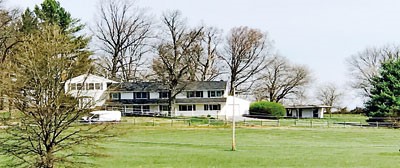
This year’s Vesak will be of special significance to the Washington Buddhist Vihara which is opening a new meditation retreat centre. Named the ‘Lion of Wisdom’ (‘Pannasiha’) Meditation Centre, it has been erected in memory of the founder of the Washington Vihara, Most Ven. Madihe Pannasiha Mahanayaka Thera. The Vihara – the first Theravada Buddhist temple in USA was set up in the mid-1960s.
The brain-child of Maharagama Dhammasiri Nayaka Thera, the chief prelate of the Vihara will be the abbot of the meditation centre with Bhante Yogavacara Rahula as the director and the chief meditation master. Along with the present meditation master at the Vihara, Bhante M. Pannawansa, meditation courses of one to ten days duration will be offered.
Most Ven. Madihe Pannasiha Mahanayaka Thera
The Vihara had been conducting meditation classes regularly but with the increasing interest, the need to have a quiet, spacious place where devotees can conveniently follow a course was felt. The centre stands on the top of a small hill offering beautiful views from two sides. Built on a plot of land extending over three acres, two of the three levels in the building have been allocated for male and female meditators. More ‘kutis’ are being planned in the years to come.
Ven. Dhammasiri once told me that tension and stress in their lives have led Americans to look towards Buddhist meditation as a form of relaxation. “With only a few holidays, the life of an American revolves round work. Their stress levels are high. So they try to get away at least for an hour or two on Sundays to follow our meditation classes,” he said. While at one stage they were more interested in Buddhist philosophy, the accent is now on meditation, he added.
Ven. Dhammasiri has been at the Vihara for 30 years. Having observed his skills in planning and organising activities as well as his ability in administrative work, he was handpicked by Madihe Mahanayaka Thera to function as the secretary of the Washington Buddhist Vihara Society which is an incorporated body. A year later he succeeded Ven. Dr. Henepola Gunaratana as president and continues in that capacity to date.17 05 2007 - Sunday Times
N4.13
‘Rebel’ monk’s endeavour for social justice
Randima Attygalle
Ven. Kirama Wimalajothi Thera credited with initiating the Buddhist Cultural Centre in Nedimala and the Sambuddhathwa Jayanthi Mandiraya has taken on an ambitious project, the setting up of an International Bhikkuni Training Centre.
“I never see what has been done; I only see what remains to be done,” said Lord Buddha. Personifying these words is the most recent spiritual labour of Ven. Kirama Wimalajothi Thera – the International Bhikkhuni Training Centre in Kananwila. Affiliated to the Dekanduwala Dhamma Training and Meditation Centre for Bhikkhunis in Kananwila which was initiated by the Venerable Thera in 1993, the International Bhikkhuni Training Centre still under construction is tucked away in the lush green environs of the Dekanduwala Dhamma Training and Meditation Centre compound. At a time when local Bhikkhunis who have received upasampada are denied legally sanctioned means of identity for reasons best known to bureaucracy, the ambitious move by this ‘rebel in robes’ is a reminder of Lord Buddha’s liberal thinking of opening equal paths of Dhamma to both men and women.
The ultimate objective of the International Bhikkhuni Training Centre as Ven. Wimalajothi Thera explains, is to mould a generation of bhikkhunis conversant in the Dhamma who can become competent global ambassadors. “The siwuwanakpirisa or four-fold group Lord Buddha preached of, comprises Bhikkhu-Bhikkhuni, Upasaka-Upasika which is a clear manifestation of gender equality Buddhism seeks to champion, although narrow political and other agendas have denied our upasampada-attained bhikkhunis of their basic rights of an identification,” says Ven. Wimalajothi Thera who aspires to broaden the horizons of bhikkhunis- both local and foreign through the upcoming International Buddhist Faculty which is to be completed by the end of this year.
Dharmashanthi Bhikhuni
Pix by Indika HanduwalaThe much travelled prelate who is credited with initiating the Buddhist Cultural Centre in Nedimala was also involved in setting up the Sambuddhathwa Jayanthi Mandiraya, today a one-stop shop for many a need of Buddhists - both local and foreign. His latest endeavour of an International Buddhist Faculty aspires to impart not only knowledge of the Dhamma but also Buddhist Counselling, Management of Temples and language and communication skills. The facility will be also be open to dasa sil mathas who are yet to be ordained. The chief prelate who laments the loss of ‘piriven-based education’ for the Buddhist clergy in the country, hopes to fill the lacuna through this ambitious move. “Our leading piriven were transformed into universities which are not conducive to producing monks of character,” he observes.
The Faculty which will be served by qualified teaching staff is to be completed with a library, auditorium and hostel facilities for bhikkhunis and dasa sil mathas. Mainnaluwe Dharmashanthi Bhikkuni, the present Chief Bhikkhuni of the Dhamma Training and Meditation Centre who will be steering the initiative as the Head of the Faculty, notes that what the International Training Centre aspires is to produce fully-fledged bhikkunis who could become mentors not only for the clergy but also for the laymen, especially women.
A trained counsellor, Dharmashanthi Bhikkhuni has been heading the Dekanduwala Dhamma Training and Meditation Centre for the past 13 years touching the lives of both the clergy and the lay people. Many women have sought her wise counsel over the years, among them abused women, abandoned wives and some who were on the brink of suicide. “Bhikkhunis should be catalysts of social reform,” observes Dharmashanthi Bhikkhuni who urges responsible authorities in the country to recognize this and become pro-active stakeholders. “On the contrary we do not even have a proof of identity as a bhikkhuni,” says the veteran bhikkhuni whose expertise is sought even by overseas novice bhikkhunis to receive upasampada.
Ven. Kirama Wimalajothi Thera
The two Indonesian bhikkhunis- Siriwattano and Samantha who were ordained at the Dekanduwala Dhamma Training and Meditation Centre a few years ago are regular visitors. “We find the tranquil environment here an oasis for meditation,” says Bhikkhuni Samantha, adding that the upcoming International Buddhist Faculty in the same compound will fulfil a regional spiritual need as well. Bhikkhuni Muditha from Taiwan who initially arrived here as a teacher of Chinese language, came under the wings of Dharmashanth Bhikkhuni, who she reveres as her guru of Pali. The bhikkhuni community is very strong in Taiwan where it plays a very proactive role in the lives of the lay people says Bhikkhuni.
The funding of the International Bhikkhuni Training Centre both locally and regionally is a daunting task, says Ven. Kirama Wimalajothi Thera. “The centre does not depend on any state grant and will be fully funded by a group of like-minded individuals which is no easy task,” he says adding that public support will be most welcome in this challenging endeavour, reminding once more of Lord Buddha’s words: ‘thousands of candles can be lit from a single candle, and the life of the candle will not be shortened. Happiness never decreases by being shared…’17 05 2007 - Sunday Times
N4.14
All alight for Vesak
Amila Gamage
With the island all alight for Vesak, it’s quite a busy time for pandal artists and constructors. For artist W. Somasundera and W.D. Padmakumara the process of designing and building pandals is a long but fulfilling one.
“I have been making pandals for about 12 years now,” says Padmakumara adding that the Pandal being set up in Rajagiriya is a new one which has not been showcased at any other time. It will be unveiled for the first time during the holidays.
The conceptualising and construction of this Pandal he says began in December last year. Once the vesak holidays are over the structure will be taken down and set up in another district in time for Poson.
While the setting up of the structure has taken Padmakumar almost 15 days, “when everything is completed and the lights of the pandal are switched on it brings me a lot of joy,” he says.
Artist Somasundera adding the final touches
Padmakumara with his pandal


Checking the lights and switches
Behind the scenes of a Pandal
Putting the pieces together29 04 2018 - Sunday Times
N4.15
The Sound of Silence
Mahil Wijesinghe
AGE-OLD RITUALS: Bhikkus walk on pindapatha under the forest canopy for the mid-day meal to the alms hall in Madakada Aranya
Near Ingiriya, meet a community of monastic Bhikkus thriving on the ancient discipline of meditation amidst tranquility in the heart of the forest canopy at Madakada Aranya Senasanaya.
A labyrinth of paths snake through the rainforest in the hermitage at Madakada. It is dawn and the misty, nippy air envelops us. Rays of sunlight filter through the silhouetted leaves of the massive trees in the forest and the continuous sound of gushing waters of Nachchimale Ela (stream) reverberate across the forest. The cicadas and songbirds exercise their vocal chords in their tranquil surroundings.
We are at Madakada Aranya Senasanaya, an abode of higher beings. Nestling on the bank of the Nachchimale Ela, near Keenagahawila village in the outskirts of Ingiriya, the Madakada Aranya Senasanaya lies beneath the leafy canopy of a rainforest reservation extending over 50 hectares. The natural rain forest shields the hermitage from the outside world, providing an ideal setting for the Buddhist meditation practised there.
It is just two kilometres north-west of Ingiriya town on Keenagahawila village, along the Colombo-Ingiriya main Road, a one and a half hour drive from Colombo.
The hermitage, a complex of 20 Kutis (cells) and a rock cave, a small shrine, Bo tree enclose, alms halls, Chaitya, refectory and a kitchen sit astride a saddle of rock, reached by a rough, serpentine path and a cement stairway of even steps and jumps. The environment is one of calm serenity and silence, except for the gushing waters of Nachchimale Ela and the swish of leaves in the wind and the chattering of birds.
Each Kuti has a door and window, a narrow bed, table, low stool, some pictures of the Buddha and an electric light. A firewood hearth is provided for making tea and herbal drinks. A neatly paved walkway winds through the trees for Sakman Bhavana (meditative walking).
The routine of the hermitage day begins in the darkness before daybreak, and consists of a closely organized samatha vipassana timetable of meditation, study, instruction, worship and chanting sacred pirith litanies and a special Buddha Puja program ‘Buddha Watha’ until 10 pm. Insight meditation is done sitting, usually lasting one and a half to two hours at a time, twice a day.
The daily program also includes a few domestic duties, as well as sweeping pathways, shrine rooms and alms hall. Meticulous personal cleanliness is required, so the hermitage schedule includes a daily bath. The Bhikkus dress in a deep brown habit, symbolic of their renunciation of the world, and observe contemplative decorum in all activities, in silence and solitude.
The two main meals (purely vegetarian) at the hermitage – breakfast and lunch – are provided by alms donors, who are assigned to offer alms 365 days a year to the hermitage. Each donor comes with a group of devotees to the hermitage on his assigned date and prepares meals in the kitchen and offers them to the Bhikkus. At the hermitage, the Bhikkus receive food in their begging bowls at a preaching hall and confer merit on the donors. They then bring it to the Dana Salawa (alms hall) where the food is consumed. Begging for food, or Pindapatha, is also a facet of the renunciation of worldliness inherent in Buddhist monastic life.
Each day in the hermitage is a closely structured balance of mind development, concentration and awareness exercises, food, drink, rest and sleep, solitude, silence, study, worship and instructions. The austerity of this regimen is also very healthy. Many beneficial side effects stem from a serene environment, cleansing the mind of tension, stress, worry, guilt, anger and evil thoughts, helping to balance the proper functioning of blood circulation, the nervous system and vital organs in the process. This is strongly borne out by evidence that most Bhikkus who follow meditative routines live in good health to an advanced age.
At present, there are about 15 meditative Bhikkus at the hermitage. Their Vipassanadhura meditation is a mainly contemplative one. The Samatha Vippassana Bhavana insight meditation is the dominant and central theme and experience. These contemplative communities live mostly in secluded woodland hermitage complexes (Aranya) in rock shelters, caves and kutis. Madakada Aranya is also one of the best meditative places for foreign Bhikkus who search for spiritual environs and nature’s affinity.
It was founded in 1945 by Ven. Wanawasi Saddatissa Thera, a doctor by profession whose lay name was Sam Atapattu. He later entered into Buddhist monkhood and came to the cave of a thick forest of Madakada through Nambapana Ela (stream) close to Keenagahawila with the help of an officer of the Department of Forests. He used to stay alone in a cave at Madakada, practising Samathavipassanabavana and walked around eight to 10 kilometers in the leech-infested thick forest in the morning for pindapatha, to find food only for one meal a day. Later, the Thera became popularly known as ‘Dosthara Hamuduruwo’ who developed the place with devotees in nearby villages establishing a committee of devotees to develop the place as ‘Madakada Aranya Senasanaya’. Today, the hermitage consists of over ten meditative branches island wide.
The Madakada hermitage is administrated by its chief monk, Ven. Ampitiye Mangala Thera whose serenity, mental clarity and spiritual depth reflect long schooling in meditative discipline as well as a refreshing light- heartedness and good humour. He was the chief pupil of Ven. SaddatissaThera. The deputy chief monk of the hermitage, Ven. Dambuluwana Samitha Thera, one of the scholastic pupils of Ven. Ampitiye Mangala Thera does most of the administrative work of the hermitage.
The cave which Ven. Saddatissa Thera occupied, has been turned into a magnificent shrine room in the hermitage where all the Buddha pujas are offered with veneration. A portrait of Ven. Saddatissa in a meditative posture and another painting as a layman in full suit adorn the wall of the cave.
Walking around the wooded shade is balm to stressed nerves. Gigantic trees, their barks entwined with three-inch thick vines, add to the feeling of being in the thick of the forest, while the whisper of leaves rustling in the breeze is another soothing element. We observed many wonders of nature in the form of rare birds, butterflies, medicinal plants and wild flowers as well as endemic fish at the cascading Nachchimale Ela.
The chief monk also points out that it is wrong to address the hermitage as a Nachchimale Aranya and its correct name is Madakada Aranya Senasanaya. He narrates the story about how it became known as Nachchimale.
In the past, most of the people who worked in estate plantations around Ingiriya were Tamils who came from South India. The Tamil people in the estates close to the hermitage used to go to Ingiriya town to bring provisions for cooking. One day, an elderly woman who crossed the stream with her provisions on the head, had fallen into the deep waterhole in the stream and drowned. Hence, the stream was called Aachchimale (the place where the elderly woman died) and later it became known as Nachchimale.
Nachchimale Ela comprises a very rich bio-diversity hotspot with the rainforest and is home to a number of endangered bird species and reptiles adjoining the Madakada Aranya. During the holidays Nachchimale Ela is a popular bathing spot among the locals and some fatalities have also been reported.
However, you must keep in mind that this is the abode of higher beings who are aspiring for spiritual advancement, so don’t break the silence! Enjoy nature and the refreshing environs, but do so quietly.29 04 2018 - Sunday Observer
N4.16
The Proper Search for Happiness
When I was dragged from the bed by my older brother to attend Daham Pasala with him on Sundays in Sri Lanka in the 1960s, happiness was visiting Punchi Amma’s house on my way back home to receive and taste freshly plucked mango or guava from her garden. From where I’m sitting now in Canberra, a childhood in the 1960s was a happy time. Since then, the pursuit of happiness has become a lot more adult, a lot more commercialized, a lot more psychological, and even a lot more scientific.
Dozens of popular books with the word ‘happiness’ in their titles have been published in the past decade. I’ve read some of them and will use ideas from the most authoritative. Why such a glut? Perhaps because the satisfaction of so many of our material ambitions in the West has left us unsatisfied. Or perhaps as our material needs edge closer to satiation our aspirations turn to a higher order involving psychology.
Is happiness all there is to life? It would be inhuman not to feel sad over the death of a loved one - someone related or special. Although all of us have done our share of seeking pleasure and avoiding pain, it would be unrealistic to imagine the world without negative emotions. The greatest single mistake we make is imagining that changing circumstances of our lives will make us happier. If only we had a little more money or a better job; if only we had a bigger house, a different spouse or better-behaved children, things would be so much…well, better. We’re all tempted to think it, but for the most part it’s wrong.
Is getting your life under control a pathway to happiness? Would that be when you’re retired with a reasonable pension, perhaps, when you’ve paid all your accumulated debts, fulfilled all your obligations and taken your place on a hansi putuwa in the verandah, with a rigid daily routine, bowel motions monitored and all the prescribed pills taken three times a day after meals? Or would it be when you’re finally got all your books arranged in order (or given them away in favour of a Kindle), the crossword completed and in bed by nine?
Research by Professor Sonja Lyubomirsky of the University of California and her colleagues has found that changing our circumstances account for as little as 10 per cent of the difference between our level of happiness and other people’s. She says happiness is not out there for us to find it. It is inside us. Happiness is a state of mind from which we perceive the world we live in.
So let me give you a few ideas for improving your happiness. Although I’ll add my own thoughts and little experience, for the most part they are drawn from research of the many psychologists operating in this area. Most of the ideas won’t come as a great surprise to you, but they are backed by solid research evidence. Some of them you’ll already be practicing, but that’s okay; it’s nice to have the refresher.
The crucial test of a happy life is how we respond to the needs of others. Everything else is peripheral and mostly trivial. Try to focus on the human, not the material, because people matter more than things. We know it’s true because people - our mothers, fathers, siblings, spouses, children, grandchildren and friends - play such a large part in our own lives. The unit of currency for materialism is, of course, money, and we can’t live without it, but as Woody Allen says ‘being rich is better than being poor – if only for financial reasons’. Global research data shows that once a person reaches a certain level of income - enough to meet basic needs - there are less positive connections between happiness and wealth. Intangibles like warm connections with people we love and meaningful activities make people far happier than say, shopping or getting a chic item - a Rolex watch!
So, try making other people happy first, not yourself, because the happiest people in the world barely know they’re happy. They are too busy with no time for self-pity, regret or fear of future. Happy people trust their own instincts rather than trying to adhere rigidly to a set of pre-coded rules laid down by institutions - including religious ones, and refuse to be influenced by the opinion and judgments of others. They do things for their own sake, not because of the income or status they hope that will bring them. Robert Frank, a professor of economics at Cornell University, says those who focus intensely on material success tend to experience low level of measured happiness.
The distinguished American economist and Nobel Prize winner, Paul Samuelson - my hero when I was studying economics - once devised the formula ‘happiness equals consumption divided by desire’. Or to put it another way, happiness is what you have over what you want. Easier said than done, of course, but the key to reducing our desire for more is to stop trying to keep up with the Joneses. The more we can train ourselves not to compare our material score with others, the happier we’ll be.
Again it may sound like Sunday school, but evidence-driven psychologists say people who practice gratitude tend to be happier. So please begin and end each day with thanks for whatever is going on in your life. Being kind and generous leads you to perceive others more positively and generously, and fosters a heightened sense of interdependence. One study in America found that elderly individuals who gave no emotional or financial support to others, were more than twice as likely to die during the five years the researchers followed them compared to people who did give something to others.
A happy person develops the ability to live completely in the present moment to experience each moment as new. Such a person realizes that what he will be in the next moment, and what he will do, grows out of that moment, and cannot be predicted in advance either by him or others. Living in the present moment involves an absence of rigidity and a maximum of adaptability. This comes very close to the Buddhist emphasis on an attitude of ‘mindfulness’.
‘Happiness is not a horse, you cannot harness it’, says an old Russian proverb: the more you seek happiness the less likely you are to find it!
Siri Ipalawatte, Australia14 05 2018 - The Island
N4.17
Fa-hein’s Cave and the Making of a Myth
Bhante Dhammika of Australia
Myths have an important role in most religions. The very basis of some religions is a myth. Most of these myths were unconscious, i.e. they self-evolved through misapprehension and hearsay, and they were kept alive by devotion and gullibility and in time became integrated into the religion, sometimes a central part of it. But others myths have been deliberately manufactured. Some time ago I became acquainted with just such an example of this, not directly but indirectly connected with religion, in this case with Buddhist history. About 15 years ago a leading Sri Lankan newspaper ran a full-page story about a place called Pahiyangala, a cave where it was claimed the Chinese pilgrim Fa-hein (modern piniyn Chinese, Faxian) stayed while on his way to Sri Pada when he was in Sri Lanka in about 410 CE. The cave is in the vicinity of Sri Pada and its name was, so it was claimed, derived from the pilgrim’s name; Pahiyan = Fa-hein, gala = rock. Intrigued but sceptical I did a bit of research and was soon able to dismiss the story as baseless and of very recent origin.
Fa-hien Cave
It is not difficult to see the problems with the Pahiyangala myth. It starts at the very beginning. Fa-hein mentions Sri Pada in his travelogue, but he never went there, he just reported what others told him about it, and thus he would not have stayed in the nearby cave. In face he does not mention going anywhere other than Anaradhapura and Mahintale. But even if he did go to the cave at Pahiyangala that he, one of but many thousands of visitors, would have been remembered is implausible in the extreme. And even if he had been remembered he would have been known by the Sanskrit version of his name, Dharmadasa, not his Chinese name. And why, it could be asked, would people in Sri Lanka decide to name a location after a (then) obscure foreign monk who stayed with them for a day or two? There is no inscription at Pahiyangala mentioning Fa-hein and there is no ancient texts from Sri Lanka mentioning him or any other Chinese pilgrim. So where does the information establishing his visit to this cave come from? No answer has been given.
Is there any material evidence for the claim? Archaeological investigation of the cave shows that it has been inhabited since prehistoric times. Fragments of Chinese porcelain have been found there as they have been in many locations throughout Sri Lanka. When I visited Pahiyangala a monk there showed me a small piece of such porcelain and told me that it was "Fa-hein’s cup". This claim, even if made in with sincerity, has to be dismissed as nonsense. Fa-hein was of course completely unknown in Sri Lanka and most of the rest of the world until the publication of Samuel Beal’s translation of his travelogue in 1884. In the decades after that Beal’s book must have been read by English speaking Sri Lankan Buddhists and at some point the then abbot of the Pahiyangala vihara must have heard about it and the myth was born. But why would the abbot (or whoever) do this? Did the original name of the cave sound something like Fa-hein and he put 2 and 2 together and came up with 9? I have never been able to find out the pre-myth name of the cave. Did he do it on a whimsy? Did he do it in the hope of attracting visitors to an otherwise obscure and prosaic temple? We do not know.
The earliest mention I have been able to find to the Pahiyangala myth is in a YMBA Vesak Annual from the early 1920s and I suspect that the story started around this time. I have not however, been able to find out the original name of the cave but it would be interesting to know what it was. It has only been in the last 10 or 15 years that the story has really began to get off the ground. Pahiyangala now has its own website, it is mentioned in several tourist guidebooks to Sri Lanka and newspapers and at least one airline magazine has featured it. About 10 years ago an official from the Chinese embassy in Colombo visited Pahiyangala and donated a painting of Fa-hein to the temple; anything to promote a bit of China-Sri Lanka friendship.11 05 2018 - The Island
N4.18
Vesak at Berlin Vihara
Ven. Bambalapitiye Medhankara thera addressing the gathering in the compound of the Berlin Vihara. Seated on his left is Italian monk Ven. Dhammamuninda thera who was trained at the Mitirigala Nissarana Vanaya. He speaks four languages fluently — Italian, German, English and Sinhala.
The Berlin Buddhist Vihara founded by Asoka Weeraratna (1957), and housed in Das Buddhistische Haus built by Dr. Paul Dahlke in 1924, being the oldest Theravada Buddhist temple in Europe, observed Vesak in the presence of a large gathering of Buddhists and well–wishers from Sri Lanka, Germany, Thailand and many other Asian and European countries.
Two Buddhist monks, Ven. Bambalapitiye Medhankara Thero of Siri Vajiraramaya Temple in Bambalapitiya and Ven. Dhammamuninda Thera (an Italian monk trained at the Mitirigala Nissarana Vanaya) led the religious activities in the Vesak Day program organised and coordinated by Tissa Weeraratna, with the assistance of both Sinhala and German Buddhists.
Following the Dhamma talks by the two monks and address of welcome by the hosts, Pirith was chanted to invoke the blessings of the noble triple gem on all those present and all living beings in accordance with the teachings of the Buddha who placed a heavy emphasis on Ahimsa (non-violence), Metta (loving-kindness) and Karuna (compassion) as the cornerstone and true pathway to peace. Several dayakayas observed ‘ Sil’ on this occasion.
Berlin Vihara was decorated with Buddhist flags, and colourful Vesak lanterns. A number of tents erected on the large compound of the Vihara served as Dansala that offered a wholesome vegetarian meal with mostly Sri Lankan dishes during the lunch recess.28 05 2017 – Sunday Island
N4.19
Cow unites Buddhists and Hindus for its protection

On the last poson full moon poya day (8 June), Buddhist and Hindu activists from across the country gathered at the Sri Sambuddhathwa Jayanthi Centre at Thummulla Junction, Colombo 5 to pass a resolution to protect cow in Sri Lanka. They expect this to be presented to the parliament through Mano Ganesan, minister of national co-existence dialogue and official languages, who was the chief guest of the event.
Ven. Athureliye Rathana Thero addressing the gathering acknowledged this as a victory for the people dedicated to this cause in this country for many years. He said, harming life is anyway a sinful act according to Buddhism and protecting cow and banning its slaughter is important for many reasons in addition to the religious sentiments. These include its role as a nutrition provider through its milk and many other edibles made from milk and its role in agriculture. If the country takes a decisive step towards organic farming then there will be a dearth of our "cattle resource" remarked the Ven. Thero.
This development in Sri Lanka comes close on the heels of a landmark law passed in the Indian parliament banning sale of cows for slaughter. The Ministry of Environment, Forest and Climate Change of India on 23 May 2017 issued the extraordinary gazette notification called the "Prevention of Cruelty to Animals (Regulation of Livestock Markets) Rules, 2017" that banned the sale of cows and buffaloes for slaughter through animal markets in that country.
In Sri Lanka too a bill to prevent cruelty to animals had been drafted and its passage is expected through parliament. Responding to a query on its delay, Rathana Thero replied that certain elements in the livestock business are thwarting this move.
His Holiness Bhaktivinod Swami Maharaj of the International Society Krishna Consciousness (ISKCON) from Coimbatore India spoke of the spiritual aspects of "ahimsa". Giving an explicit overview of how Indian culture is interwoven around cow, he said veneration of cow comes from the ancient Vedic belief that the sacred cow Kamadhenu was the abode of all 33 crore (10 million) demigods.
He also reminded of Muslim Mogul emperors of India who banned cow slaughter. Since the time of Humayun, who first introduced ban on cattle slaughter in India, Akbar and Jahangir, both in his lineage followed suit. Last of the Mogul emperors Bahadur Shah Zafar, who ruled Delhi during British Raj’s occupancy, imposed capital punishment for cattle slaughter.

Swamiji also recalled the role played by the first British Governor of Bengal, Robert Clive in promoting cattle slaughter and thereby breaking the backbone of agriculture in India. Clive on entering India was amazed to see the success of the agricultural system there, and realized it revolved around the "holy cow", not just religiously, but socially as well. Cow was an integral part of a Hindu family as was any other human member in the family. Then he targeted the cow. And thus he opened the first slaughterhouse of cows in Kolkata in 1760. It had a capacity to kill 30,000 cows per day.
Within a century India had very little cattle left to sustain its agricultural needs. Then Britain as an alternative started offering artificial manure, started importing it from England. Soon Indian agriculture became dependent on West invented artificial products, and home grown natural practices started to disintegrate.
One can draw a close parallel to what happened in Sri Lanka in the immediate aftermath of full British occupation in 1815. The British rulers, after the first rebellion in Uva Wellassa in 1818, realized that the fertility and self-sufficiency of that region was the greatest threat to its authority, and went on a destruction spree of the farmland and irrigation sources in order to break the backbone of the island nation’s agricultural livelihood.
Minister Mano Ganesan acknowledging the timely need of the resolution to protect cow, said lately Sri Lanka has come to be engulfed by violence. He said all forms of slaughter, including man slaughter needs to be halted in the country.
New restrictions on cattle slaughter in India
The Centre has banned the sale of cattle for slaughter at animal markets across the country.
Under a notification, titled the Prevention of Cruelty to Animals (Regulation of Livestock Markets) Rules, 2017, those who wish to sell cattle — bulls, cows, buffaloes, steers, heifers and camels — may do so only after they formally state that the animals have not been "brought to the market for sale for slaughter".
The new rules aim at regulating such markets and also the sale of bovines said Environment Minister Harsh Vardhan.
"The aim of the rules is to regulate the animal market and sale of cattle in them and ensure welfare of cattle dealt in them."30 05 2017 - The Hindu
N4.20
Health reasons to not eat beef

Compiling up-to-date scientific evidence on the health risks of red meat eating, "Health & Society" has said enough and more why people should not eat beef for their own health. Back to back editions on 20 and 27 January this year were dedicated to this topic.
The NCDs, as of today, are the leading cause of death in the world, and are estimated to be responsible for 63% of the deaths worldwide. Unquestionably, red meat, of which beef is a kind, is one of the most important causative factors of Non Communicable Diseases (NCDs). As such, there are ample reasons why red meat eating needs to be discouraged to ensure better health for people.
WHO’s sickening silence
Thus, we cannot resist raising an eyebrow over World Health Organization’s sickening silence on the issue, especially in the context of prevention and control of NCDs. We believe now the time is ripe for the organization to take a bandwagon role in this regard too, similar to what they previously did with tobacco and alcohol use in the same paradigm. This is exactly what needs to happen if the multibillion dollar meat industry’s greed for money is not to take precedence over the health of the world’s populace.
Compelling evidence against red meat
After a systemic review of scientific studies, an expert panel of the World Cancer Research Fund and the American Institute for Cancer Research concluded in 2007 that "red or processed meats are convincing or probable sources of some cancers." Their report said that evidence is convincing for a link between red meat, processed meat, and colorectal cancer, and limited but suggestive for links to lung, esophageal, stomach, pancreatic, and endometrial cancers.
Dr. Frank Hu’s Study
In the US, a large study was undertaken by a team led by Dr. Frank Hu, Professor of Nutrition and Epidemiology and Chair, Department of Nutrition, Harvard School of Public Health to unravel more on the association between red meat intake and mortality. The study included 37,000 men and 83,000 women. All the participants were free of cardiovascular disease and cancer at the start of the study. The study extended for over two decades and gathered information on a variety of health factors, including body weight, cigarette smoking and physical activity level every 2 years in addition to filling up of food frequency questionnaires by the participants every 4 years. The total follow-up period was 2.96 million person-years.
Almost 24,000 participants died during the study. These included approximately 5,900 from cardiovascular disease and 9,500 from various cancers. Those who consumed the highest levels of both unprocessed and processed red meat had the highest risk of all-cause of mortality, cancer mortality and cardiovascular disease mortality. After adjusting for other risk factors, the researchers calculated that one additional serving per day of unprocessed red meat over the course of the study raised the risk of total mortality by 13%. An extra serving of processed red meat (such as bacon, hot dogs, sausage and salami) raised the risk by 20%.
The researchers estimated that substituting one serving per day of other foods - like fish, poultry, nuts, legumes, low-fat dairy and whole grains—for red meat could lower the risk of mortality by 7% to 19%. If the participants had all consumed fewer than half a serving per day (about 1.5 ounces) of red meat, the scientists calculated, 9.3% of the deaths in men and 7.6% of the deaths in women could have been prevented.
The researchers vehemently concluded that red meat consumption is associated with an increased risk of mortality that included cardio vascular disease (CVD) and cancer. Substitution of other healthy protein sources for red meat is associated with a lower mortality risk.
Among the probable reasons for cancers associated with red meat consumption include,
* Saturated fat, which has been linked to cancers of the colon and breast as well as to heart disease.
* Carcinogens formed when meat is cooked.
* Heme iron, the type of iron found in meat that may produce compounds that can damage cells, leading to cancer.
Further, grilling of red meat is also linked to cancer causation. It is argued that high-temperature cooking of any muscle meat, including red meat, poultry, and fish, can generate compounds in food that may increase cancer risk. These compounds include heterocyclic amines (HCAs) and polycyclic aromatic hydrocarbons (PAHs). The good news for the meat eaters is that they might improve their health by substituting other healthy protein sources for some of the red meat they eat.
Health reasons to go vegetarian
Prof. Duo Li, Professor of Nutrition, Department of Food Science and Nutrition, Zhejiang University, China has casted the issue in cement. He extrapolated various studies carried out throughout the world in buttressing his argument in favour of vegetarianism in the prevention of NCDs.
Compared with an omnivorous diet, a vegetarian diet includes plenty of fruits and vegetables. In general, vegetarian diets are rich in fiber, magnesium, phytochemicals, antioxidants, vitamins C and E, Fe3+, folic acid and n-6 polyunsaturated fatty acid (PUFA), but low in cholesterol, total fat and saturated fatty acid (SFA), sodium, Fe2+, zinc, vitamins A, B12 and D, and especially n-3 PUFA.
Prof. Li argues, "Low intake of cholesterol, total fat, SFA and sodium, and high intake of phytochemicals, antioxidants and fiber in vegetarian diet, are associated with health advantages including decreased mortality and morbidity of NCDs".
Dilemma of Vitamins D and B 12
However, it is unclear whether the vegetarians have adequate levels of vitamin D. Vitamin D is either consumed from the diet or synthesized in humans from cholesterol following adequate exposure to the sunlight. But, Prof. Li believes, "the vegetarians do not necessarily have lower vitamin D status (serum 25-hydroxyvitamin D) compared with omnivores".
Contradicting some studies from Poland and the UK that reported vegetarians and vegans having lower serum/plasma 25-hydroxyvitamin D levels, Prof. Li points, "However, the Adventist Health Study-2 from the USA found that serum/plasma 25-hydroxyvitamin D concentrations were not associated with vegetarian status. The possible reasons for the variable results include inadequate exposure to the sunlight, dark skin, potentially adequate intake by individuals who are lacto- or lacto-ovo-vegetarians versus vegans, use of supplements or supplemented foods etc".
Prof. Li also believes, "The vegetarians have a number of increased risk factors for NCDs such as increased plasma homocysteine, mean platelet volume and platelet aggregability compared with omnivores, which are associated with low intake of vitamin B12 and n-3 PUFA". He recommends the vegetarians to specifically focus on increasing their intake of vitamin B12 and n-3 PUFA to further reduce already low mortality and morbidity from non-communicable diseases".
Sarah K. Gebauer et al. from the Department of Nutritional Sciences, Pennsylvania State University writing to the American Journal of Clinical Nutrition recommend flaxseed ("Hana" in Sinhala and Āḷivitai In Tamil) and flaxseed oil, walnuts (genus Juglans) and walnut oil, and canola oil as good vegetarian sources of n-3 PUFA.
The UK based Vegan Society recommends foods fortified with B12 that include some soy products and breakfast cereals and B12 supplements as sources of B12 for the strict vegetarians. Apart from that milk, eggs, yogurt, cheese, whey powder and yeast extract spreads (marmite) are good sources of B12.
16 06 2017 - The Island
N4.21
The Hindu who build 65ft Samadhi Buddha Statue
Ven. Egodamulle Amaramoli Maha Nayake Thera
Moneragala Temple, Rambadagalle
Devanayagam Eswaran, Chairman of Eswaran Brothers, was a unique human being who had elevated himself to a high level of mindfulness. Following in the footsteps handed down by Hindu and Buddhist philosophies, he had reached a level of mindfulness where one gives up traits such as greed, lust and jealousy.
While a deeply religious Hindu, he is someone who will be remembered for his great contribution forwards Buddhism.
After the destruction of the colossal Bahamian Buddha statues in Afghanistan in 2001, there was a pale of gloom over the entire Buddhist world.
This sad news reverberated across the world and in a quaint town of Rambadagalle in the Kurunegala District, many questions were raised among the Buddhists as to what they could do to at least in some small measure to make up for this loss. Instead of choosing revenge, the Buddhist clergy in the area suggested that a bigger statue be built to compensate the loss.
It was a mighty task and one which could never have been achieved if not for Devanayagam Eswaran. A devout Hindu, he had commissioned the building of the statue of Lord Hanuman in Ramboda. Upon hearing of the uphill task undertaken to build a Buddha statue in Rambadagalla, Mr. Eswaran enthusiastically extended his assistance by personally inviting Muthu Muthiah Sthapathi – a world-renowned Indian sculpture to undertake the project.
Thus started our strong friendship and close association during which Mr. Eswaran did all he could to assist in the project. The 65 feet tall Samadhi Statue of the Buddha in Rambodagalle Viharaya is a reality today and a lasting tribute to Mr. Eswaran’s selfless contribution towards Buddhism. It is because of the effort and support by this Hindu friend that this ambitious project became a reality. Our friendship started in 2002 and continued till he passed away in January this year. In the desert of humanity, he was an oasis, someone who brought peace and tranquillity relief to anyone who associated him.02 04 2018 - Daily Mirror
N4.22
A masterpiece of compassion
Believed to be the world’s largest seated Buddha statue, the Rambodagalla rock-cut statue in Kurunegala, is a fine example of coexistence among the different races and religions in the country
Mahil Wijesinghe
Our last week’s Spectrum lead story, written by eminent journalist, Kalakeerthi Dr. Edwin Ariyadasa, focuses on the value of inter-racial harmony among the different communities in the island citing the example of the recently built massive rock-cut Buddha statue at the Rambodagalla village near Kurunegala.
This Vesak season, perhaps, the Rambodagalla Buddha statue, which is a powerful spiritual symbol of Buddhist faith, would be a fine example to pursue racial harmony in the country. Coexistence expresses the joy of witnessing the love and harmony prevailing among humanity. It is therefore strong evidence of a peaceful coexistence between the different communities.
Recently I had the opportunity to visit this massive 67.5 feet seated rock-cut Samadhi Buddha statue when we headed towards Arankele through Ridigama in the outskirts of Kurunegala. It was dawn when we reached there and we spent a couple of hours at the site until the sun’s rays filtered on the statue.
I felt fortunate to be here at the Rambodagalla sacred site, one of the most serene Buddhist places in the country. A neatly kept stone staircase led us on a steady climb through the rock boulder to the Buddha statue carved out into a solid rock.
Bamian Buddha statue
This statue is not strange to me. I have visited it many times during its construction since 2002 and photographed it at several stages of construction. After it was completed in 2010, I visited and photographed it again and again.The temple, Vidyasagara Pirivena at Moneragala in the Rambodagalla village, famous for coconut, is situated off Kurunegala.
To visit this magnificent work of art one has to drive down the Kurunegala – Kandy road for about four kilometres, then turn left at the Mallawapitiya junction and continue on the Keppetigala road for 20 km.
There is an interesting narration how the seed was sown to build such a massive Buddha statue.
One day in 2001, a village boy who attended Sunday Dhamma School at the Rambodagalla temple rushed to the chief incumbent of the temple, Ven. Egodamulle Amaramoli Thera and expressed his enrage at the destruction of the ancient standing Buddha statue in the Bamian valley in Afghanistan by a Taliban extremist terrorist group in 2001.
The chief monk then told the student that Buddhists don’t take revenge, instead, showed compassion towards them according to the Buddha’s teaching. Thus the idea was initiated in the mind of the chief incumbent of the temple, to build a statue not second to the centuries-old tallest statue destroyed by Taliban terrorists.
Rambodagalla Temple in Moneragala is situated near Ridigama in Kurunegala close to the Deduru Oya in an enchanting plain surrounded by a mountain range with a living rocky boulder where the magnificent Buddha statue was to be hewn out into a living rock.
National integration
Under the guidance of the chief incumbent, the construction of the statue began on September 13, 2002. This enchanting statue 67.5 feet tall, in Dhyana Mudra (cross-legged) posture, is a true and lasting testimony to the spirit that exemplifies national integration.
Many philanthropists and dignitaries had helped the monk financially to complete this massive task of building the statue.
Among them was a leading Hindu businessman, the late D. Easwaran of Easwaran Brothers.
Although some politicians from Tamil Nadu were vociferous against Sri Lanka in the past, strangely, a group of their own people engaged in building this statue which indicates that art is not a barricade to race, religion or caste.The statue was created by a team of South Indian Hindu craftsmen from Chennai and its chief Indian sculptor was Muthu Muthiah Sathapathi, a world renowned artiste who had been awarded the Padma Sri by the Indian government.
In September 2008, when I visited the site, the statue was being built by Indian craftsmen, emanating most of the features of the statue from the living rock. I climbed half way by ladder and photographed the statue with craftsmen at work.
That day, sitting on a stone slab in front of the statue, I watched the Indian craftsmen chiseling rock with electric grinders and local labourers removing the drilled rock, toiling in sweat in the intense heat of the day. I imagined then how our benovelent monarchs in Anuradhapura and Polonnaruwa, had built magnificent rock-cut statues at the Samadhi statue in Anuradhapura, the Avukana statue and Gal Vihara, Polonnaruwa, centuries ago during the golden era of Sinhalese art and architecture.
Centuries later, the country relives the pride and glory of sculpture through the making of another majestic Buddha statue and the craftsmanship of highly skilled South Indian sculptors.
Reckoned to be the largest cross-legged Buddha statue in the world, the construction has been completed after 13 years and the statue officially unveiled to the public on April 30, 2015.
Since then large crowds belonging to all communities are attracted to the site to witness the miracle of peace at Rambodagalla in the name of the demolished Bamian Buddha statue in Afghanistan.
A pilgrimage to the Samadhi statue at Vidyasagara Piriven Vihara at Rambodagalla in Kururnegala is indeed a spiritual journey that would last a lifetime.20 05 2019 – Sunday Observer
N4.23
A Vesak thought
Vesak could not have dawned on this trouble-torn land at a better time. The occasion, when the birth, enlightenment and passing away of the Buddha are commemorated, is the time for self-reflection and pursuit of inner happiness which is not attainable without love and compassion towards others. The most important of the achievements of ancient Sri Lankans inspired by Buddhism was popular morality, which has sadly been in decline.
The country has been on edge, during the last several weeks, under a pall of uncertainty. The people are still reeling from the fifteen minutes that shook the world, on Easter Sunday, and the unfortunate incidents of communal violence in some parts of the country thereafter. It will take long for the kith and kin of the victims of the Easter carnage to come to terms with their losses, if at all.
Force of circumstance has caused this year’s Vesak celebrations to be scaled down perhaps as never before. Politically, this situation is attributable to serious lapses on the part of the ruling politicians and some public officials; they have failed in their duty to ensure public safety. But, spiritually, the absence of festivity has not affected the spirit of the occasion; the usual carnival atmosphere associated with Vesak celebrations has absolutely nothing to do with the true meaning of the sacred event. People of different ages, in their best bib and tucker, go on sightseeing tours in open trucks and other such contraptions, singing, drumming and feasting on food and beverages, given away at dansel along the way, at night. Colourful Vesak lantern exhibitions are held and winners rewarded on a day which has nothing to with competition or competitiveness, at all.
Vesak has, over the years, become a religious event trapped in a mundane farthingale, as it were, owing to the commercialisation thereof. During this sacred event, entertainment takes precedence over religious observances.
Those who view thorana miss the Jathaka stories for a myriad of colourful lights, and if the moral of such narratives can be conveyed, in some other way, the absence of thorana may not be felt. Lights are not Vesak though many seem convinced otherwise. Vesak is the light that dispels darkness and illuminates the path the Buddha has shown.
Vesak is the time of giving. People’s generosity spills over into the streets in the form of many dansel. This year, the number of dansel has dropped drastically, we are told. The people who go on sightseeing tours are sure to miss them, but if the needy can be looked after with the funds so saved, the purpose of giving will be better served. There are many elders’ homes, orphanages and hospitals crying out for public assistance. Charity should be better focused and relief given to the needy and not those who make Vesak an excuse for merrymaking.
Meanwhile, a British colonial officer’s observation of how Buddhists celebrated a day of religious significance comes to mind. In his famous work, Buddha and the Gospel of Buddhism, Ananda Coomaraswamy quotes from a British Government Agent’s report (1870), which describes how crowds of pilgrims converged on Anuradhapura during Poson: "… these 20,000 men from all parts of the country come and go annually without a single policeman being there and, as the Magistrate, I can only say that anything to surpass their decorum and sobriety of conduct, it is impossible to conceive. Such a thing as a row is unheard of." Such was the conduct of a people whose minds were imbued with dhamma!
Uplifting news comes from some areas that the Buddhists are helped by their fellow citizens of other faiths to make Vesak celebrations a success. This is the way forward. All Sri Lankans must be able to celebrate days of religious and cultural significance to them in this manner if ‘unity in diversity’ is not to remain a mere catchy slogan.
May Vesak have a soothing effect on the agitated minds and help bring about sobriety of conduct!19 05 2019 - Sunday Island, Editorial
N4.24
Oasis of silence
In this tensed world, where most people around the globe seek Buddhist meditation as relief, a contemplative community at the Bodhinagala Aranya Senasanaya, near Ingiriya, offers surroundings perfectly suited to the age-old art of meditation
Mahil Wijesinghe

Places
Over eight bhikkhus clad in deep saffron robes that cover both shoulders and carrying begging bowls were present for the midday dana (alms). Indeed, it was a rare sight to see them walk silently on pindapatha down the pathway under a forest canopy, in keeping with tradition dating back to the days of the Buddha when bhikkhus went on alms rounds for their food.
The group of bhikkhus of varying age came in single file, each carrying the alms bowl covered with the robes. After their feet were washed they moved on and patiently stood until the devotees served the dana into their bowls, chanting Sadu… Sadu... Thereafter they retired to the dana salawa (alms hall) a little distance away and sat down to eat the food they had been offered. A dark saffron robed figure stayed behind in the dana salawa to confer merit on the devotees who served alms. This is a moment in the daily routine of the bhikkhus of the Bodhinagala forest hermitage.
We were at the Bodhinagala forest hermitage or the better known Dombagaskanda Aranya Senasanaya, about eight kilometres from Ingiriya town. The hermitage nestles on the banks of the Kalu Ganga near Dombagaskanda hill from which it derived its name, in the outskirts of Ingiriya in the Kalutara district. It lies beneath the leafy canopy of a wet zone rain forest reservation, some 347 hectares in extent. The natural rain forest shields the hermitage from the hustle and bustle of the outside world, providing a serene undisturbed environment for the meditating bhikkhus who live a life of contemplation with nature.
Although it was a sunny day when we arrived at the forest reserve, we heard the sound of rain. Further up, we noticed that it was not rain, but the sound of a stream flowing across the hill. We also had a glimpse of the Kalu Ganga which flows along the foot of the forest reserve through massive trees. The silence of this serene and undisturbed forest is occasionally broken by the sound of a hornbill or a monkey. A neatly kept pathway led us on a steady climb through the forest, the greenery all around providing a cool canopy.
The hermitage is a complex of more than 10 kutis -cells and a rock cave, a shrine, Chaitya, alms hall, refectory, preaching hall and a kitchen, reached by a neat, serpentine path and a long stairway.
Each kuti has a door and a window, a narrow bed, a table, low stool, some pictures of the Buddha and electric light. A firewood hearth is provided for making tea and herbal drinks. A paved walkway has been constructed in front of each kuti for sakman bhavana – meditative walking. The hermitage has a hollow gediya - wooden gong which is sounded at four set times of the day to signal four separate times in the monk’s day.
Organized timetable
The hermitage day begins in darkness before daybreak, and consists of a closely organized timetable of meditation, study, instruction, worship and chanting of sacred pirith litanies until 10pm. Insight meditation sittings usually last one and a half to two hours at a time, twice a day.
The daily program also includes a few domestic duties, as well as making simple articles for use in the hermitage. Meticulous personal hygiene is required, so that the hermitage schedules a daily bath. The bhikkhus dress in a deep brown habit, symbolic of their renunciation of the world, and observe contemplative decorum in all activities, in the solitude of silence.
Two main meals at the hermitage –breakfast and lunch– are provided by alms donors, the bhikkhus receive food in their begging bowls and confer merit on the donors. Begging for food, or pindapatha, is also a facet of the renunciation of worldliness inherent in Buddhist monastic life.
Although the fare is simple and almost purely vegetarian, great care is taken in the preparation and presentation, as giving alms to bhikkhus is rated high on the scale of a Buddhist. A hot porridge made with rice, coconut cream and fresh green herbs is always a staple for heel dane, as breakfast is called, together with a rice meal and a chilli relish. Lunch is rice with vegetable, with perhaps fresh fruit or curd and palm treacle to follow.
The procedure of offering alms sees a donor selected for each day of the year. The chief donor together with relatives and friends offers alms to the bhikkhus on the day assigned to him. Some would come to the hermitage the previous evening and stay overnight at the Giman Hala (resting hall) to prepare the morning breakfast and lunch which would be offered the following day. Most donors are from nearby places while some are from faraway places around the country.
Sri Lanka’s Buddhists follow the classic, historical Theravada teaching. Guided by monastic orders and the ancient Pali canon, meditative practice varies from the simple to the profound. It is practised by all ordained bhikkhus to a greater or lesser degree, depending on the routines of each hermitage.
Insight meditation
The daily programs of vipassana dhura monks are a mainly contemplative one, in which vipassana bhavana insight meditation is dominant and central theme and experience. Insight meditation employs many techniques and subjects, one of the most widely used being anapanasati, the concentration on rhythmic inhalation and exhalation of breath. These communities live mostly in secluded woodland hermitage complexes (aranya), in rock shelters, caves, cob huts or cells, collectively called kuti.
Each day at the hermitage is a closely structured balance of mind development, concentration and awareness exercises, food, drink, rest and sleep, solitude, silence, study, worship and instruction. In the meditative process, specific activities of the mind and body are explored and worked within a personal, inward journey towards contact with the universal truths and Buddhist virtue.
The austerity of this regiment is also very healthy. Many beneficial side effects stem from a serene environment, cleansing the mind of tension, stress, worry, guilt, anger and evil thought, helping to balance the proper functioning of blood circulation, the nervous system and vital organs in the process. This is strongly borne out by evidence that most bhikkhus who follow meditative routines live in good health to an advanced age.About 12 bhikkhus reside permanently at the hermitage, while foreign bhikkhus too come for short periods to practise meditation. To avoid disturbing the meditative bhikkhus, visitors are allowed into the area of kuti only from 12 noon to 1pm.
Founded 70 years ago, the Bodhinagala forest hermitage is today administrated by its chief monk, Ven. Dharma Keerthi Sri Vippassanachariya Labugama Ananda Dhamma Kithti Thera, whose serenity, mental clarity and spiritual depth reflect long schooling in meditative discipline, as well as a refreshing lightheartedness. “In the administration of the hermitage, the essential spirit of seclusion and solitude of hermitage life is preserved, with communal rituals limited to the barest minimum. Above all, we place before all who meditate here an opportunity to journey to the peace that comes with understanding, with true insight,” the chief incumbent tells us.We left the hermitage, with joy in our hearts, having witnessed its spiritual serenity. The happiness we enjoyed, spending a few hours under the canopy of green, away from the sights and sounds of the outside world, was more than words could express.
12 05 2019 - Sunday Observer
N4.25
Vesak, Upasampada and Sri Pada

Vesak Poya marks the conclusion of the Sri Pada season after six months
Vesak ‘Themagula’,the birth of Prince Siddhartha in Lumbini, Nepal, his Supreme Enlightenment in Bodhgaya in the state of Bihar and Maha Parinibbana in Kusinara in India is commemorated on Vesak Full Moon Poya.These are the three most important places of worship visited by Buddhists to pay homage to Gautama Buddha. On Vesak day, devotees in Sri Lanka observe both the aamisa pooja performing religious rituals and also prathipatti pooja by observing sil and meditation- sila, bhavana.
There are two other important events that take place in Sri Lanka on Vesak Full Moon Poya day. The Upasampada (higher ordination) of samanera (novice) monks begins with the Vesak Poya and the Sri Pada season ends after six months, on Vesak Full Moon Poya.
The Siamopali Mahavihara of Malwatte and Asgiriya Chapters commence their Upasampada with the dawn of the Vesak Poya in May and end on Poson Poya in June.
During the time of the Buddha there had been eight forms of conducting upasampada, the ehibhikkhu upasampada when the Buddha himself conferred Upasamada, Saranagaman upasampada, Ovadapatigahan upasampada, Pagnnabiyakaran upasampada, attagarudhanamapatiggahan upasampada, duthenauasampada, attavacika-upasampada, gnatchichathukamm-upasampada.
At present, only the eighth is followed. The samanera has to study for at least seven years in a school for monks which is known as a pirivena or under a upadyaya– a teacher who has to be a Maha Thera and has completed ten years of his upasampada,where the samanera resides. He can even have more than one teacher but at his upasampada only one is permitted to guide him. At the ceremony there will also be two Karmacharya who recite the karmavakya. A samanera has to complete 20 years of age to receive upasampada.
The Anunayake Thera of the Malwatte Chapter, the Most Ven. Dimbulkumbure Wimaladhamma Maha Thera said that this year the upasampada ceremonies will be conducted in a very simple manner. There are five poya days between Vesak and Poson. May 18th - Pasaloswaka, 26th – Atavaka, June 3rd – Amavaka- the darkest, June 10th - Puraatakavaka the rising moon and 16th – Pasalosvaka Full Moon. On these five poya days, two selected samanera will be recognized as ‘Wahala Naga’ from the Malwatte and Asgiriya temples. They will be dressed in a Thuppotiya and conducted to the Sri Dalada Maligawa on an elephant. During the time of the Kandyan kings, the king sponsored a samanera from each of the two temples. At present, continuing this tradition of Wahala Naga, the Diyawadana Nilame or in his absence the Kariya Karawana Korale will place a ‘crown’ similar to the one worn by the King of Siam on the Wahala Naga’s head and they are taken in a procession back to the Malwatte and Asgiriya temples, to complete the upasampada. The Most Ven. MahanayakeThera is the Upadyaya for the Wahala Naga.
The other important event on Vesak Poya is the conclusion of the Sri Pada season after six months. The season begins on Unduvap Full Moon Poya in December and ends with Vesak Full Moon Poya. Buddha had visited the mountain area on His third visit to Lanka, on an invitation by Sumana Saman, the guardian deity of Samanta Kuta. It is believed that He placed His footprint on the Samanala Kanda which is known as Sri Pada (resplendent feet). Hindus believe that it is Shiva’s footprint. Christians and Muslims also visit Adam’s Peak bringing religious amity.
Sri Pada can be reached from Ratnapura in the Sabaragamuwa Province and from the Nuwara Eliya district in the Central Province. It is possible to reach the peak by six routes. Ratnapura-Palabaddala, Kuruvita-Erathna, Murraywatte, Mookuwatte, Malimboda and through Nallathanni in Hatton which is the most popular and shorter route.It takes more than five hours to reach the peak which is about 7360 feet in height. In Sanskrit texts it is known as Lanka Pabbatha, Rohana and Rohana Pabbatha. In the Mahawansa it is mentioned as Samantha Kuta - the abode of Saman Deiyo.
It is believed that King Walagamba, when he was driven away from his kingdom, lived in a forest for 14 years. Chasing a deer one day, he reached the summit of this mountain and discovered the sacred footprint.
During the off-season, the image of the deity Saman and other religious items are placed in the Galpotthawa Sripadasthana Viharaya in the Sabaragamuwa Province,where the incumbent monk is Ven. Bengamuwa Dhammadinna Maha Thera. Under the Thera’s guidance on the day before Unduvap Full Moon Poya in December, the image of the Saman deity and other items of worship are taken in a perahera (procession) to the Pelmadulla Raja Maha Viharya where pirith is chanted and religious rituals are performed before proceeding toSri Pada. There are three peraheras. One takes the route of Hatton-Nallathanni, the second Ratnapura-Palapaddala and the third through Balangoda across Pinnawala.They all meet at Sri Pada and after performing more rituals at the foot of the Samanala Kanda, reach the summit where the Saman deity’s image is placed.
At the end of the season, on Vesak Poya, after performing the same rituals the deity is returned to the Galpotthawa Viharaya.
With the intention of reaching the summit to view the sunrise,some pilgrims start their journey in the night. It is also less tiring, but they cannot enjoy the beauty of the surroundings in the night. Trekking up, the pilgrims make their ablutions at the Seetha gangula, a stream in which the water is icy-cold. On the way up to the mountain, you find the Sama Chaitya, the Peace Pagoda built in 1976. There are also small kiosks which offer food and drink.
The sunrise is spectacular. Pilgrims who reach the summit before dawn can view the sunrise which casts a shadow of the mountain in a conical shape on the opposite valley, which they call the ‘ira-seyawa.’
From June to November there are heavy rains and strong winds making it very difficult to climb the sacred mountain – hence it is the off-season for pilgrims.19 05 2019 - Sunday Times
N4.26
Let us unite in the spirit of the Dhamma this Vesak
Tiricunamale Ananda Maha Nayaka Thera
Pic by Priyantha WickramaarachchiThe commemoration of the Thrice-Blessed Day of Vesak marking the birth of Prince Siddhartha, His attainment of Buddhahood and the Passing Away of Buddha by the Buddhists in Sri Lanka took a different turn this year. Even observing ‘sil’ and performing other religious activities at the temples normally done with great enthusiasm were on a low key due to fear of terrorism.
Although the people have to face such a calamity due to the short-sightedness of state administration, let us discuss a few relevant matters in the Dhamma preached by the Buddha.
The Dhamma shows the path to end suffering and the way to solve the problems we are faced with. We should see how we, as Buddhists, make an effort to utilise that path to solve our problems. When there is a mishap it is common to curse, shout and criticise the party at fault. The Dhamma has shown that in such a situation it is not the solution. The Buddha has pointed out that when a person is hit by a poisonous arrow, what should be done is to pull out the arrow and treat the person rather than try to find out who aimed the arrow or with what material the arrow had been made.
By looking for other reasons the result would be the death of the person who was injured due to neglect. The Buddha has advised us on the need to be watchful as a lion in whatever we do.
As regards the present crisis too, not only the views of the government or the opposition, but even the actions of ordinary people that appear in social media are similar to looking for the creed, caste and religion of the person who aimed the arrow. In other words, it is, as the Sinhala idiom says “getting the well cleaned when one sees the opportunity”. Or being power hungry, like applying medicine for elephantiasis on the shoulder. What all political groups, whether in power or in the opposition, should do is to take legal action against the wrongdoers.
At the same time they should, on behalf of their countrymen, unite and hold fruitful discussions to ensure the country’s law is fair and reasonable to all citizens, and terrorism will be eliminated. Since Sri Lanka is a multi-racial country where numerous communities live, it is not beneficial to give special privileges on the basis of nation or religion. It is possible for someone to ask about the “precedence for Buddhism” in the Constitution. As the Archbishop Cardinal once commented, everyone should accept that it has been the tradition for 21 centuries. We must also accept that this has in no way affected the privilege of followers of numerous religions to follow their faiths.
Allowing the politicians to take decisions which can be either beneficial or not beneficial to the country and for the public to be silent has led to certain catastrophes. Although there are certain organisations of professionals they too have narrow political agendas. It is a pity that certain educated monks who can raise their voices on behalf of the nation have also become politicised. The need for a professional people’s power group representing both lay and the clergy, not aligned to any narrow political movements, thinking impartially of the country, the nation and fellow countrymen is felt more than ever before. It is only such a power group that can pressurise the ruling government through the people. That group should not be a mere mouthpiece of the opposition either. The support of Sri Lankan professionals abroad should also be obtained. We should all get together and help for a leader like ‘Dharmapala hero’ to come up. Unless that can be achieved it will be never possible to rid this country of corrupt politicians.
We should unite without delay since we are duty bound to create a suitable environment for our future generations to live freely in this country. We should realise the need to find solutions without delay on how extremists, nationalists and religious fanatics, local and foreign groups and organisations achieved what they wanted due to party politics, petty differences, hunger for power and lust for wealth.
At the same time the government must think of establishing a superior religious advisory board as recommended by the Buddha Sasana Commission sometime back.
During this Vesak season it is most fruitful for the Buddhists to pay homage to the Buddha by observing the thoughts of devotion, compassion and kindness. Considering the need for everyone’s safety, it is advisable to convert your home to a temple, observe ‘sil’, listen to Dhamma sermons and lead a pious life. The pure strength of the mind will then turn into a blessing and undoubtedly help to get rid of any fear in the country and the people to have peace, lead the politicians into the correct path, and improve the human and physical development. The Maha Sangha can deliver sermons suitable for the times and the media can help to conduct special religious programmes. We must not forget that such Dhamma programmes and national unity will go hand in hand.
We should always remember that enmity can be won through ‘metta’, injustice can be defeated through truth, arguments and divisive elements can be subdued through unity and reconciliation, and unjust, evil, wicked forces can be definitely done away with the blessings of the ‘devas’ who are on the path of the Dhamma. If the country is to prosper, we should accept the programme of developing the mind as a national policy and start through education. That is the only way to protect the younger generation and the country and the most sensible way for the people to cooperate with the Forces that offer us protection.
In this Vesak season let us clean our homes and temples, illuminate them and decorate them as usual. Above all let us unite in the spirit of the Dhamma, with everyone sharing thoughts of peace and Metta, celebrate the joy of the Birth, Enlightenment and Passing Away of the Thathagatha with even more enthusiasm than in previous years.19 05 2019 - Sunday Times
N4.27
Pilikuththuwa Raja Maha Viharaya Offering spiritual panacea among caves
Randima Attygalle
Shrine room nestled amidst a drip-ledged cave
A drive of about four kilometers away from the Miriswatta junction on the Gampaha-Wathurugama road, brings us to Pilikuththuwa Raja Maha Viharaya. Sprawling across 200 acres, the temple is nestled among 101 caves! Believed to be the temple with the highest number of drip ledged (locally referred to as kataran) rock caves in the country, its history according to archaeological evidence, extends from the pre-historic era to the Kandyan era. Although the first royal patron of the temple is not confirmed, the brahmi inscriptions identified by Prof. Senerath Paranavitana in four of the caves, as documented in his work Inscriptions of Ceylon Vol I and II confirm that they date back to King Devanampiyatissa era. One inscription ‘manorame’ is translated into manaram denoting beautiful or enchanting. The temple is today a protected site of archaeological value declared by the Department of Archaelogy.
The cave complex of Pilikuththuwa Raja Maha Viharaya is not alone. The other cave temples found in Uruwala, Maligathenna, Waarana, Miriswatta and Koskandawala in the vicinity of the Pilikuththuwa Raja Maha Viharaya are believed to have formed one major cave site in the Anuradhapura period according to the information furnished by the Department of Archaelogy. The origin of the name ‘Pilikuththuwa’ is steeped in legend. One popular belief as the Chief Incumbent of the temple, Yakkaduwe Rahula Thera tells us is that it the village supplied royal garments (pili), hence the name Pilikuththuwa came into being. The legend also has it that the Queen of King Walagamba hid her treasured belonging in the village during the South Indian invasions when she fled the Anuradhapura kingdom together with the king. Another belief is the fusion of five areas assigned for various purposes such as pili kotuwa, mal kotuwa, haalpan kotuwa rendered it the name.
The present 'awasa geya' or the dwelling of the priests, interestingly mirrors colonial architecture. Largely a reflection of the British elements, the building as Rahula thera says had been erected during Kinigama Saranapala thero’s tenure as the chief incumbent. Several pieces of furniture speak for antiquity of the place. Added to this are two more dwellings of the priests sheltered under caves- one dating back to the Dutch period and the other to the Kandyan period, their mud walls and doors still speaking for the craftsmanship of the ancient artisan. A wooden bridge connects these two dwellings and a stream of water gushes underneath.
The temple which is believed to have received royal patronage was revived during the Kandyan period says the prelate. "The influence of Wehelle Dhammadinna thera, a student of Saranankara thera who pioneered Buddhist revival of the era largely contributed to this," says the chief incumbent who also notes that the written evidence of the chief incumbency of the temple dates back to Induruwe Sobhitha Thera. "Yet the origins of the temple dates back to 2-3 century BC and excavations and other archaeological evidence confirm that the caves were offered to the Sangha to be used as their abodes once kataram or drip ledges were made." Excavations have also unearthed coins and clay pots from Dambadeniya and Polonnaruwa eras.
The drip ledges (which were made for the water to drip along the caves, sheltering the occupant) hold a visitor in wonderment unable to fathom the dexterity of the ancient Sri Lankan stone artiste capable of such mastery in seemingly impossible heights. The flora which surrounds the caves, replete with the biggest and the oldest pus wela (the giant creeper) the country claims intensifies their splendour.
The iconic vihara geya or the shrine room of the temple sheltered by another gigantic cave is believed to have originally been a place of meditation, later converted to a shrine room. The ceiling of the outer chamber is embellished with zodiac signs (rashi chakraya) and the inner chamber’s ceiling adorns a design of several hundreds of lotus flowers in exotic hues. The walls depict jathaka stories- all dating back to the Kandyan era. An interesting feature of the temple paintings is the influence of the Portuguese way of life. The entrance to the inner chamber of the shrine room is guarded by two paintings of Portuguese soldiers and even human figures of the jathaka stories are interestingly clad in garments of Portuguese style. Another unique feature is the painting of four bhikkunis. "The halo surrounding them, given life by the ancient artist denotes that the bhikkunis had reached arhath status", explains Rahula thera. According to him, such paintings of bhikkunis are found only at the Pilikuththtuwa Raja Maha Viharaya in the country.
Overlooking the dharma shalawa and the awasa geya is an ancient pond. This water body and the lush greenery which surrounds it act as a natural air conditioner. The extensive temple grounds rich in bio diversity, is home to several rare and valuable plant and herb varieties. Thoppi gala which translates to a hat-like-cave is another highlight of the place believed to have been a strategic point for the king’s spies. The temple is also a repository of several other memorabilia of historical value. The palanquin or the dolawa of Hikkaduwe Sri Sumangala thera is among them. The great monk who visited the temple has however returned in a bullock cart, thus leaving behind his palanquin which is conserved and exhibited.
The presence of two bo trees- known as kumara bodhiya and kumari bodhiya is another distinct feature. The villagers of Pilikuththuwa believe that bodhiya claims special powers and worshipping it could invoke blessings and bring solace both physically and mentally.
The chief prelate with his wealth of experience as a teacher both in schools and pirivenas believes that this revered ground of great archaeological value should be promoted among tourists in an era where Buddhist Cultural Tourism has become a buzz term. "A large number of tourists who want to learn Buddhism in depth and enjoy the cultural heritage the country offers arrive annually and relevant authorities should promote less-traversed religious sites such as this temple," he reflects. The hallowed grounds touched by the magical wand of mother nature seems to be an ideal spiritual oasis for anybody searching tranquility in this busy modern world.
(Pix by Sujatha Jayaratna)16 06 2019 – Sunday Times
N4.28
Ladakh, India’s first Buddhist-majority union territory
S. Venkat Narayan
1. Maitreya Buddha statue in Ladakh's Nubra Valley.
2. The Diskit Monastery, the oldest and largest in Ladakh's Nubra ValleyLadakh, India’s first Buddhist-majority Union Territory (UT), will come into existence along with Jammu and Kashmir on October 31, according to informed sources. The Government of India legislated the creation of these two union territories out of Jammu and Kashmir state last week.
About 3,00,000 people live in Ladakh. Two out of every three residents of the newly-created UT are Buddhist. While 14% of the remaining residents are Muslim, Hindus account for 8%.
Even though Buddhism was born in India and flourished in the first millennium, it became nearly extinct after the arrival of Islam in late 12th century. There are barely 10 million practitioners of Buddhism in the country today. They are scattered across Sikkim, Ladakh, Arunacchal Pradesh, Darjeeling in West Bengal, and Lahaul and Spiti in upper Himachal Pradesh.
The 18 pilgrim centres associated with the Buddha, including Bodh Gaya in Bihar where he attained enlightenment, attract two million pilgrims from Buddhist countries such as Sri Lanka and Myanmar, and from other parts of India.
Like Chandigarh, the joint capital of Punjab and Haryana states, Ladakh too will not have a legislative assembly and will fall directly under Central command—a move, which its population has gladly welcomed.
With Ladakh also being strategically important with both India and China staking claim over the region, the move—even though it has raised China's heckles—will help "exercise better geopolitical control over the area," said a senior Central government official, requesting anonymity.
Making an impassioned statement on the floor of the Lok Sabha on August 6, Bharatiya Janata Party (BJP) Member of Parliament (MP) from Ladakh Jamyang Tsering Namgyal pointed out how the region had been left out of all development initiatives so far, despite pleas by its Buddhist population to past Indian administrations.
"Today is that day in Indian history when the mistakes made by the Congress Party under the leadership of Pandit Jawaharlal Nehru are being rectified. In 1948, the President of the Ladakh Buddhist Association had requested Pandit Jawaharlal Nehru to either bring Ladakh directly under central administration or make it a part of East Punjab, but under no condition keep Ladakh with Kashmir. But the government at the time didn’t even listen to us. And because we are under Kashmir, till date Ladakh has not been developed," Namgyal said.12 08 2019 - The Island
N4.29
Today is IL POYA, Last Katina Cheevara for Monks
L.B. Senatatne
• The greatest asset of a monk who has received Higher Ordination or Upasampada is the calling for Vas during his lifetime
• Today is the last day when a member of the Sangha could receive the third robe and that is on Il PoyaA village during this period after the three months of Vas is a hive of activity with arrangements for the offering of the Katina Cheevaraya.
If one is to hear the throb of drums in the early hours of the morning during the period before Il Poya, then you can rest being assured that the most important period of a monk is been brought to light by his followers. That then is the first indication that “the ritual of Katina” offering has commenced.
The ‘Katina Cheevaraya’ is washed at a spout after the Cheevaraya has been dyed
The greatest asset of a monk who had received Higher Ordination or Upasampada is the calling for Vas during his lifetime. The offering of Katina Cheevaraya is reported to have commenced during 588 BC in the time of Buddha while he was in Isipathanaramaya, Varanasi, India.
King Rajadhi Rajasinghe during his entire period of Kingship in the Kandyan Kingdom is recorded to have offered Katina Cheevara. It is considered the greatest asset to any man or woman who participates in the Katina ceremonies. Even touching the Cheevaraya or robe brings great merit, it is said eight meritorious acts as enunciated by Gautama Buddha.
The cloth in the past for robes was obtained from the coverings of dead bodies in which they were wrapped. The practice during that period was for the dead to be taken into forests or reserves for the dead wrapped in white cloth and leave them for the wild animals. But some of the cloth had been used by monks for their robes or Cheevaraya.
This then does not mean that the Katina Cheevaraya should be offered to the very monk who had observed Vas or Retreat during the period in a particular Temple.How did Vas originate?
It began with five monks who were on their way to meet Gautama Buddha and just some distance away, they met with the hard rain.
They then spent their time meditating. After the rains they set about their objective to meet the Buddha and told him of their experiences and by travelling in the rain, they would be trampling other lives, both plant and animals.
Buddha then instructed that they should refrain from travelling about during the rainy season and meditate.
He also said that whenever it was possible to address the devotees for their deliverance. Then there were groups, who were antagonistic to Buddha who criticised the travel of his disciples during the rainy season.
This also led to instruct monks that during the rainy season they should curtail their movements. With this, Buddha advised all monks to perform Vas or what is called in other religions as lent, during the rainy season.
On the other hand, the monks who had observed Vas prepare with the devotees for the offering of the Katina robe. Should a monk fail to observe Vas on Esala Poya, then he is entitled to observe Pasu Vas, a day after Nikini Poya, provided the retreats to the Poya or the area which is reserved for monks to hold their ceremonies and rituals. But, that does not entitle the member of the Sangha to receive the Katina Cheevara after Il Poya.
The monks are brought in procession for the ceremonies
So, Devotees all over the country are preparing to offer the Katina Cheevara to the monks who have been in Vas to offer before Il Poya.
The observances began from Esala Poya. During this season the monks retreat to their temples or in the early days to forest caves to meditate, in areas where devotees were living to preach the Dhamma of Buddha for their way of life and deliverance. At Aluvihare temple some of the cave abodes could be seen to this day and they are in good condition.
In temples, during this period devotees had arranged with the monks to listen to sermons, sometimes daily in the evenings. From last Poya day, devotees in the villages or urban communities are preparing to offer the Katina Cheevara before Il Poya to the monks who have been in Vas during the last three months.
Yet, only one Katina Cheevaraya or robe could be offered at one temple, even if several monks have been in Vas during the season. The offering of the robe is by the devotees, but who should be offered the robe is the decision of the congregation of monks.
I thought that it would be worth spending two or three days in visiting these rural temples, like Thalapitiya, Lunuwella and also Hantane Raja Maha Vihare, whose incumbent is the Hewaheta Sangha Nayake Venerable Etulgama Dhammadassi Thera.
They continue to go through the same process of stitching the robe according to the paddy field of King Bimbisara, stitch it on the temple premises, dye the robe and also wash it in a spout and then dry it in normal weather. The temple was full of villagers in their best for the occasion and every one of them was with an Atapirikara to be offered to the monks who have been in retreat or Vas After the cloth for the processing of the Katina Cheevaraya is brought from the place it had been kept overnight, it is then cut according to a plan set about by Buddha. The Katina Cheevaraya is according to the plan of paddy fields of king Bimbisara. But, the cloth at that time was taken from cemeteries, where the practice was to leave the dead in forests. From these covered cloths of dead bodies, the cloth was brought, stitched and then made into a Cheevaraya.
After the Cheevaraya was stitched, it is dyed in a ‘pandu oruwa’ or a receptacle made out of a log for the specific purpose of dying the Cheevaraya.
After the Cheevaraya or robe is dried it is brought with all the pomp and ceremony into the area where it is offered to the monks who have assembled to appoint a monk to receive the Katina Cheevaraya.
The ‘ Cheevaraya ‘ is dried
The greatest asset of a monk who had received Higher Ordination or Upasampada is the calling for Vas during his lifetime. The Katina Cheevaraya is then offered to the monks by the devotees by holding the open robe. This then does not mean that the Katina Cheevara should be offered to the very monk who had observed Vas or Retreat during the period in particular Temple. After the Cheevaraya or robe is offered to the monks, then they must select a monk from the congregation or even from outside to offer the Katina Cheevaraya.
Once the Katina Cheevaraya is in the hands of the monks in the congregation, The Maha Sangha commences accepting the offering of the Katina robe. But from here the devotees have no say.
The robe is then held by two senior monks and then again it is offered to the congregation of monks. They, in turn, discuss as to whom the Cheevaraya should be offered.
After their decision, the monk in question is offered the robe by the most senior monk, to the recipient.
The recipient monk then goes through a process, and in his stanzas, he says that the Cheevaraya would be with him and he will touch it daily and be the third robe, as allowed by Buddha. The robe is then marked by him with a key, having kept a betel leaf over the key so that a mark would be left to recognise the Katina Cheevaraya over the other robes.
Thus then ends the Katina offering.
12 11 2019 - Daily Mirror
N4.30
Buddhism or Buddhist Philosophy?
Dr. Kemachandra
Some politicians say they follow Buddhist Philosophy, not Buddhism. Maybe there is more truth in intention.
Like the pejorative quality used in other terms such as Socialism, Liberalism, etc., strictly speaking, the ‘ism’ in the Buddhism turns the Buddhist teaching into a formalised system of beliefs. In religious sense, the ‘ism’ is a notion of belief that supernatural powers control the universe and all living things. In that sense, their statement sounds true, but in the context of Dhamma, the faith or Saddha, does not rely upon supernatural powers or scripts, rather it can be verified by direct experience. Therefore, the Buddhist teaching cannot be an ‘ism’. This may be the reason why the western-educated scholars have related the Buddhist teaching to a Philosophy: study of general and fundamental questions about existence. It is not a bad idea if we understand what the true existence in the Buddhist thought is. Of course, it is neither in the past nor in the future, but always falls into the present moment. I believe understanding this is a prerequisite for understanding the Buddhist Philosophy.
Nevertheless, we can replace the term Buddhism with the ‘Buddha Sasana’ that covers the doctrine as well as accumulated beliefs, practices, values including Sanga and Laymen institutions that have built up by traditions. They all are essential components of the survival of the Buddhist Philosophy, so making statements to say that it is all downhill since the Maha Sanga and the devotees engaged in religious practices and traditional engagements is not a good idea. We also wonder how one can harmonise the insight into the Buddhist wisdom on the one hand, with the suicidal nature of social liberalism on the other. Nothing they said seemed to have an iota of the continuous and sustained concentration to hinder needless thoughts as the Buddhist Philosophy advocates.07 12 2019 - The Island
|
3 ~ End of Aloka News Page 4 ~ 5
Every morning we are born again. What we do today is what
matters most. |
| JOURNAL | NEWS | LETTERS | BOOKS | PERSONS | HISTORY | SLIDES |
© Aloka MCMXCIX-MMXXI